



History
After World War II (1939-1945) and into the 1950s, an increasing number of countries surreptitiously invested in stealth aircraft products to evade air defense networks that now rely primarily on radar-guided missile networks. Radar-absorbing material (RAM) became a buzzword at the time, and the U.S. "Project Rainbow" used a modified U-2 spy plane to test the concept in 1957. Although that test fails, it brings up "Project Gusto". Designed to provide high-speed stealth flying wings to replace the aging U-2 production line.
While the service is backed by the Central Intelligence Agency (CIA), the service is also pushing for another high-altitude reconnaissance design that relies heavily on radar cross-section reduction (RCS)a program pioneered by the Lockheed "A-12" - Predecessor of the more famous (though now retired) United States Air Force (USAF) SR-71 "Blackbird".
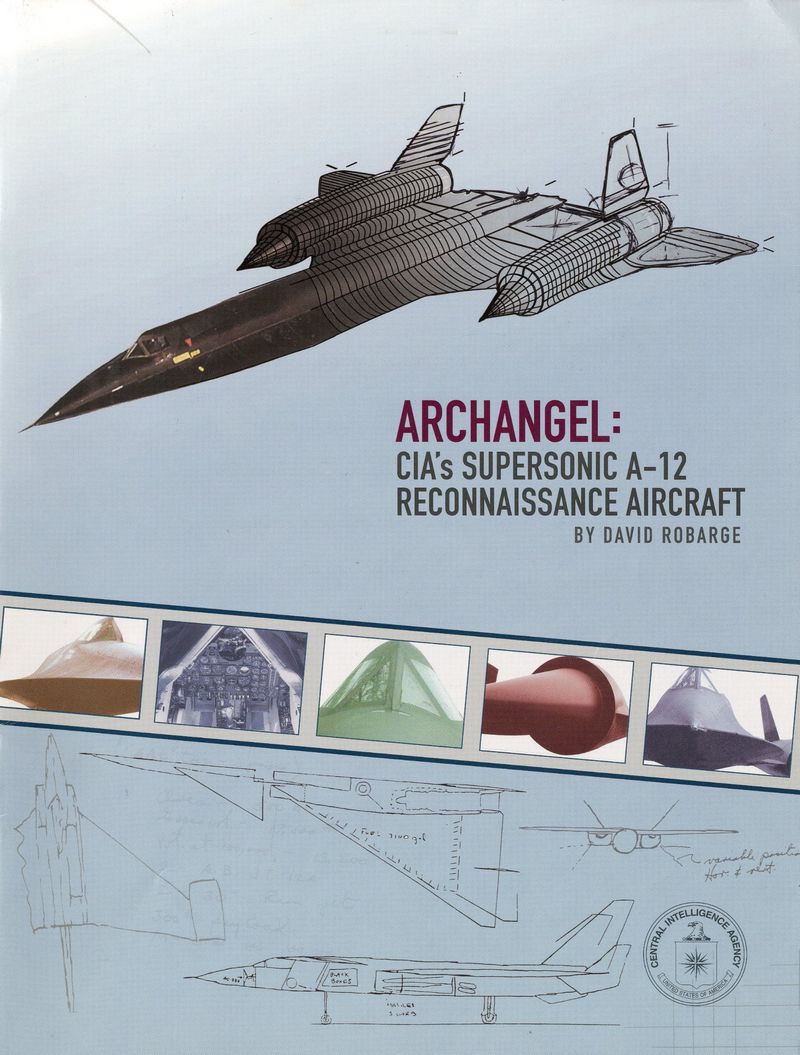
Archangel is the name of the A-12 project inside Lockheed Skunk Works. It was developed by the CIA's "Oxcart Project" initiative in competition with Convair's "Kingfish", the former being selected for service. The A-12 received certain RCS reduction features, including a chin-shaped fuselage and an inward-sloping tail.
The design is very similar to the outgoing SR-71, with its long-necked fuselage keeping the cockpit forward and twin tubular engine nacelles intersecting the wing main aircraft. The all-black RAM-centric body jacket completely covers the plane.
Powered by 2 Pratt & Whitney J58-1 afterburning turbofan engines, each producing 32,500 lbs of thrust. Performance includes a top speed of Mach 3.2 (faster than the heavier SR-71) - around 2,210 mph - with a service ceiling of up to 95,000 feet.
The range is 2,200 miles and the rate of climb is measured at 11,800 feet per minute.
Lockheed's design was selected based on committed performance specifications, cost and previous work with Convair's quotation. The first flight of the A-12 prototype took place on April 26, 1962, and after successful testing it ran from 1963 to 1968 (it was officially launched in 1967, but was not publicly announced until the 1990s). Thirteen aircraft built to the A-12 standard (along with two additional M-21s to be described later) surfaced, all operating under the CIA's covert banner.
The A-12 name comes from the design alone, and it's the twelfth in a series of proposed aircraft options related to the same program.
Variants of the A-12 include a two-seat trainer version with a tandem cockpit that provides a dual control scheme for students and instructors. Only one was completed and was called the "Titanium Goose". The YF-12A is an interceptor-oriented variant approved by the U.S.
Air Force to fill the void left by the canceled North American XF-108. To meet the requirements of the YF-12A, three A-12 production forms were created in support of 3 x Hughes AIM-47A Air-to-Air Missiles (AAM) stored in the internal weapons bay.
A Hughes AN/ASG-18 Look Down/Shot (LDSD) Fire Control Radar (FCR) was also installed. Performance includes a top speed of Mach 3.35 (2,275 mph), a range of up to 3,000 miles and a service ceiling of 90,000 feet. The reported rate of climb was 11,820 feet per minute.
The M-21 became a slightly modified form of the A-12, intended as a carrier for the D-21 UAV. The M-21 places the drone above its aft fuselage (between the engine nacelles) and mounts special launch controls on the mothership. The model was canceled when a drone collided with the transport ship - the crew ejected safely, but one drowned in the sea after landing.
Two M-21 aircraft completed.
Although the A-12 was designed for high-altitude flight over the Soviet Union, the A-12 has never been used over such a vast airspace due to the downing of an American U-2 spy plane in May 1960. That means the A-12's job is to focus on Asia to keep a close eye on North Korea and North Vietnam. Improved Soviet anti-aircraft weapons supplied to the region ultimately limited the A-12's mission range.
The A-12 was decommissioned in 1968, and the official program ended on December 28. The SR-71 series has come online, which has accelerated the phasing out of the A-12.
Some A-12 aircraft have been successfully preserved for museum displays and protected displays in the United States. At least six A-12s were killed in the accident and three were killed.
Specification
Basic
Production
Roles
- Reconnaissance (RECCE)
Dimensions
101.61 ft (30.97 m)
55.61 ft (16.95 m)
18.44 ft (5.62 m)
Weight
24,800 kg
56,500 kg
Performance
Performance
2,212 mph (3,560 km/h; 1,922 knots)
95,144 ft (29,000 m; 18.02 mi)
2,485 miles (4,000 km; 2,160 nautical miles)
3,597 m/min (11,800 ft/min)
Armor
No. Recon mission equipment in four interior compartments.
Changes
A-12 - name of the basic series; thirteen aircraft completed; also introduced a one-off two-seater trainer ("Titanium Goose").
M-21 - Modified A-12 for Lockheed D-21 reconnaissance drone launch program; two completed from available A-12 production inventory.
YF-12A - related dedicated interceptor model; equipped with AN/ASG-18 series fire control radar, supports 3? Hughes AIM-47A missiles; modified three examples.
"Archangel" - Nickname for the product
"Cygnus" - alternative nickname
 Argentina
 Armenia
 Australia
 Austria
 Austria-Hungary
 Belgium
 Brazil
 United Kingdom
 Brunei
 Bulgaria
 Canada
 Chile
Chile China
China Colonial America
 Colombia
 Confederate States
 Croatia
 Czech
Czech Denmark
 Egypt
Egypt Finland
 France
 Georgia
 Germany
 German Imperial
 Greece
 Holland
 Hungary
 India
India Indonesia
 Iran
Iran Iraq
Iraq Ireland
 Israel
 Italy
Italy Japan
Japan Japan (1940)
 Jordan
 Kingdom of Italy
 Malaysia
 Mexico
 Myanmar
 Nazi Germany
 Netherlands
 New Zealand
 North Korea
 Norway
 Pakistan
 Peru
Peru Philippines
 Poland
 Portugal
 Prussia
 Romania
 Russia
 Saudi Arabia
 Serbia
 Singapore
 Slovakia
 Slovenia
 South Africa
 South Korea
 Soviet Union
 Spain
Spain Sweden
 Switzerland
 Syria
Syria Taiwan
 Thailand
 Turkey
 UAE
UAE Ukraine
 Vietnam
 Yugoslavia