
History
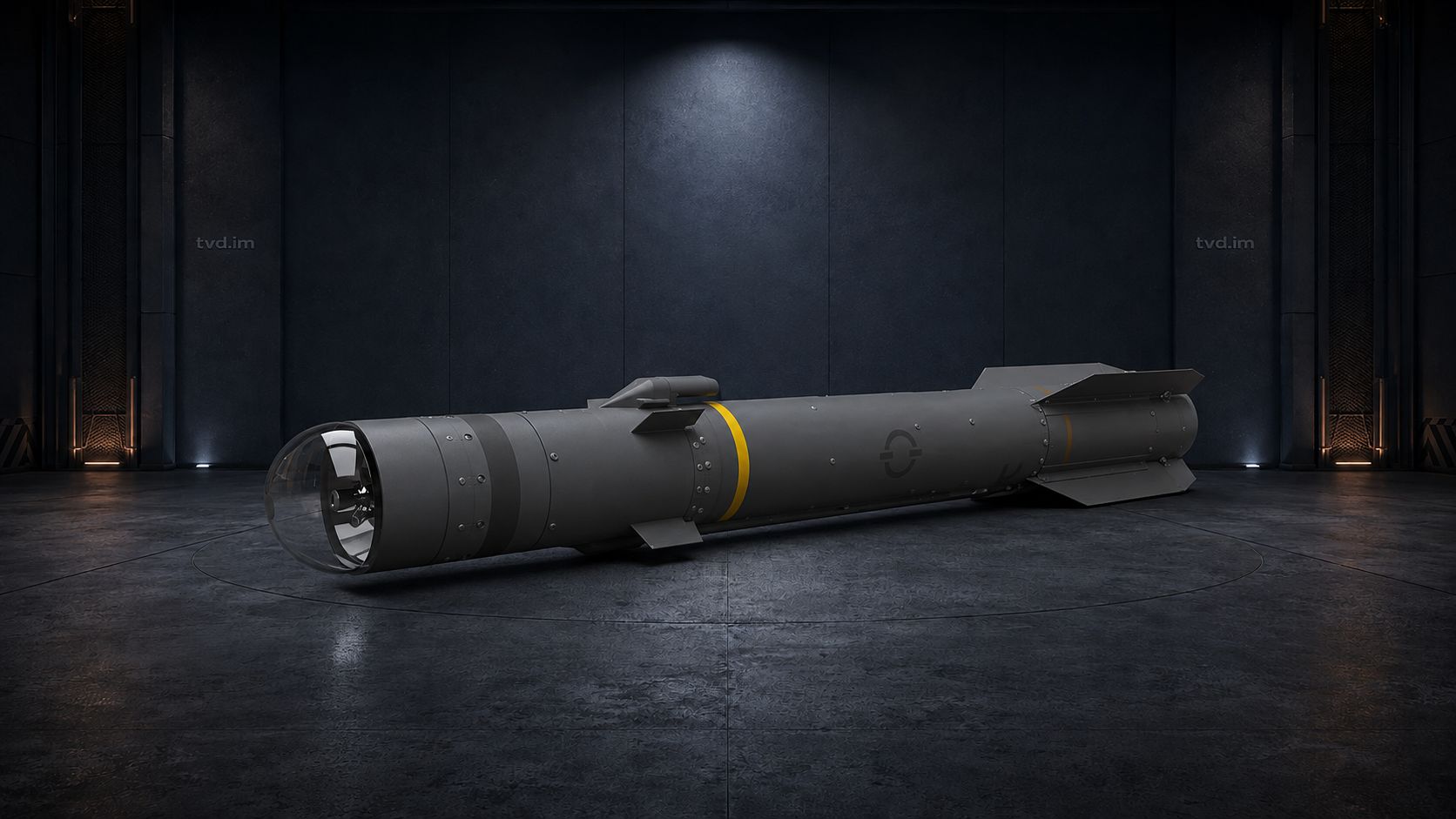
MBDA Brimstone 3 is a British precision-guided air-to-surface missile intended for use against moving and stationary ground targets. It combines semi-active laser guidance with a millimetric-wave radar seeker and can be integrated with crewed aircraft, remotely piloted aircraft, helicopters, and surface launchers.
The missile was developed through the United Kingdom's Brimstone Capability Sustainment Programme. It introduced new-build hardware while retaining capabilities developed through earlier upgrades to the Brimstone missile family.
Brimstone 3 is intended to replenish British missile stocks and support export orders. Belgium selected the missile for its MQ-9B SkyGuardian aircraft, while Germany approved its acquisition for the Eurofighter fleet.
Development and testing
The United Kingdom announced the Brimstone Capability Sustainment Programme in March 2018. The program combined the improvements introduced through earlier Brimstone upgrades in a new production standard. These features included a dual-mode seeker, an enhanced autopilot, and an insensitive-munition-compliant rocket motor and warhead.
The first Brimstone 3 firing trial took place at the Vidsel test range in Sweden in 2019. The missile was launched from a surface installation against a pickup-truck target in temperatures below −30 °C. According to MBDA, the test demonstrated closed-loop guidance, target acquisition, and target tracking.
The surface firing also demonstrated the missile's planned common-platform architecture. MBDA has presented Brimstone 3 as suitable for fast jets, remotely piloted aircraft, attack helicopters, land launchers, and maritime platforms.
Aircraft integration and procurement
Germany approved the planned acquisition of 3,266 Brimstone 3 missiles for its Eurofighter fleet in 2024. The first contract covered 378 missiles, including operational, test, and training rounds. Deliveries were reported as scheduled to begin in 2028.
In June 2026, General Atomics completed weapons qualification work for the Royal Air Force Protector RG Mk1. The tests cleared the MQ-9B-based aircraft for certified carriage and release of Brimstone 3 missiles and Paveway IV guided bombs.
Belgium completed an agreement for 16 Brimstone 3 missiles in July 2026. The contract was valued at approximately €10 million. The weapons are intended for Belgium's MQ-9B SkyGuardian remotely piloted aircraft, changing the fleet from an intelligence, surveillance, and reconnaissance system into a platform with a planned precision-strike capability.
Design
Guidance and targeting
Brimstone 3 uses a dual-mode seeker that combines semi-active laser guidance with millimetric-wave radar. Laser guidance allows the missile to follow energy reflected from a designated target. The radar seeker supports autonomous target acquisition and tracking, including engagement of moving targets and operation in poor weather or visually obscured conditions.
The missile also incorporates updated internal electronics, an upgraded inertial measurement unit, and an enhanced autopilot. These systems control the missile during flight and support the seeker during the terminal phase of an engagement.
Propulsion and endurance
The missile uses an insensitive-munition-compliant rocket motor. This design is intended to reduce the risk of an accidental reaction after exposure to heat, impact, or other hazardous conditions. A revised battery reportedly provides approximately 30 percent more engagement time than batteries fitted to earlier versions.
Warhead
Brimstone 3 carries an Insensitive Multi-Effect Warhead developed by TDW. The warhead is intended to combine safer storage and handling characteristics with effects against several target types, including armored and unarmored vehicles.
Platform installation
The missile weighs approximately 50 kg. Fighter aircraft can carry Brimstone missiles on triple launchers, allowing several weapons to be installed on one pylon. The Brimstone 3 hardware standard was designed for integration across air, land, and maritime platforms without creating a separate missile for each launcher.
Service and procurement
The United Kingdom is the original customer for Brimstone 3 through the Capability Sustainment Programme. The missile has been associated with the Royal Air Force Eurofighter Typhoon and Protector RG Mk1 programs. The Protector weapons qualification completed in 2026 established certified carriage and release capability for the MQ-9B-based aircraft.
Germany is scheduled to receive its first Brimstone 3 missiles from 2028 for integration with Eurofighter aircraft. Belgium plans to use its smaller initial purchase on MQ-9B SkyGuardian aircraft. The Belgian order covered 16 missiles, and delivery was expected after the July 2026 agreement.
Operators and customers
- United Kingdom: Original customer through the Brimstone Capability Sustainment Programme. Brimstone 3 is associated with Royal Air Force Eurofighter Typhoon and Protector RG Mk1 aircraft.
- Belgium: Contracted 16 missiles in 2026 for planned integration with MQ-9B SkyGuardian aircraft.
- Germany: Approved the planned acquisition of 3,266 missiles for the Eurofighter fleet. Initial deliveries were reported as scheduled for 2028.
Specifications (Brimstone 3)
General characteristics
- Type: Air-to-surface anti-tank guided missile
- Manufacturer: MBDA
- Country of development: United Kingdom
- Weight: Approximately 50 kg
- Launch arrangements: Single-missile installations or triple launchers, depending on the platform
Guidance
- Terminal guidance: Dual-mode semi-active laser and millimetric-wave radar seeker
- Flight control: Enhanced autopilot and upgraded inertial measurement unit
- Target capability: Moving and stationary ground targets
Performance
- Reported air-launched range: Up to approximately 60 km, depending on launch conditions
- Battery endurance: Approximately 30 percent greater engagement time than previous versions
Propulsion and warhead
- Propulsion: Insensitive-munition-compliant rocket motor
- Warhead: TDW Insensitive Multi-Effect Warhead
Related equipment
- Brimstone: Original member of the missile family, introduced into Royal Air Force service in 2005.
- Dual Mode Brimstone: Earlier version that added semi-active laser guidance to the millimetric-wave radar seeker.
- Brimstone 2: Improved version with revised guidance and propulsion that preceded the Brimstone 3 production standard.
 Argentina
 Armenia
 Australia
 Austria
 Austria-Hungary
 Belgium
 Brazil
 United States
 Brunei
 Bulgaria
 Canada
 Chile
Chile China
China Colonial America
 Colombia
 Confederate States
 Croatia
 Czech
Czech Denmark
 Egypt
Egypt Finland
 France
 Georgia
 Germany
 German Imperial
 Greece
 Holland
 Hungary
 India
India Indonesia
 Iran
Iran Iraq
Iraq Ireland
 Israel
 Italy
Italy Japan
Japan Japan (1940)
 Jordan
 Kingdom of Italy
 Malaysia
 Mexico
 Myanmar
 Nazi Germany
 Netherlands
 New Zealand
 North Korea
 Norway
 Pakistan
 Peru
Peru Philippines
 Poland
 Portugal
 Prussia
 Romania
 Russia
 Saudi Arabia
 Serbia
 Singapore
 Slovakia
 Slovenia
 South Africa
 South Korea
 Soviet Union
 Spain
Spain Sweden
 Switzerland
 Syria
Syria Taiwan
 Thailand
 Turkey
 UAE
UAE Ukraine
 Vietnam
 Yugoslavia