
History
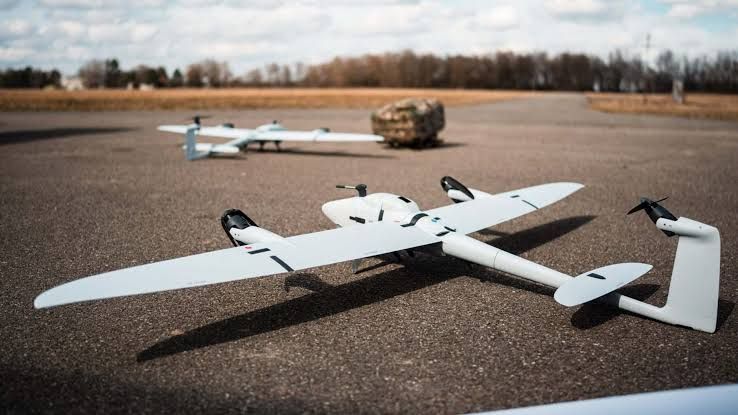
The Quantum-Systems Vector is a German electric vertical-takeoff-and-landing reconnaissance unmanned aerial vehicle. It combines runway-independent operation with the endurance and efficiency of a fixed-wing aircraft.
Vector is designed for intelligence, surveillance, and reconnaissance missions. Its modular architecture supports interchangeable sensors, encrypted communications, automated flight control, and operations in environments affected by electronic warfare.
The aircraft has been employed extensively in Ukraine, where operational experience has driven modifications for navigation without satellite signals, onboard artificial intelligence, seasonal camouflage, and automatic evasion from interceptor drones.
Quantum-Systems was founded in Germany in 2015. A company brochure dated May 2019 documented Vector as a vertical-takeoff reconnaissance UAV and part of a convertible Vector and Scorpion system. The fixed-wing Vector and multicopter Scorpion shared a central fuselage, sensors, autopilot, and data-link equipment. The early system is described in the Vector and Scorpion brochure.
In September 2020, Quantum-Systems partnered with Auterion to introduce Vector to government users. The aircraft was intended to be portable, rapidly assembled, and suitable for deployment without a runway, catapult, or recovery net.
Quantum-Systems donated its first Vector systems to Ukraine in March 2022. Germany subsequently financed larger deliveries. By 2026, company representatives reported that more than 800 aircraft were present in Ukraine and that a Ukrainian facility was producing and testing the type. Vector operations in Ukraine also provided experience with disrupted satellite navigation and communication links.
The company progressively introduced dead-reckoning navigation, radio-based navigation, and visual navigation for missions in jammed environments. Vector AI uses onboard computing for navigation, sensor processing, target location, and mission autonomy. The development of these capabilities is described in an interview on the Vector program.
During 2026, Quantum-Systems began another modernization program for Ukrainian Vector aircraft. Earlier-generation airframes were scheduled to receive a replacement nose with artificial-intelligence equipment, an interceptor-evasion module, and improved batteries. Deliveries of newly built aircraft, including Vector AI systems fitted with the evasion module in Germany, began in April 2026.
The interceptor-evasion configuration introduced a rear-facing thermal camera to detect approaching drones, including during night operations. Onboard artificial intelligence assesses the detected object and can command an evasive maneuver without operator input. A yellow seasonal camouflage scheme was also introduced to reduce visual contrast over dry Ukrainian fields. Quantum-Systems stated that these measures improve survivability but do not guarantee protection against every interception. Details of the configuration were reported in an account of the Vector modernization.
Design
Airframe and propulsion
Vector is an electrically powered fixed-wing aircraft with vertical takeoff and landing capability. Its lifting motors allow it to launch and recover from confined areas. After the transition to horizontal flight, the wings provide the aerodynamic efficiency needed for longer reconnaissance missions.
The airframe uses a modular central fuselage. In the original two-in-one system, an operator could remove the Vector wings and attach multicopter arms to create the Scorpion configuration. The central fuselage, gimballed sensors, autopilot, control link, and video data link were shared between the two aircraft.
The early airframe was described as a glass-fiber and Kevlar honeycomb sandwich structure. The system could be disassembled for transport in a rugged case or backpack and prepared for flight by one operator.
Sensors
Vector uses an interchangeable forward payload section. Documented payloads include stabilized electro-optical and infrared cameras for day-and-night reconnaissance and a tactical mapping camera. Changing the complete payload bay does not require tools.
An early electro-optical and infrared gimbal provided 1280 by 720-pixel electro-optical video and 640 by 480-pixel infrared imagery. The documented sensor package also supported optical and digital zoom, scene tracking, target geolocation, an infrared illuminator, and an infrared laser rangefinder.
Vector AI adds onboard artificial-intelligence processing. Reported functions include visual navigation without satellite positioning, target detection and location, sensor processing, and autonomous completion of reconnaissance tasks. The 2026 interceptor-evasion configuration supplements the forward mission sensors with a rear-facing thermal camera.
Communications and control
The aircraft uses an encrypted command, control, and video data link. Manufacturer material describes AES-256 encryption, multiple-input and multiple-output beamforming, and mesh-network functions. A handheld controller supports mobile operation, while a stationary ground installation can provide greater communication range.
Vector can be operated through QBase Tactical or Auterion Mission Control. Documented functions include mission planning, waypoint control, in-flight route changes, live reconnaissance video, point-of-interest marking, target tracking, sensor switching, geolocation locking, and automated system monitoring.
The control software can continue missions after the loss of a satellite-navigation signal or data link when the configured mission and safety conditions permit. Later Vector AI aircraft use visual and onboard navigation methods to improve operation in electronically contested environments.
Operational history
Ukraine has operated Vector since 2022. The aircraft has conducted reconnaissance missions in conditions involving satellite-navigation jamming, disrupted communications, and threats from FPV interceptor drones. By August 2026, Quantum-Systems stated that the fleet had accumulated more than 20,000 combat flight hours in Ukraine.
Operational experience indicated that interceptors frequently approached reconnaissance aircraft from behind. A thermal detector was selected because approximately half of the reported Vector missions took place at night, when a conventional rear-facing camera would have limited effectiveness. Automatic threat classification and evasion reduce the need for the reconnaissance operator to interrupt the primary mission.
Vector aircraft are also used by United States government organizations. Reported users include United States Special Operations Command and the Department of State. The Netherlands received its first Vector system in October 2022.
Variants
- Vector: Fixed-wing electric VTOL reconnaissance aircraft with modular payloads and an encrypted command and video link.
- Scorpion: Multicopter configuration created by fitting copter arms to the shared Vector central fuselage. It is intended for hovering and surveillance in confined or urban areas.
- Vector AI: Updated Vector configuration with additional onboard computing for autonomous navigation, sensor processing, target location, and missions in jammed environments.
- Vector AI interceptor-evasion configuration: Vector AI equipment combined with a rear thermal camera, automated evasive maneuvering, and seasonal yellow camouflage. Newly built systems with this equipment were delivered from April 2026, while older aircraft entered a retrofit program.
Operators
- Ukraine: In service since 2022. Germany financed multiple orders, and production and testing were subsequently established in Ukraine.
- Netherlands: The Dutch Ministry of Defence received its first Vector system in October 2022.
- United States: Used by government organizations, including United States Special Operations Command and the Department of State.
Specifications (Vector, 2023 brochure configuration)
General characteristics
- Type: Electric fixed-wing VTOL reconnaissance unmanned aircraft
- Wingspan: 2.8 m (9.2 ft)
- Weight: Less than 8.5 kg (18.7 lb)
- Environmental protection: IP54
- Maximum supported wind: 12 m/s (23 kn)
Performance
- Maximum launch altitude: 3,000 m above mean sea level
- Maximum operating altitude: 4,500 m above mean sea level
- Reported endurance with standard batteries: Approximately 120 minutes
Communications and mission systems
- Handheld command and video range: 15 km
- Stationary command and video range: 35 km
- Encryption: AES-256
- Average documented data-link latency: 7 milliseconds
- Ground-station battery endurance: 12 hours
- Mission-control options: QBase Tactical or Auterion Mission Control
These values describe the configuration presented in the 2023 manufacturer brochure. Payload selection, batteries, data-link installation, and later Vector AI modifications can change the aircraft's operational characteristics.
 Argentina
 Armenia
 Australia
 Austria
 Austria-Hungary
 Belgium
 Brazil
 United Kingdom
 United States
 Brunei
 Bulgaria
 Canada
 Chile
Chile China
China Colonial America
 Colombia
 Confederate States
 Croatia
 Czech
Czech Denmark
 Egypt
Egypt Finland
 France
 Georgia
 German Imperial
 Greece
 Holland
 Hungary
 India
India Indonesia
 Iran
Iran Iraq
Iraq Ireland
 Israel
 Italy
Italy Japan
Japan Japan (1940)
 Jordan
 Kingdom of Italy
 Malaysia
 Mexico
 Myanmar
 Nazi Germany
 Netherlands
 New Zealand
 North Korea
 Norway
 Pakistan
 Peru
Peru Philippines
 Poland
 Portugal
 Prussia
 Romania
 Russia
 Saudi Arabia
 Serbia
 Singapore
 Slovakia
 Slovenia
 South Africa
 South Korea
 Soviet Union
 Spain
Spain Sweden
 Switzerland
 Syria
Syria Taiwan
 Thailand
 Turkey
 UAE
UAE Ukraine
 Vietnam
 Yugoslavia