
History
IMPACT Drones SABLE is a high-speed autonomous counter-drone interceptor developed for longer-range pursuit of incoming aerial threats. The San Francisco-based company describes SABLE as the faster interceptor in its Air Defense as a Service concept.
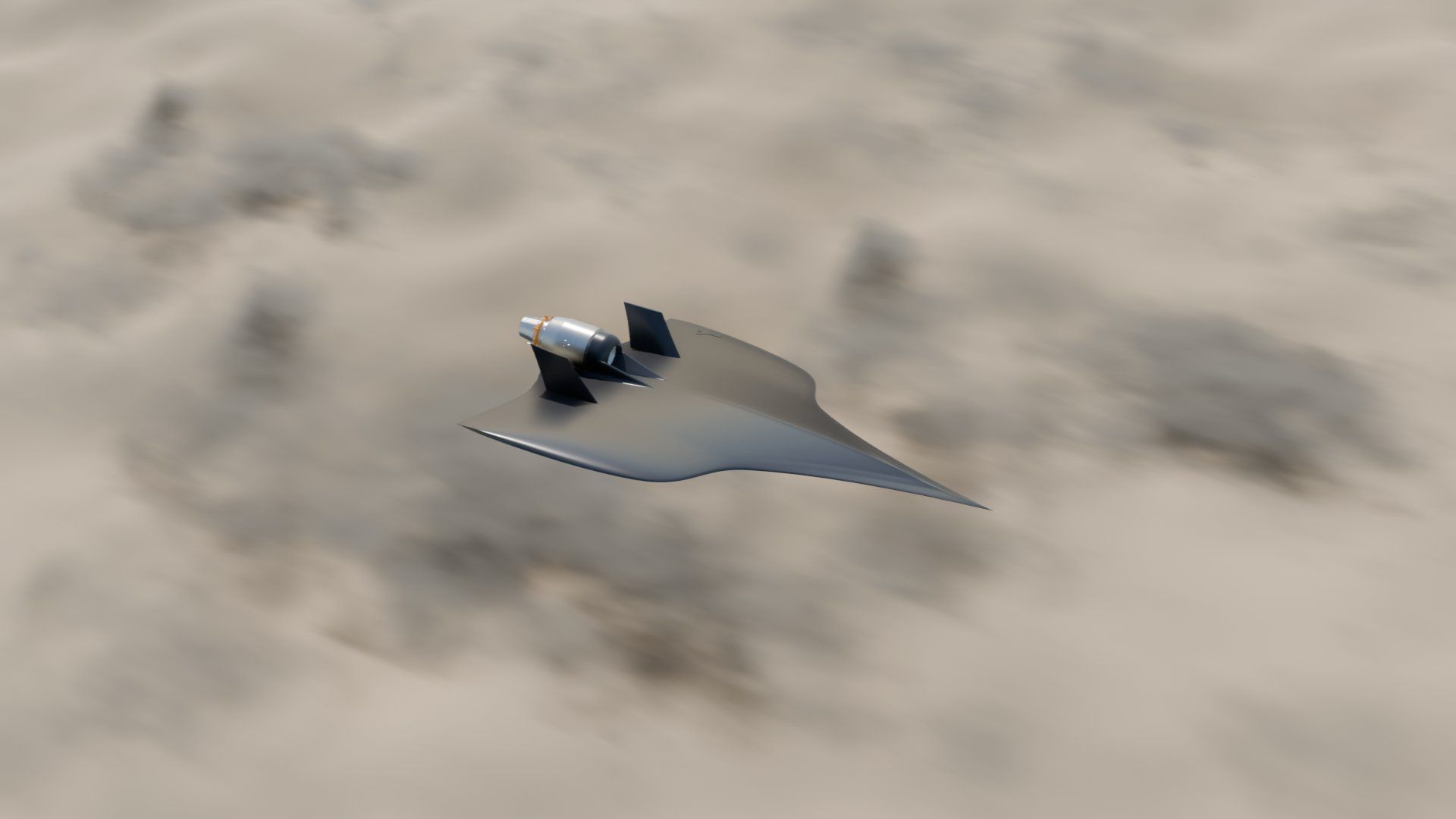
SABLE uses a turbine engine and a delta-wing airframe. It is intended to intercept faster threats before they reach protected locations such as data centers, airports and power infrastructure.
IMPACT Drones said in August 2026 that it had built a working SABLE prototype in two weeks. The prototype represented an early physical milestone for a program that had been publicly introduced only weeks earlier.
Development
IMPACT Drones publicly introduced SABLE on 4 August 2026 alongside the HUNTER close-range interceptor. The company presented both aircraft as elements of a containerized counter-UAS system intended to detect an incoming drone, launch an interceptor and guide it toward the target.
At the August 4 launch, IMPACT Drones gave SABLE a design speed of 825 km/h (513 mph). Later in August, co-founder Alessandro Fiume stated a figure of 750 km/h (466 mph). The later figure was reported when the company announced its working prototype, so the available sources show that the stated design speed changed during early development. Neither figure is identified in the supplied material as a demonstrated flight-test speed.
On 26 August 2026, reports based on posts by company co-founders Jasper Lortije and Alessandro Fiume stated that IMPACT Drones had produced a working SABLE prototype in two weeks. The milestone was reported by Defence Blog and summarized by Dealroom. A separate Drone Wars report also described the prototype and the revised 750 km/h design-speed figure.
Design
Airframe and propulsion
SABLE is built around a delta-wing airframe and turbine propulsion. This configuration is associated with its intended role as the longer-range and higher-speed interceptor in IMPACT Drones' counter-UAS system.
Guidance and interception concept
IMPACT Drones describes its interceptor system as using onboard visual navigation that is intended to continue functioning when GPS is jammed. The interceptors are designed to be stored in sealed containers at protected sites. After detection of a hostile drone, an interceptor is intended to launch through the container lid, pursue the target and destroy it by ramming.
The available material describes SABLE as an autonomous counter-drone interceptor for pursuit of faster and more distant threats. It does not provide detailed information about sensors carried specifically by the SABLE prototype, its endurance, dimensions, mass, launch acceleration or demonstrated engagement performance.
Program status
As of August 2026, SABLE was at the prototype stage. IMPACT Drones claimed that a working prototype had been completed, but the supplied sources do not document operational service or completed production deliveries.
The company targeted pilot deployments of its Air Defense as a Service system for the third quarter of 2026. This was a stated program target rather than evidence that SABLE had entered operational service.
Specifications (SABLE prototype)
General characteristics
- Type: Autonomous high-speed counter-drone interceptor UAV
- Airframe: Delta-wing configuration
- Powerplant: Turbine engine
Performance
- Stated design speed: 750 km/h (466 mph) in the August 2026 prototype announcement; an earlier public figure was 825 km/h (513 mph)
Interception
- Primary role: Longer-range pursuit of incoming drones and faster aerial threats
- Engagement method: Intended to ram the target
- Navigation concept: Onboard visual navigation designed to continue operating when GPS is jammed
Related equipment
HUNTER is the second interceptor in IMPACT Drones' Air Defense as a Service concept. It is described as a shorter-range point-defense system, while SABLE is intended for faster and longer-range pursuit.
 Argentina
 Armenia
 Australia
 Austria
 Austria-Hungary
 Belgium
 Brazil
 United Kingdom
 Brunei
 Bulgaria
 Canada
 Chile
Chile China
China Colonial America
 Colombia
 Confederate States
 Croatia
 Czech
Czech Denmark
 Egypt
Egypt Finland
 France
 Georgia
 Germany
 German Imperial
 Greece
 Holland
 Hungary
 India
India Indonesia
 Iran
Iran Iraq
Iraq Ireland
 Israel
 Italy
Italy Japan
Japan Japan (1940)
 Jordan
 Kingdom of Italy
 Malaysia
 Mexico
 Myanmar
 Nazi Germany
 Netherlands
 New Zealand
 North Korea
 Norway
 Pakistan
 Peru
Peru Philippines
 Poland
 Portugal
 Prussia
 Romania
 Russia
 Saudi Arabia
 Serbia
 Singapore
 Slovakia
 Slovenia
 South Africa
 South Korea
 Soviet Union
 Spain
Spain Sweden
 Switzerland
 Syria
Syria Taiwan
 Thailand
 Turkey
 UAE
UAE Ukraine
 Vietnam
 Yugoslavia