
History
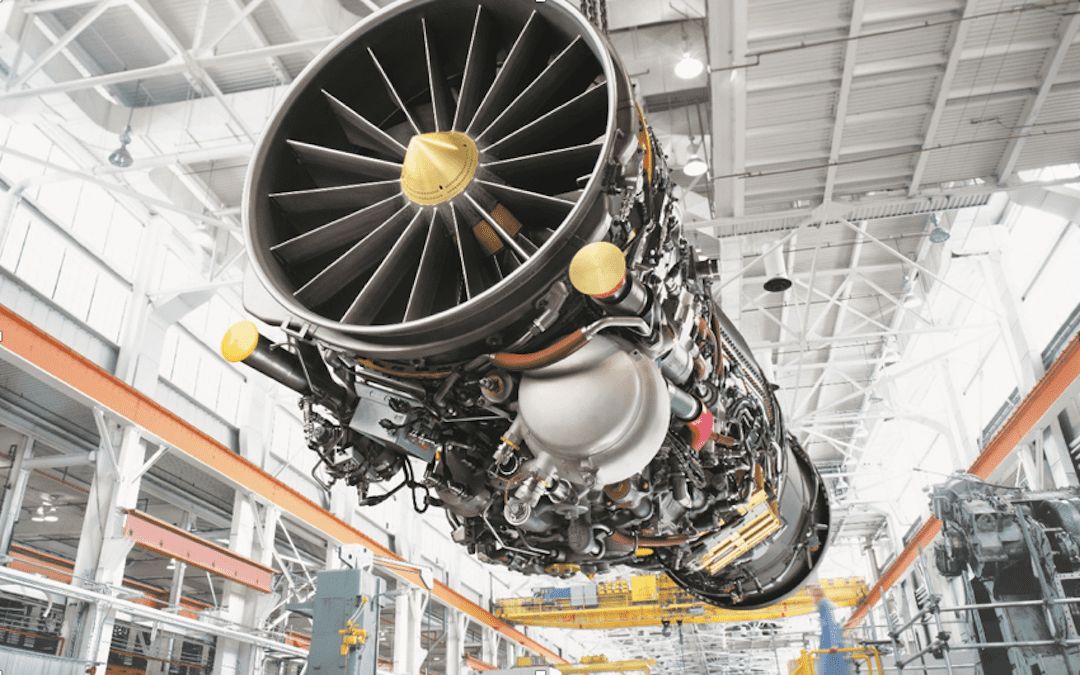
The General Electric F414 is an American afterburning turbofan in the 22,000 lbf (98 kN) thrust class. It was developed from the F404 engine family for modern combat-aircraft applications and became the powerplant of the Boeing F/A-18E/F Super Hornet and EA-18G Growler.
The engine combines increased thrust with a modular architecture, digital control, on-condition maintenance, and technologies intended to improve durability and reduce life-cycle costs. GE Aerospace states that more than 1,600 F414 engines have been delivered and that the family has accumulated more than five million engine flight hours.
The F414 has subsequently been adapted for several combat-aircraft and research-aircraft programs. GE states that eight nations have F414-powered aircraft either in operation or on order.
Development
The F414 shares its basic design lineage with General Electric's F404. A secondary history describes the F414 as also incorporating development work from the non-afterburning F412, which had been intended for the canceled A-12 Avenger II program. The resulting F414 was enlarged and improved for the F/A-18E/F Super Hornet.
MTU Aero Engines describes the F414 as a further development of the F404 that provides about 35 percent more thrust while retaining emphasis on reliability, maintainability, and operability. MTU Aero Engines lists entry into service in 1995. MTU participates in the program with a 2.9 percent share and manufactures parts for the high-pressure and low-pressure turbines.
Fleet sustainment
In September 2026, the U.S. Navy awarded General Electric a five-year performance-based logistics contract with a ceiling value of $2.8747 billion for support of F414-GE-400 components used by F/A-18E/F Super Hornets and EA-18G Growlers. The agreement runs through August 2031 and covers logistics support for 17 engine components. The initial delivery order was valued at $198.22 million, with $148.67 million obligated at award.
The contract assigns 90 percent of the work to Lynn, Massachusetts, and 10 percent to Jacksonville, Florida. The support arrangement is intended to maintain inventories, repair or replace covered components, and provide ready-for-issue parts under performance requirements. The supported items include components associated with the combustor, rotors, cases, vanes, frames, bypass ducts, and nozzle assemblies.
Design
The F414 is a two-shaft afterburning turbofan. Its design uses a modular architecture intended to simplify maintenance and component interchange. GE describes the engine as having six modules and using on-condition maintenance rather than scheduled overhaul intervals.
The engine incorporates digital engine control. MTU lists a digital control unit among its principal features, while a GE technical brochure reproduced by AeroExpo identifies Full Authority Digital Electronic Control, or FADEC, as a feature used to improve operational characteristics. The same technical material describes advanced materials and cooling methods intended to improve performance and component life.
MTU identifies powder-metal turbine disks, single-crystal turbine blades, and a convergent-divergent exhaust nozzle among the F414's design features. GE also emphasizes rapid throttle response, unrestricted engine performance on demand, and stable afterburner operation.
An enhanced-engine development package has also been described for the F414. The GE brochure states that these technologies can be retrofitted to improve component capability and reduce ownership costs, or configured to provide up to a 20 percent increase in thrust together with improved specific fuel consumption.
Operational history
The F414-GE-400 powers the twin-engine Boeing F/A-18E/F Super Hornet and EA-18G Growler. Each aircraft uses two engines. In U.S. Navy service, the availability of F414 engines and modules is therefore directly connected with the readiness of both the carrier-based strike-fighter and electronic-attack fleets.
The F414 family has also been selected for additional aircraft programs. MTU lists the F414-INS6 for the Tejas Light Combat Aircraft Mk II, the F414-GE-39E for the Saab Gripen next generation aircraft, the F414-GE-400K for the KAI KF-21 Boramae, and the F414-GE-100 for NASA's X-59 QueSST research aircraft.
The source material also identifies Australian F/A-18F Super Hornets and EA-18G Growlers as F414-powered aircraft. The 2026 U.S. Navy logistics contract, however, is specifically a U.S. sustainment arrangement and is not described as financing support for foreign fleets.
Variants
- F414-GE-400 – Variant used by the Boeing F/A-18E/F Super Hornet and EA-18G Growler.
- F414-GE-39E – Variant identified by current GE and MTU material for Saab's next-generation Gripen application.
- F414-INS6 – Variant selected for the Tejas Light Combat Aircraft Mk II.
- F414-GE-400K – Variant listed by MTU for the KAI KF-21 Boramae.
- F414-GE-100 – Variant listed by MTU for NASA's X-59 QueSST research aircraft.
An older GE brochure reproduced by AeroExpo uses the F414G designation for the Gripen application, while current GE specifications identify an F414-GE-39E variant. The available material therefore reflects a change in the designation used for this application.
Operators
- United States Navy – Operates F414-GE-400-powered F/A-18E/F Super Hornets and EA-18G Growlers and maintains a long-term logistics and component-support program for the engine.
- Australia – Australian F/A-18F Super Hornet and EA-18G Growler fleets are identified in the source material as F414-powered aircraft.
Specifications (F414-GE-400)
General characteristics
- Type: Two-shaft afterburning turbofan
- Length: 3.91 m (154 in)
- Maximum diameter: 0.89 m (35 in)
- Inlet diameter: 0.79 m (31 in)
- Airflow: 77.1 kg/s (170 lb/s)
- Overall pressure ratio: 30:1
- Bypass ratio: 0.25:1
Performance
- Thrust class with afterburner: 98 kN (22,000 lbf)
- Thrust-to-weight class: 9:1
Related equipment
- General Electric F404 – Earlier engine family on which the basic F414 design is based.
- General Electric F412 – Non-afterburning turbofan development associated with the canceled A-12 Avenger II and identified as part of the F414's development lineage.
 Argentina
 Armenia
 Australia
 Austria
 Austria-Hungary
 Belgium
 Brazil
 United Kingdom
 Brunei
 Bulgaria
 Canada
 Chile
Chile China
China Colonial America
 Colombia
 Confederate States
 Croatia
 Czech
Czech Denmark
 Egypt
Egypt Finland
 France
 Georgia
 Germany
 German Imperial
 Greece
 Holland
 Hungary
 India
India Indonesia
 Iran
Iran Iraq
Iraq Ireland
 Israel
 Italy
Italy Japan
Japan Japan (1940)
 Jordan
 Kingdom of Italy
 Malaysia
 Mexico
 Myanmar
 Nazi Germany
 Netherlands
 New Zealand
 North Korea
 Norway
 Pakistan
 Peru
Peru Philippines
 Poland
 Portugal
 Prussia
 Romania
 Russia
 Saudi Arabia
 Serbia
 Singapore
 Slovakia
 Slovenia
 South Africa
 South Korea
 Soviet Union
 Spain
Spain Sweden
 Switzerland
 Syria
Syria Taiwan
 Thailand
 Turkey
 UAE
UAE Ukraine
 Vietnam
 Yugoslavia