



History of Ford GTB (G-622) (Myanmar Jeep)
Logistics vehicles have always proven to be the lifeblood of a wide range of conflicts, and World War II was no exception, especially in the Pacific campaign that spanned thousands of miles by sea and land. The mission of the American army was to retake Burma from the Japanese and retake the vital passage to China. U.S. Army General Joseph Stilwell has thwarted Japanese attempts to invade northern Burma, where military engineers are building the new "Ledo Highway" linking the Indian state of Ledo Assam with the old Burma Road in Kunming, Yunnan, China The first 100 miles were made in December 1942 and consisted of a steep, narrow passage from Ledo across the Pangsau Pass and down into Burma.
The road is next to a mountain several thousand feet high, and 100,000 cubic feet of dirt must be removed for every mile driven. All of this work was done by 15,000 U.S. soldiers and 35,000 locals in Myanmar during temperatures as high as 100 degrees plus maximum humidity. With so much work to do against the Allies, specialized trucks of a certain quality were required to transport much-needed troops and supplies to far-flung locations, these vehicles could handle the harsh environmental and temperature conditions, as well as help achieve the eventual Allied victory over Japan. It is estimated that after the completion of the "Leduo Road", it will provide more than 65,000 tons of supplies for the Allied Forces in China.
So far, these forces have relied heavily on supplies airlifted to the region.
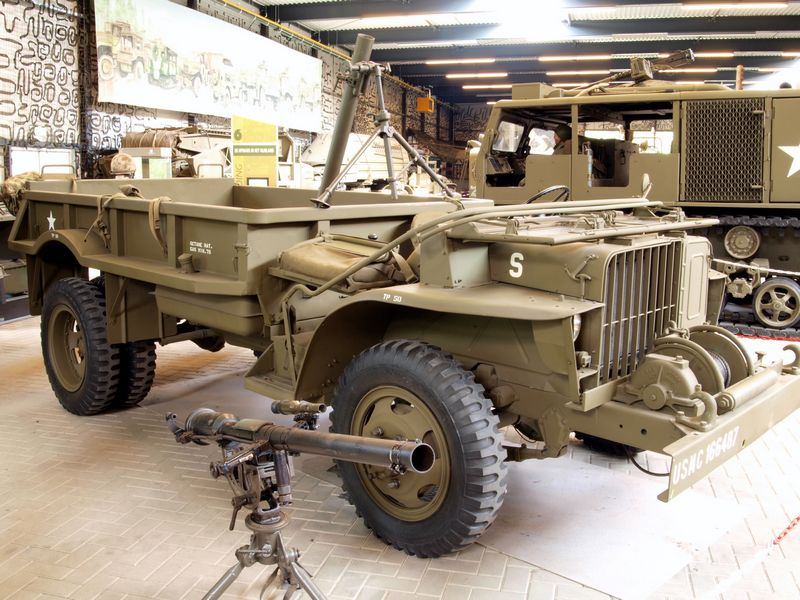
A federal initiative resulted in the famous "Myanmar Jeep", also known as the "Ford GTB 1.5 Ton Truck" ("GTB-G622"), which was flagged in the US Navy and Marine Corps during World War II Under service war. The vehicle has durable military qualities from the start, along with the necessary maneuverability and a fairly tight turning radius (32 feet). The GTB was originally developed for the U.S. Army, which didn't think much of the vehicle at the timenavy authorities thought it could come in handy. The design features a short, low-profile wheelbase that can move 3,000 pounds of cargo along its rear cargo bed.
The car doesn't have any conventional cab, just a simple folding windshield in front of the two crew (driver and co-driver). The nose of the vehicle is deliberately shortened, and the engine protrudes into the cabin between the driver and passenger, the protrusion hidden under a curved access panel. The cockpit is simple, with a large three-spoke steering wheel, minimal system dials, and suitable handlebars and footrests.
The passenger seat faces the dryer position and folds up for storage. The powerplant of choice is a Ford G8T-type 4-stroke, L-head, inline 6-cylinder producing 90 hp at 3,400 rpm - delivering a top speed of 45 mph at a paltry rating of 9 mpg. The GTB's unique grille pattern makes it instantly recognizable, as it's designed with vertical running lines along the right-hand section, with the remaining space reserved for an externally accessible toolbox.
Round headlights span the sides of the grille. The front of the vehicle is protected by a large bumper assembly that spans the width of the truck. 20-inch road wheels are standard, and a slot has traditionally been drilled out of the left side of the truck for a single spare.
GTB trucks can also tow wheeled trailers.
In size, the Ford GTB proved to be a larger vehicle than the world famous JEEP or 3/4 ton Dodge "Power Wagon" series, but compared to the war-winning "Deuce and-a-Half" transport. Almost all GTB models come with an optional front winch (Braden or Gar Wood brand) rated at 10,000 lbs. With excellent ground clearance, the GTB can handle water sources and depressions up to 25 inches deep.
The cockpit can be protected to a minimum by raising the front windshield and raising the canvas headliner. Infantry folding seats can be installed at the rear, and a canvas canopy can also be seen to protect from the sun and rain.
Unlike other transport and logistics vehicles, which served in the U.S. military during World War II, the GTB series lacks any inherent self-defense capabilities other than personal weapons (if any) carried by the crew and passengers.
Wartime records show that Ford produced over 15,000 GTB series trucks during its run, which were supplied to all U.S. service branches in five variants. "GTB" represents the original name for cargo transport aircraft, while the U.S. Navy recognizes them as "GTBA". "GTBB, Wrecker" is a limited series, only 50 units were produced. "GTBS" is the brand used by the US Navy for bomb service management with heavy duty crane components. "GTBC" is nothing but an improved form of the US Navy GTBS. All versions (except GTBS) feature 20-inch dual rear wheels, and all GTB trucks are painted "Ocean Grey" to US Navy specifications.
All U.S. military services use GTB, GTBB, and GTBSthe U.S. Army version uses traditional "OD Green", but the totals offered are limited compared to the USN/USMC numbers.
GTB vehicles proved to be suitable trucks for the task at hand, with thousands of people making a "one-way" trip to China as many of these vehicles were handed over to Chinese allies after their missions. The Ledo Road, officially opened in January 1945, successfully transported 129,000 tons of supplies from India to waiting troops in China.
While air transport has proven to be more effective than road alternatives in the long run, the role roads play in conflict is just as important. By the end of the war, the situation had changed so much that the Ledo Road initiative was overshadowed by airdrop/airlift activities.
Many GTBs survived World War II and received extended service in the upcoming Korean War (1950-1953). The final form of the U.S. Navy was not classified as surplus until 1967.
Private collectors have since set about restoring the remaining GTBs as wartime classics, while others have been converted into farm implements.
Specification
Basic
Roles
- Utilities
- Support/Special Purpose
Dimensions
16. 40 feet (5 m)
7.28 ft (2.22 m)
1.37m
4 tons (3,628 kg; 7,998 lb)
Performance
Performance
72 km/h
for everyone else in our database)
Armor
None, except for personal weapons carried by the crew/passengers.
Not applicable.
Changes
G-622 - Basic model designation
GTB - Basic Cargo Truck; All Services
GTBA - Base Carrier; US Navy/US Marine Corps
GTBB, Wrecker - 50 copies produced
GTBS - Bomb Service Vehicle; US Navy/US Marine Corps
GTBC - Improved Bomb Service Vehicle; USN/USMC
 Argentina
 Armenia
 Australia
 Austria
 Austria-Hungary
 Belgium
 Brazil
 United Kingdom
 Brunei
 Bulgaria
 Canada
 Chile
Chile China
China Colonial America
 Colombia
 Confederate States
 Croatia
 Czech
Czech Denmark
 Egypt
Egypt Finland
 France
 Georgia
 Germany
 German Imperial
 Greece
 Holland
 Hungary
 India
India Indonesia
 Iran
Iran Iraq
Iraq Ireland
 Israel
 Italy
Italy Japan
Japan Japan (1940)
 Jordan
 Kingdom of Italy
 Malaysia
 Mexico
 Myanmar
 Nazi Germany
 Netherlands
 New Zealand
 North Korea
 Norway
 Pakistan
 Peru
Peru Philippines
 Poland
 Portugal
 Prussia
 Romania
 Russia
 Saudi Arabia
 Serbia
 Singapore
 Slovakia
 Slovenia
 South Africa
 South Korea
 Soviet Union
 Spain
Spain Sweden
 Switzerland
 Syria
Syria Taiwan
 Thailand
 Turkey
 UAE
UAE Ukraine
 Vietnam
 Yugoslavia