
History
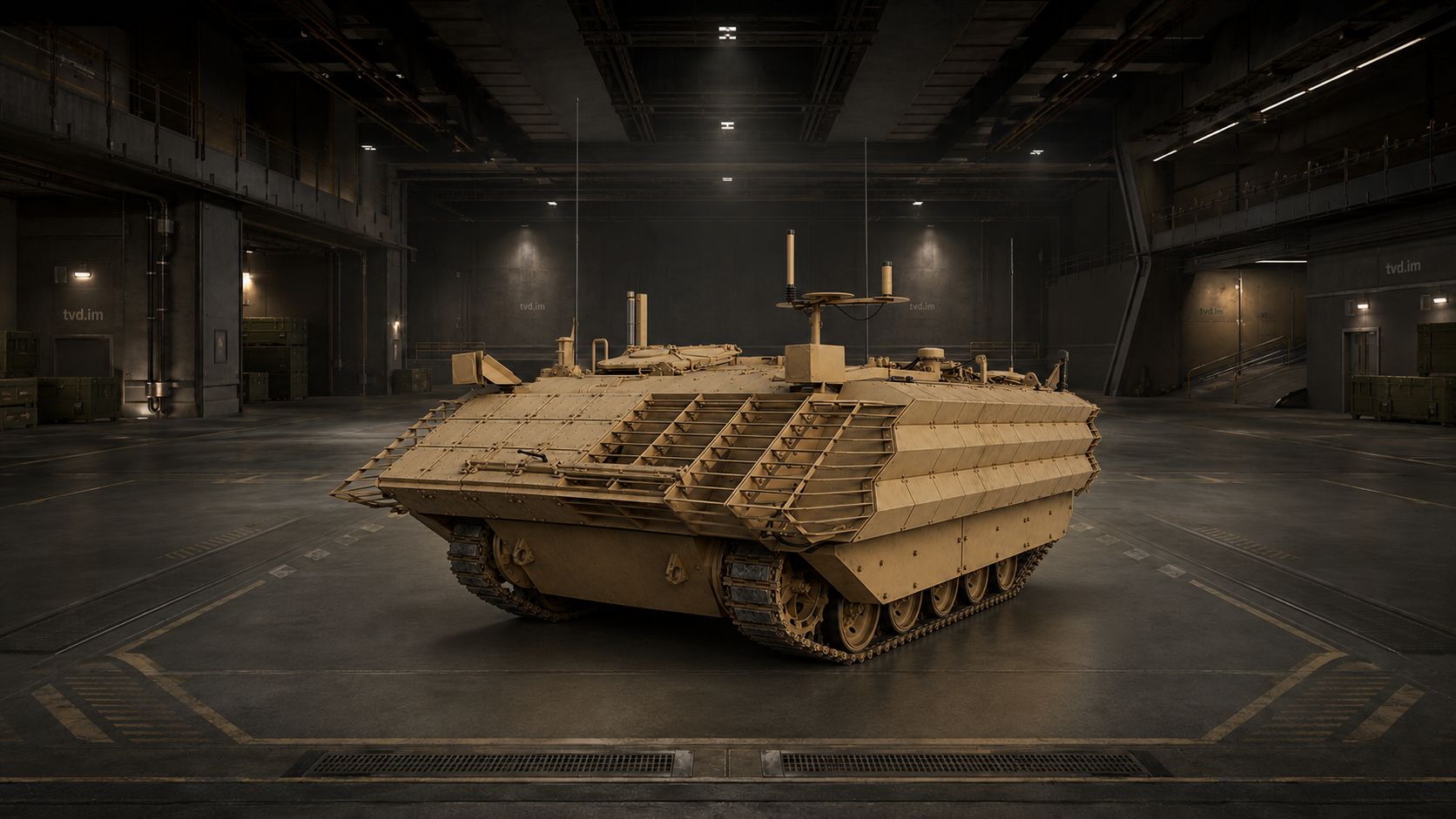
The FV432 Mark 3 Bulldog is an upgraded British tracked armoured personnel carrier from the FV430 family. It was developed from the FV432, which GKN Sankey originally produced for the British Army during the 1960s and early 1970s.
The Bulldog program combined a diesel engine and automatic transmission with improved steering, braking, protection, and crew equipment. The modernization allowed the British Army to retain the adaptable FV432 platform for troop transport and specialist support duties.
Bulldog vehicles have served with British units in several configurations, including troop carrier, command, mortar, ambulance, and recovery roles. Their continued use has reduced the demand placed on larger tracked vehicles such as Warrior.
Production of the original FV432 began in 1962. The vehicle entered British Army service during the 1960s and became the most common member of the FV430 family. Approximately 3,000 FV432 vehicles were produced before manufacturing ended in 1971.
The British Army initially planned to replace the FV432 with newer vehicles, including Warrior and members of the CVR(T) family. However, the availability and adaptable internal layout of the FV432 made modernization practical. The Mark 3 upgrade appeared from 2002 and received the Bulldog name.
Requirements generated by operations in Iraq and Afghanistan increased the need for protected tracked vehicles. In 2006, the British Ministry of Defence ordered additional Bulldog conversions under a force-protection initiative. BAE Systems Land Systems carried out work with the Army Base Repair Organisation, while later completion work involved British Army maintenance personnel in Iraq.
The upgraded vehicles entered operational use in Iraq in 2007. Improvements included a new powertrain, revised steering and braking equipment, additional protection, and equipment intended to improve operation in hot conditions.
Design
Bulldog retains the conventional FV432 tracked layout. The engine is installed at the front, with the driver positioned on the right. The commander sits behind the driver, while the rear compartment accommodates passengers or specialist equipment.
A side-hinged rear door provides access to the passenger compartment. The original FV432 arrangement includes folding seats along both sides, allowing the interior to be converted into a flat cargo area. The absence of firing ports reflects British doctrine, under which transported troops normally dismount before fighting.
Mobility
The Mark 3 modernization replaced the earlier powerplant with a six-cylinder diesel engine and automatic transmission. Changes to the steering and braking systems improved control and mobility. The tracked suspension provides cross-country performance, and suitably prepared members of the family can operate in water using their tracks for propulsion.
Protection
The Bulldog upgrade introduced additional armour intended to improve protection against battlefield threats. Sources describing the force-protection program also identify Kevlar-lined plates beneath the hull for improved resistance to improvised explosive devices. Some operational vehicles received an appliqué reactive-armour package for protection against shaped-charge weapons.
Armament and equipment
Bulldog can carry a 7.62 mm general-purpose machine gun and smoke dischargers. Equipment varies according to configuration. Some protected vehicles were fitted with a weapon station that allowed the machine gun to be operated from inside the hull.
The wider FV430 family includes nuclear, biological, and chemical protection equipment. Bulldog improvements also included air conditioning for demanding operational environments.
Operational history
FV432 vehicles served with the British Army for decades before the Bulldog modernization. At their peak during the 1980s, almost 2,500 FV432 vehicles were reportedly in use.
Bulldog vehicles deployed to Iraq during Operation Telic. One documented vehicle, originally built as an FV432 Mark 2/1 in 1969 and later converted to Bulldog standard, served in Basra with the 1st Battalion, Royal Green Jackets in 2007.
In July 2026, media reports stated that two soldiers took a Bulldog from Swinton Barracks at Perham Down and struck parked vehicles. A British Army representative confirmed that two soldiers had been detained and that an investigation had begun. No injuries were reported, and the armoured vehicle was reportedly undamaged.
Variants
- FV432 Mark 3 Bulldog: Upgraded tracked troop carrier with a diesel powertrain, revised controls, and improved protection.
- Command vehicle: Configuration fitted with communications and command equipment.
- 81 mm mortar carrier: Specialist configuration used to transport and operate an infantry mortar.
- Ambulance: Medical evacuation configuration adapted to carry casualties.
- Recovery vehicle: Support configuration used for maintenance and vehicle-recovery duties.
Operators
- United Kingdom: Bulldog vehicles remain associated with the British Army in troop-transport and supporting roles.
Specifications (FV432 Mark 3 Bulldog)
General characteristics
- Type: Tracked armoured personnel carrier
- Crew: Two
- Passengers: Up to ten
- Engine: Six-cylinder diesel engine
- Transmission: Automatic
Performance
- Maximum speed: Approximately 52 km/h (32 mph)
- Maximum range: Approximately 480 km (298 mi)
Armament
- Main armament: 7.62 mm general-purpose machine gun
- Defensive equipment: Smoke dischargers
 Argentina
 Armenia
 Australia
 Austria
 Austria-Hungary
 Belgium
 Brazil
 United States
 Brunei
 Bulgaria
 Canada
 Chile
Chile China
China Colonial America
 Colombia
 Confederate States
 Croatia
 Czech
Czech Denmark
 Egypt
Egypt Finland
 France
 Georgia
 Germany
 German Imperial
 Greece
 Holland
 Hungary
 India
India Indonesia
 Iran
Iran Iraq
Iraq Ireland
 Israel
 Italy
Italy Japan
Japan Japan (1940)
 Jordan
 Kingdom of Italy
 Malaysia
 Mexico
 Myanmar
 Nazi Germany
 Netherlands
 New Zealand
 North Korea
 Norway
 Pakistan
 Peru
Peru Philippines
 Poland
 Portugal
 Prussia
 Romania
 Russia
 Saudi Arabia
 Serbia
 Singapore
 Slovakia
 Slovenia
 South Africa
 South Korea
 Soviet Union
 Spain
Spain Sweden
 Switzerland
 Syria
Syria Taiwan
 Thailand
 Turkey
 UAE
UAE Ukraine
 Vietnam
 Yugoslavia