
History
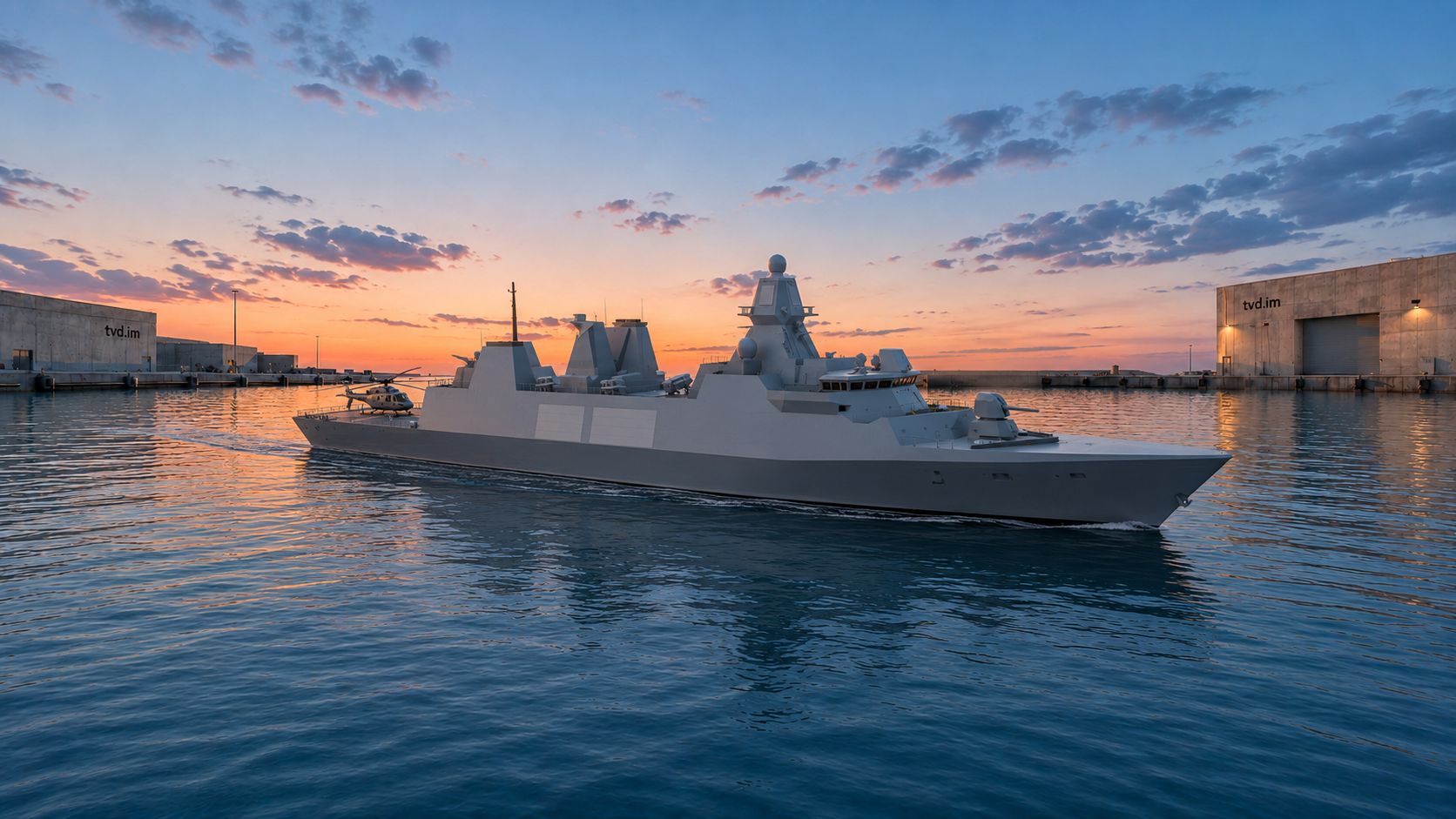
Wicher is the first Project 106 Miecznik-class multirole frigate built for the Polish Navy. PGZ Stocznia Wojenna is constructing the ship in Gdynia through the PGZ-MIECZNIK consortium, using Babcock International's Arrowhead 140 design adapted to Polish requirements.
The frigate is intended for air defense, anti-surface warfare, anti-submarine warfare, maritime security, and operations with NATO naval groups. It will replace part of Poland's aging Oliver Hazard Perry-class frigate force.
Wicher was launched into the Gulf of Gdańsk on 13 August 2026. It is the largest Polish surface combatant launched since the interwar period and the first of three frigates planned under Poland's largest naval shipbuilding program.
Poland's Armaments Agency signed the construction contract with the PGZ-MIECZNIK consortium in 2021. The Arrowhead 140 design was selected in 2022, and Wicher's keel was laid in Gdynia in January 2024. The design is derived from Denmark's Iver Huitfeldt class and also forms the basis of the British Type 31 frigate.
The completed hull left the assembly hall on 9 August 2026. It was moved using 278 self-propelled modular transporters and placed aboard the semi-submersible barge Boabarge 33. The ship was christened Wicher on 12 August and floated off the barge the following day. Accounts of the rollout, christening, and launch were published by MILMAG, Naval Today, and TWZ.
Wicher entered the water without its complete combat system. Outfitting alongside the quay will include installation of the masts, vertical launch system, weapons, radars, electronic warfare equipment, and sonar systems. Shipyard trials, sea trials, qualification, and acceptance testing are to follow. Delivery to the Polish Navy is planned for 2029.
Design
Wicher has an overall length of approximately 138 m (453 ft) and a maximum beam of about 20 m (66 ft). Published maximum-displacement figures range from approximately 7,000 to 7,700 tonnes, reflecting differences in the stated allowance for additional equipment, protection, and hull outfitting.
The Arrowhead 140 platform uses a modular arrangement with substantial internal space for mission systems and future changes. Wicher has a core crew of approximately 120 and accommodation for up to 60 additional personnel, including mission specialists, aviation personnel, or embarked command staff.
Propulsion and performance
The ship uses a combined diesel and diesel propulsion arrangement. Four diesel piston engines drive two controllable-pitch propellers. The stated maximum speed is 28 knots, while the planned range is approximately 8,000 nautical miles.
Combat management and sensors
Thales supplies the TACTICOS combat management system, which integrates the ship's sensors and weapons. The planned radar suite includes the Sea Master 400 Block 2 long-range multifunction radar, a medium-range radar from the NS50 family, and the STIR 1.2 EO Mk 2 fire-control radar.
The underwater sensor suite includes a Thales Blue Hunter hull-mounted sonar and a CAPTAS-2 towed-array sonar. Other planned equipment includes navigation radars, a panoramic electro-optical system, a laser warning system, and a diver-detection sonar. Rohde & Schwarz supplies an electronic warfare system based on its KORA family. Details of the post-launch installation program are described in the Wicher rollout report.
Armament
The planned air-defense installation centers on a 32-cell Mk 41 vertical launch system. It will carry MBDA CAMM surface-to-air missiles, while the longer-range CAMM-MR is planned for future integration. CAMM missiles can be quad-packed, although the ship's actual missile load will depend on its operational configuration.
The principal surface-strike armament is reported as eight Kongsberg Naval Strike Missiles, with provision for eight additional launchers. One secondary report instead identifies RBS-15 missiles, but the more detailed configuration accounts name NSM.
The main gun is a Leonardo OTO Melara 76/62 Super Rapid Strales. It can use DART guided ammunition for defense against missiles, aircraft, and unmanned aerial vehicles. Two Polish-built OSU-35K remote weapon stations with AM-35K 35 mm guns will provide additional close-range defense and can fire programmable ammunition.
For anti-submarine warfare, Wicher is planned to receive two twin launchers for MU90 Impact lightweight torpedoes. The Terma C-Guard system uses eight fixed 130 mm launchers to dispense infrared, radar-frequency, and acoustic countermeasures.
Aviation and boats
The frigate has a large helicopter deck and facilities for maritime helicopters. Rotary-wing unmanned aircraft may also operate from the ship. Four boat bays in the Arrowhead 140 design can accommodate crewed boats or uncrewed surface vessels, although the Polish Navy has not confirmed the specific unmanned systems to be carried.
Program status
Wicher is undergoing outfitting and systems integration following its August 2026 launch. Delivery and commissioning are planned for 2029 after completion of shipyard, sea, qualification, and acceptance trials.
The Miecznik program includes two additional frigates. Construction of Burza had begun by early 2026, with launch planned for 2027 and commissioning in 2030. Huragan was scheduled for keel laying in late 2026, launch in 2028, and commissioning in 2031. The overall program is scheduled for completion by the end of 2031. Poland also holds an option associated with Babcock for five additional ships based on the same design.
The program is intended to replace the Polish Navy's former United States Navy frigates ORP Generał Kazimierz Pułaski and ORP Generał Tadeusz Kościuszko. It also establishes domestic infrastructure and experience for constructing and integrating large surface combatants. Further program context is available from Army Recognition and Polish Radio.
Class ships
- Wicher: First ship of the class; launched on 13 August 2026 and planned for commissioning in 2029.
- Burza: Second ship; launch planned for 2027 and commissioning for 2030.
- Huragan: Third ship; launch planned for 2028 and commissioning for 2031.
Operators
- Poland: The Polish Navy is the intended operator of Wicher and the other two contracted Miecznik-class frigates. Wicher has not yet entered operational service.
Specifications (Wicher)
General characteristics
- Type: Multirole frigate
- Design: Project 106 Miecznik, derived from Arrowhead 140
- Length: Approximately 138 m (453 ft)
- Maximum beam: Approximately 20 m (66 ft)
- Maximum displacement: Approximately 7,000-7,700 tonnes, depending on the published definition and configuration
- Core crew: Approximately 120
- Additional accommodation: Up to 60 personnel
Performance
- Propulsion: Four diesel engines in a combined diesel and diesel arrangement
- Propellers: Two controllable-pitch propellers
- Maximum speed: 28 knots
- Range: Approximately 8,000 nautical miles
Planned armament
- Surface-to-air missiles: CAMM in a 32-cell Mk 41 vertical launch system; future CAMM-MR integration planned
- Anti-ship missiles: Eight Naval Strike Missiles, with provision for eight additional launchers
- Main gun: One 76/62 Super Rapid Strales
- Close-range guns: Two OSU-35K stations with 35 mm AM-35K cannon
- Torpedoes: Two twin launchers for MU90 Impact lightweight torpedoes
- Countermeasures: Terma C-Guard with eight fixed 130 mm launchers
Planned sensors and systems
- Combat management system: Thales TACTICOS
- Long-range radar: Thales Sea Master 400 Block 2
- Medium-range radar: Thales NS50 family
- Fire-control radar: Thales STIR 1.2 EO Mk 2
- Hull sonar: Thales Blue Hunter
- Towed sonar: Thales CAPTAS-2
- Electronic warfare: Rohde & Schwarz KORA-based system
 Argentina
 Armenia
 Australia
 Austria
 Austria-Hungary
 Belgium
 Brazil
 United Kingdom
 United States
 Brunei
 Bulgaria
 Canada
 Chile
Chile China
China Colonial America
 Colombia
 Confederate States
 Croatia
 Czech
Czech Denmark
 Egypt
Egypt Finland
 France
 Georgia
 Germany
 German Imperial
 Greece
 Holland
 Hungary
 India
India Indonesia
 Iran
Iran Iraq
Iraq Ireland
 Israel
 Italy
Italy Japan
Japan Japan (1940)
 Jordan
 Kingdom of Italy
 Malaysia
 Mexico
 Myanmar
 Nazi Germany
 Netherlands
 New Zealand
 North Korea
 Norway
 Pakistan
 Peru
Peru Philippines
 Portugal
 Prussia
 Romania
 Russia
 Saudi Arabia
 Serbia
 Singapore
 Slovakia
 Slovenia
 South Africa
 South Korea
 Soviet Union
 Spain
Spain Sweden
 Switzerland
 Syria
Syria Taiwan
 Thailand
 Turkey
 UAE
UAE Ukraine
 Vietnam
 Yugoslavia