

History
Although the Italians developed and released the first submachine gun during World War I, it was not the typical submachine gun form we know today, as it featured a pair of spade grips, a supporting bipod And both barrels are fed by separate curved 25-round magazines inserted into the top of the frame. Originally issued to the Italian Alpine forces, the gun was used as a light machine gun support weapon - although it had many of the qualities of the now generally accepted submachine gun (pistol cartridge, compact shape, automatic action). This gun is known as "Villar Perosa" because of its origin, but is also known by the more official FIAT - Revelli Modello 1915 because of its manufacturer's marking (FIAT), designer (Revelli) and year of release (1915) . Villar Perosa appeared about two years before the announced German Bergmann MP18 submachine gun, which produced the classic submachine gun shape, making the Italians the first to use a submachine gun-like weapon - although it would be a few years before they would appreciate this.
Weapons They mastered the doctrines and rewrote them to fit their new weapons.
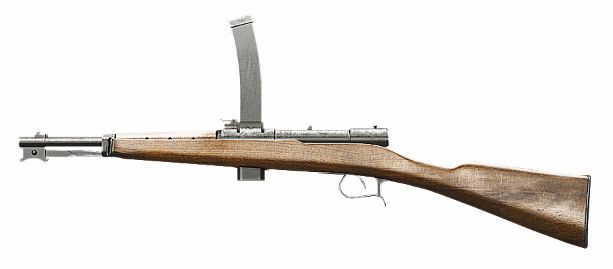
Until competitor Beretta bisected the original double-barreled Villar Perosa into a single-barrel shape, adding its own trigger group and solid one-piece wood frame , this gun finally managed to take on a more defined look and (eventually) role on the battlefield. The Beretta Model 1918 was the result, after it was released and used in a more traditional submachine gun assault role, the original Villar Perosa gun itself was redesigned as a single-barrel OVP.
The original twin-barreled form remained in service until the end of the war - although Italian theories about the type were properly re-evaluated and their use as light support weapons declined.
Like many other weapons of modern warfare, the submachine gun was born in the trenches of World War I to clear out entrenched enemies. This requires a controllable man-portable weapon system and can provide high rates of fire against infantry, who are often armed with long, bayonet-operated service rifles - usually bolt-action rifles. While semi-automatic pistols offered only a partial solution (slow rate of fire and extremely limited range), they proved largely ineffective. Likewise, machine guns of that era were large, bulky tools that required carrying water-cooled tanks and ammunition from one location to another.
Hence, this also proved to be an unlikely solution to the clearing task. This requirement has resulted in an intermediate weapon in which the pistol cartridge provides the controlled, portable firepower and automatic action required for high-capacity attacks.
For Italians, the Villar Perosa delivers all these qualities centered on the 9x19mm Glisenti pistol cartridge. The Glisenti cartridge is a version of the German 9x19mm Parabellum cartridge, but is more powerful and requires a stronger recoil spring.
The Beretta method just took Villar Perosa's design and modified it for the character. With the exception of the added wooden frame and underlying trigger group, all other design features remain the same as the original Villar Perosa design. Beretta also added a foldable bayonet system under the muzzle for extreme close combat.
Magazines are still fed from the top of the frame, while spent cartridges are ejected from the bottom. The trigger assembly is well formed, the grip is easy to reach, and the grip itself is integrated into the stock.
Essentially, the Villar Perosa was given a service rifle-style body for easier management. The vast inventory of Villaperosa weapons was modified in this way, greatly reducing the number of stock weapons.
Over time, the Model 1918 came in two different versions - one with a single trigger and the "Due Grilletti" with two trigger mechanisms to perform semi-automatic and fully automatic firing actions (the original gun is semi-automatic) only automatic). So the version with the trigger is more like a carbine than a true submachine gun.
Specifications for the new gun include a length of 33.5 inches, a barrel length of 12 inches, and a weight of 3.25 kg. The weapon is fed from a detachable 25-round magazine and has a rate of fire of 900 rounds per minute (significantly lower than the original Villar Perosa's 1,200 rpm).
Muzzle velocity is rated at 1,250 feet per second (1,200 fps on the Villar Perosa).
Despite the 1918 pedigree, the 1918 was in use until World War II, when it was still well stocked and legally commissioned by the Italian army that needed it. Actions outside of Italy also fell to Argentina and Albania.
The Model 1918 was redesigned in 1930 and redesigned into a more modern form, creating an offshoot of the Beretta Model 18/30. The main differences include the bottom-fed magazine system and the use of the more popular and readily available German 9x19mm Parabellum pistol cartridge.
Specification
Roles
- Close Combat (CQB) / Personal Protection
Dimensions
1,090 mm (42.91 in)
305 mm (12.01 in)
3.30 kg
Iron.
Performance
Recoil; Semi/Fully Auto Action
1,250 ft/s (381 m/s)
900 rounds per minute
Changes
Model 1918 - Base series designation; one-shot model.
Model 1918 ("due grilletti") - Model with two triggers, allowing semi-automatic and fully automatic fire.
Model 1918/30 - A modernized Model 1918 from 1930; feeds the magazine from below; launches the 9x19mm Parabellum pistol cartridge.
 Argentina
 Armenia
 Australia
 Austria
 Austria-Hungary
 Belgium
 Brazil
 United Kingdom
 United States
 Brunei
 Bulgaria
 Canada
 Chile
Chile China
China Colonial America
 Colombia
 Confederate States
 Croatia
 Czech
Czech Denmark
 Egypt
Egypt Finland
 France
 Georgia
 Germany
 German Imperial
 Greece
 Holland
 Hungary
 India
India Indonesia
 Iran
Iran Iraq
Iraq Ireland
 Israel
 Italy
Italy Japan
Japan Japan (1940)
 Jordan
 Malaysia
 Mexico
 Myanmar
 Nazi Germany
 Netherlands
 New Zealand
 North Korea
 Norway
 Pakistan
 Peru
Peru Philippines
 Poland
 Portugal
 Prussia
 Romania
 Russia
 Saudi Arabia
 Serbia
 Singapore
 Slovakia
 Slovenia
 South Africa
 South Korea
 Soviet Union
 Spain
Spain Sweden
 Switzerland
 Syria
Syria Taiwan
 Thailand
 Turkey
 UAE
UAE Ukraine
 Vietnam
 Yugoslavia