
History
Tanks have been a threat to infantry since the First World War (1914-1918), when they proved the difference between victory and defeat in the final offensive of the conflict. For decades, the military has funded the development of various tank counters that can operate a full range of portable shoulder-fired rockets, missiles and grenades, specialized mines and large-caliber armor-piercing rifles.
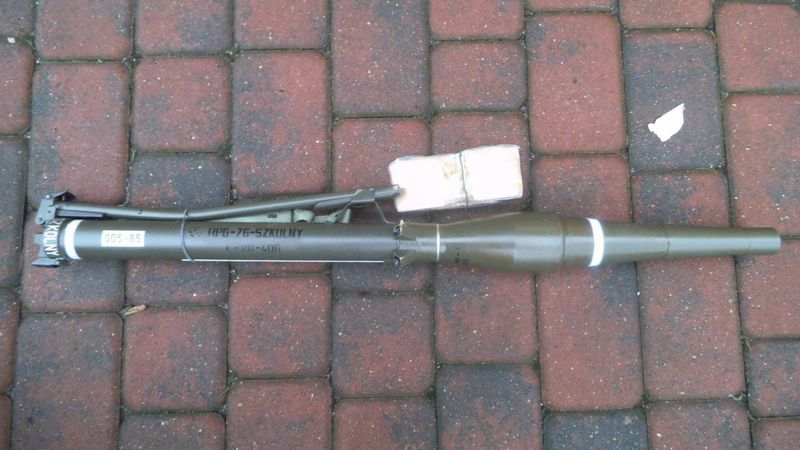
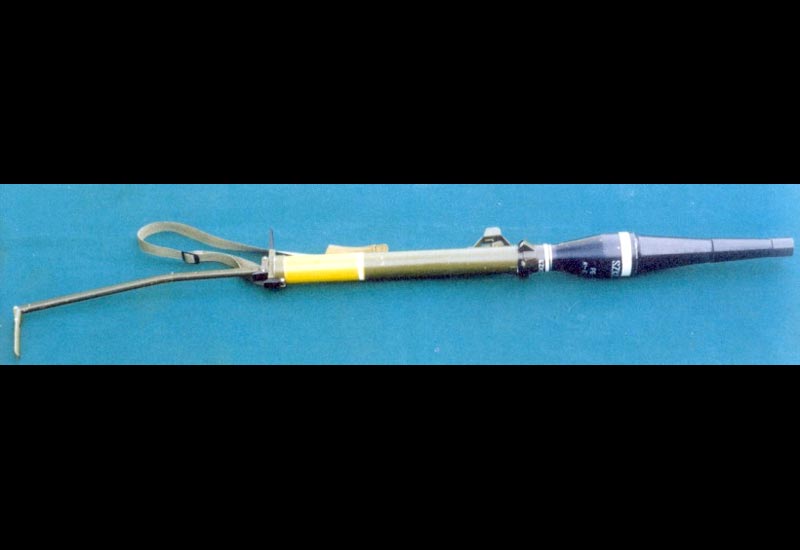
Towards the end of the Cold War in 1985, the Polish Army stockpiled a locally developed solution aimed at equipping its infantry with a highly mobile anti-tank weapon - the RPG-76 "Komar" ("Mosquito").
Design work on the weapon began in the early 1970s with Polish and Bulgarian engineers, followed by a prototype rocket in 1973 (the launcher was introduced in 1980). From 1983 to 1995, about 100,000 weapons ended up in the hands of Polish soldiers through mass production at Precision Works in Niewiadow (Bulgarian participation in the project ended a few years ago). The RPG-70 becomes a single-shot anti-tank grenade launcher solution utilizing an unguided, armor-piercing, rocket-propelled projectile fired from a simple hand-held/shoulder-armored launch tube. The gun weighs 2kg when assembled and has an overall length of 1,190mm when fully extended/open and ready. The caliber of the missile was a useful 68mm at the time and could penetrate up to 260mm of base armor.
The muzzle velocity is 145 meters per second, and the effective range is up to 250 meters. Aiming is carried out by means of an iron assembly attached to the launch tube. After launch, the used launch tube is discarded, making it relatively inexpensive to mass-produce and easy to operate/maintain.
A single soldier can carry multiple RPG-76 packs to duplicate anti-tank capabilities, and while this may seem like a bit of a burden, it turns out it's better than towing a full-sized Soviet-style RPG weapon system with his reloaded rocket-propelled grenade. The smaller profile of the RPG-76 also makes it safer to fire the weapon from the tight confines of an enclosed space, unlike the RPG series which tends to generate a lot of "kickback" in such situations.
Despite the promise of the RPG-76, it came at a time when Western armor protection was rapidly developing to negate the benefits of a portable small-caliber anti-tank solution. This limited the large-scale use of the RPG-76 in the Polish army, mainly reserved for more specialized soldiers such as airborne troops and special forces.
Nonetheless, the weapon had an active position in the Polish military stockpile until the 2000s, and until recently it was used by Polish forces in Afghanistan and Iraq, where its capabilities were considered to be effective against certain types of fortifications, Reliable attack of lightly armored/unarmored vehicles and digging into enemy personnel.
The main modern method of "destroying tanks" in the Polish army lies in the weapons collection, which includes the venerable Carl Gustaf recoilless rifle.
Specification
Roles
- anti-tank/anti-material/breakthrough
- Area Effects
- Professional roles
Dimensions
1,190 mm (46.85 in)
805 mm (31.69 in)
1.78 kg
iron
Performance
Single shot; disposable launch tube
476 feet per second (145 meters per second)
1 time per minute
820 ft (250 m; 273 yd)
Changes
RPG-76 "Komar" - name of the base series
 Argentina
 Armenia
 Australia
 Austria
 Austria-Hungary
 Belgium
 Brazil
 United Kingdom
 United States
 Brunei
 Bulgaria
 Canada
 Chile
Chile China
China Colonial America
 Colombia
 Confederate States
 Croatia
 Czech
Czech Denmark
 Egypt
Egypt Finland
 France
 Georgia
 Germany
 German Imperial
 Greece
 Holland
 Hungary
 India
India Indonesia
 Iran
Iran Iraq
Iraq Ireland
 Israel
 Italy
Italy Japan
Japan Japan (1940)
 Jordan
 Kingdom of Italy
 Malaysia
 Mexico
 Myanmar
 Nazi Germany
 Netherlands
 New Zealand
 North Korea
 Norway
 Pakistan
 Peru
Peru Philippines
 Portugal
 Prussia
 Romania
 Russia
 Saudi Arabia
 Serbia
 Singapore
 Slovakia
 Slovenia
 South Africa
 South Korea
 Soviet Union
 Spain
Spain Sweden
 Switzerland
 Syria
Syria Taiwan
 Thailand
 Turkey
 UAE
UAE Ukraine
 Vietnam
 Yugoslavia