


History
Liore-et-Olivier was a bomber platform developed by France for their air force and later used by their navy. A few were exported, and the type appeared in land-based and seaplane forms throughout its career. The aircraft was launched in the decade before World War II (1939-1945) until the first shots were fired. It entered service in early campaigns, but its technology and performance were nowhere near its modern counterparts, making this family of aircraft a symbol of the early aviation era.
Fewer than a hundred were produced, and the remaining stock fell into the hands of the French Vichy government, which arose after the country fell to the invading Germans in 1940.
Liore-et-Olivier (LeO) is a French-based airline founded in 1912, before the First World War. Founded by Fernand Liore and Henri Olivier, it produced a variety of aircraft and models during the interwar period - from the LeO H. 13 in 1922 to the LeO 45 in 1938. The company was nationalized in 1936 and joined CAMS, Potez, Romano and SPCA SNCASE - "Societe Nationale des Constructions Aeronautiques de Sud-Est".
The company fought until postwar 1957.
In 1927, Liore-et-Olivier tested its LeO 20 night bomber to compete for a new commission from the French Air Ministry, and a total of 311 eventually entered service. A year later, LeO engineers advanced the development of the airframe and delivered a prototype with 2 Hispano-Suiza 12Hb engines to the French Air Force for evaluation.
The aircraft was also accepted for service and serial production, with 96 examples (including prototypes) started.
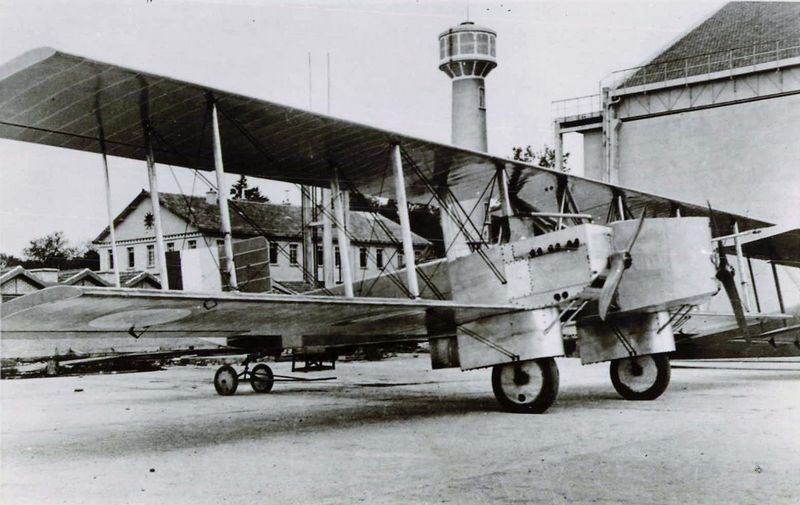
The aircraft's layout is an aviation-age hybrid, while still retaining an open-air cockpit, biplane structure, and fixed landing gear for pilots and gunners. The nose is glazed to view the terrain below, and the defensive machine gun casing is mounted directly above.
The cockpit is located forward of the upper wing assembly, and the pilot sits behind a simple windshield. This location provides an impressive view of the aircraft. A second dorsal gun pod is located behind the wing assembly to protect the aircraft's vulnerable parts. The fuselage is deep, with plate-like sides, and the stern has a rectangular vertical fin with a low horizontal plane. The landing gear retains the same trailing shape as the earlier LeO 20, with large forged wheels on the main legs and a simple tail rail under the tail.
The wing arrangement of the biplane uses parallel three-cabin struts. One of the compartments houses the engine nacelles above the lower wing units and outboard on the sides of the fuselage (one engine per wing). The aircraft's crew consists of four to five people, and defensive armament consists of two to four 7.5mm machine guns. Offensive payloads reach 1,320 pounds of conventional throwing weapons and are proven to provide torpedo carrying and firing support for maritime strike roles.
The first flight of the LeO 25 prototype was in 1928.
In 1929, in order to get better performance from their LeO 25 prototypes, they switched to 575 hp each Hispano-Suiza 12Mbr engines, with a single rebuilt LeO 25 airframe becoming the "LeO 252". The Romanian Air Force purchased this form in one example. The series subsequently evolved into the "LeO 253", based primarily on the LeO 252 model, three of which were produced and used by the Brazilian Air Force. In 1931, the aircraft was modified again, this time with underwing floats instead of the wheels, and the French Navy became "LeO H-254".
Two of these have been completed and are operating in the role of reconnaissance bomber seaplanes. A single airframe was modified as the "LeO H-255" and was equipped with a supercharged Hispano-Suiza 12Xbrs engine, which set multiple altitude/payload records during its flight. The "LeO H-256" is based on the H-254 model, but with a larger wingspan. Only one was built.
The last notable limited production variant became the only "LeO 259" with the Hispano-Suiza 12Ydrs engine.
The main French version became "LeO H-257" and "LeO H-258" branding. In the former, the Hispano-Suiza engine was replaced by the Gnome-Rhone 14Kbrs series engine, and the closed cockpit made the model more modern. This aircraft served as a pre-production model of the later "LeO H-257bis" brand.
At this point, the engines were upgraded to Gnome-Rhone 14Kirs series engines, and the bow gun pods were covered to improve crew comfort and modernity. The underside of the aircraft was also reinforced for added rigidity. About 60 examples of this type were taken over by the French Air Force. In the latter, the "LeO H-258" based on the H-257bis was propelled, albeit with a Hispano-Suiza 12Nbr engine. This was to support the bomber's inventory until the H-257bis hit the market in large numbers.
Purchased about 26 of this brand.
The LeO 25 series of bombers in service with the French Air Force were deployed in a bomber group - Groupe de Bombardment 11/25. The French Navy uses this type on a total of seven Escadrilles.
Apart from service in Brazil and Romania, the LeO 25 was not widely used outside of France, but in practice it proved to be a serviceable, reliable and robust aircraft for its time.
The line provided extensive service in the years leading up to World War II. During the regional instability caused by the Spanish Civil War (1936-1939), they were placed on "neutral patrols". Their ability to be maneuvered for land-based work or sea-based launch/salvage allows tactical flexibility in and around French airspace. The 11/25th Bomber Group was formed on French soil in North Africa.
Although its technology was outdated, its introduction in the early 1930s ensured that some would be usable in combat in the early days of World War II.
The war began on September 1, 1939, when Germany invaded Poland. After the fall of the Netherlands, the Battle of France began. The still viable LeO 25 airframes were pushed into combat roles, which ultimately proved unsuitable. Early engagements revolved around naval patrols in French waters, which led to ground bombardment raids on advancing German forces. However, the plane's size and speed made it an easy target in modern warfare, and the series did not fare well in subsequent sorties.
France ended up in the hands of the invading Germans, and suffered the humiliation and viciousness of years of defeat against a long-time enemy, even decades after the official battle had ended.
At least 50 LeO 25s remained in airworthy condition after the surrender of France, which now falls into the hands of the Axis Vichy government. However, having spent their golden years of flying, the route was restricted to any further serious battlefield work and was instead relegated to training.
The final fuselage was eventually scrapped in 1944.
Specification
Basic
Production
Roles
- Ground Attack
- Anti-ship
- Naval/Navigation
- Reconnaissance (RECCE)
- Education
Dimensions
57.55 ft (17.54 m)
25.5m
6.8m
Weight
5,300 kg
9,560 kg
Performance
Performance
143 mph (230 km/h; 124 knots)
26,247 ft (8,000 m; 4.97 mi)
932 miles (1,500 km; 810 nautical miles)
Armor
Default:
2 or 4 x 7.5mm Dahn machine guns
Up to 1,323 lb bombs or 1 torpedo
Changes
LeO 25 - Prototype night bomber; equipped with Hispano-Suiza 12Hb engines; the only example.
LeO 252 - Bomber; equipped with Hispano-Suiza 12Mbr engines; only example.
LeO 253 - Bomber similar to LeO 252; made 3 copies.
LeO H-254 - Seaplane based on LeO 252; 2 copies made.
LeO H-255 - Racing modified model based on LeO H-254; equipped with supercharged Hispano-Suiza 12Xbrs engine; only example.
LeO H-256 - Based on the larger wingspan LeO H-254; the only example.
LeO H-257 - with Gnome-Rhone 14Kbrs engine; closed cockpit; the only example of the French Navy.
LeO H-257bis - Final production model; based on LeO H-257; closed position of nasal mask; equipped with Gnome-Rhone 14Kirs/Kjrs engines; reinforced airframe; 60 copies made.
LeO H-258 - Similar to H-257bis production model; equipped with Hispano-Suiza 12Nbr engines; used in the French Navy; 26 copies made.
LeO H-259 - with Hispano-Suiza 12Ydrs/Yfrs engine; only example.
 Argentina
 Armenia
 Australia
 Austria
 Austria-Hungary
 Belgium
 Brazil
 United Kingdom
 United States
 Brunei
 Bulgaria
 Canada
 Chile
Chile China
China Colonial America
 Colombia
 Confederate States
 Croatia
 Czech
Czech Denmark
 Egypt
Egypt Finland
 Georgia
 Germany
 German Imperial
 Greece
 Holland
 Hungary
 India
India Indonesia
 Iran
Iran Iraq
Iraq Ireland
 Israel
 Italy
Italy Japan
Japan Japan (1940)
 Jordan
 Kingdom of Italy
 Malaysia
 Mexico
 Myanmar
 Nazi Germany
 Netherlands
 New Zealand
 North Korea
 Norway
 Pakistan
 Peru
Peru Philippines
 Poland
 Portugal
 Prussia
 Romania
 Russia
 Saudi Arabia
 Serbia
 Singapore
 Slovakia
 Slovenia
 South Africa
 South Korea
 Soviet Union
 Spain
Spain Sweden
 Switzerland
 Syria
Syria Taiwan
 Thailand
 Turkey
 UAE
UAE Ukraine
 Vietnam
 Yugoslavia