
History
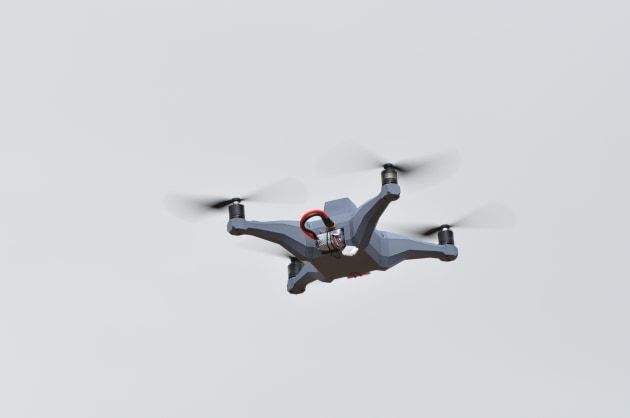
The Boresight BQ-400 and BQ-750 are Australian quadrotor target unmanned aerial vehicles developed for counter-UAS training and system testing. They provide expendable aerial targets that can represent small-drone threats without placing valuable operational aircraft at risk.
The smaller BQ-400 is the established model in the family. The BQ-750 was developed as a larger aircraft with greater endurance and payload capacity for more complex training scenarios.
Both models operate through Boresight's proprietary Ground Control Station. The common control architecture supports mixed-model exercises and the simultaneous operation of multiple target drones.
Boresight was incorporated in 2020 after being separated from the Australian defence company Criterion Solutions. Published company figures indicate that it sold several thousand target drones during the following five years.
A BQ-400 participated in a demonstration exercise at Fort Irwin, California, in March 2024. By March 2026, Boresight reported sales to armed forces and defence-industry customers in Australia, North America, Europe, and other markets. The company described the United States as a central growth market and stated that more than 2,000 of its drones had been exported there.
BQ-750 development
Boresight introduced the BQ-750 in June 2026 in response to demand for a larger target with longer endurance and useful payload capacity. Its shared control system allows customers already using the BQ-400 to add the larger aircraft without adopting a separate operating architecture.
The company announced the BQ-750 Block 2 in July 2026. This version improved speed, endurance, payload capability, and flight characteristics over Block 1. According to the company announcement, initial orders had been delivered and additional orders had been received.
United States production
In July 2026, Boresight leased an 812 m2 manufacturing facility in the Huntsville, Alabama, area. The site was approximately 15 times larger than its previous US facility and was intended to manufacture the BQ-400 and BQ-750 Block 2 closer to American customers.
Initial capacity was planned to exceed 5,000 BQ-400 aircraft per year. Management stated that output could later double or triple if demand continued to grow. Boresight reported shipping approximately 1,200 to 1,500 drones to the United States during 2025 and expected the 2026 volume to more than double.
Design
Airframes
The BQ-400 is a compact quadrotor designed as an affordable and expendable aerial target. The larger BQ-750 provides additional endurance and can carry payloads weighing up to 2 kg.
The BQ-750 uses additive manufacturing and flight-control hardware developed in-house. Its payload capacity permits threat-emulation equipment such as a dropping mechanism, an electronic-warfare package, or a shot-detection unit to be installed for particular exercises.
Control system
The BQ-400 and BQ-750 use the same Ground Control Station and mission-planning environment. Published information states that the system can control as many as ten aircraft simultaneously, including mixed formations of both types. Boresight also reported Australian civil-aviation approval for operations involving up to 20 drones at the same time.
The common architecture supports repeatable flight profiles, progressively more complex exercises, and swarm configurations. This permits counter-UAS crews and equipment developers to encounter several representative targets during one training or evaluation event.
Operational history
The BQ-series aircraft are used as targets for detecting, tracking, jamming, and defeating small UAVs. Their intended roles include operator training, counter-UAS equipment evaluation, threat emulation, and repeatable live exercises.
Boresight has identified military customers from 11 Western armed forces: the Australian Defence Force, British Army, Canadian Armed Forces, New Zealand Defence Force, United States Army, United States Marine Corps, United States Navy, United States Air Force, Royal Netherlands Army, Italian Army, and Finnish Army. Commercial and defence-industry customers named by the company include Northrop Grumman, Anduril, DroneShield, Nammo, and Houbara. These organizations are reported customers, but published information does not establish quantities or service designations for individual users.
Variants
- BQ-400 Raider: Small quadrotor aerial target and the established production model of the family.
- BQ-750 Block 1: Initial version of the larger BQ-750 target drone.
- BQ-750 Block 2: Improved BQ-750 with greater speed, endurance, payload capability, and revised flight characteristics. Initial deliveries were reported in 2026.
Specifications (BQ-400)
General characteristics
- Type: Quadrotor aerial target UAV
- Dimensions: 325 × 325 × 105 mm
- Weight: 1.3 kg
Performance
- Maximum speed: 17.5 m/s, approximately 63 km/h
- Range: 2.5 km
- Endurance: Up to 25 minutes
Specifications (BQ-750 Block 2)
General characteristics
- Type: Medium quadrotor aerial target UAV
- Dimensions: 800 × 800 × 160 mm
- Weight: 3 kg
- Payload capacity: Up to 2 kg
Performance
- Maximum speed: 17.5 m/s, approximately 63 km/h
- Range: At least 2.5 km
- Endurance: More than 35 minutes according to Boresight's Block 2 announcement; another published report gives a maximum of 45 minutes
 Argentina
 Armenia
 Austria
 Austria-Hungary
 Belgium
 Brazil
 United Kingdom
 United States
 Brunei
 Bulgaria
 Canada
 Chile
Chile China
China Colonial America
 Colombia
 Confederate States
 Croatia
 Czech
Czech Denmark
 Egypt
Egypt Finland
 France
 Georgia
 Germany
 German Imperial
 Greece
 Holland
 Hungary
 India
India Indonesia
 Iran
Iran Iraq
Iraq Ireland
 Israel
 Italy
Italy Japan
Japan Japan (1940)
 Jordan
 Kingdom of Italy
 Malaysia
 Mexico
 Myanmar
 Nazi Germany
 Netherlands
 New Zealand
 North Korea
 Norway
 Pakistan
 Peru
Peru Philippines
 Poland
 Portugal
 Prussia
 Romania
 Russia
 Saudi Arabia
 Serbia
 Singapore
 Slovakia
 Slovenia
 South Africa
 South Korea
 Soviet Union
 Spain
Spain Sweden
 Switzerland
 Syria
Syria Taiwan
 Thailand
 Turkey
 UAE
UAE Ukraine
 Vietnam
 Yugoslavia