
History
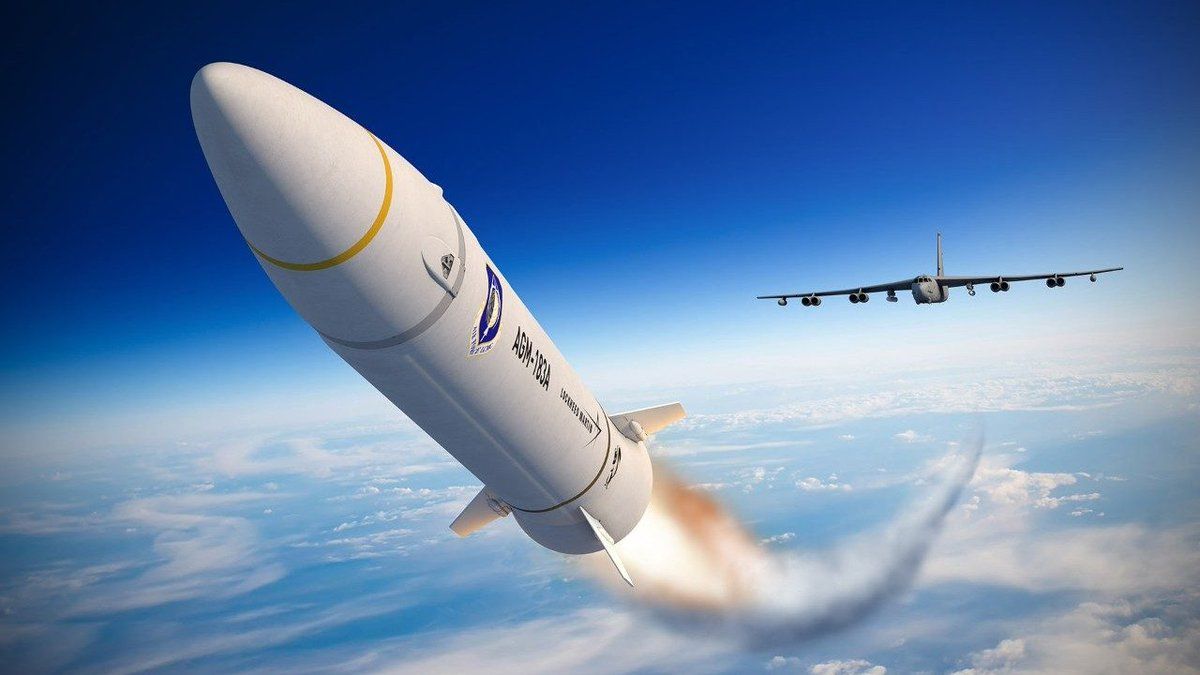
The Next Generation Hypersonic Cruise Missile (NGHCM) is a proposed U.S. Defense Advanced Research Projects Agency effort to design, build, and flight-test a fully integrated air-breathing hypersonic cruise missile demonstrator. DARPA intends the demonstrator to establish a technical foundation for future weapons with substantially improved range, cruise speed, altitude, survivability, or combinations of these characteristics.
The program was publicly outlined in August 2026 through a request for information seeking concepts from industry and emerging technology developers. The notice emphasized that NGHCM was not intended as a routine modernization program. Instead, DARPA sought high-risk technologies and system architectures capable of producing a major improvement over existing hypersonic cruise-missile concepts.
DARPA also identified affordability and manufacturability as central concerns. Earlier scramjet demonstrators had established the feasibility of air-breathing hypersonic flight, but the agency argued that legacy manufacturing approaches could produce weapons that were too expensive and complex for large-scale production in a conflict with a peer adversary.
Development objectives
DARPA divided the NGHCM information request into three principal focus areas. The first covered complete missile architectures and integration approaches. Respondents were asked to examine how improvements in payload, range, speed, and altitude could be balanced against maneuverability, signature, platform capacity, and other factors affecting mission effectiveness and survivability.
The agency did not prescribe a single launch method. Concepts could include tactical aircraft, external or internal carriage by heavy bombers, surface-based vertical launch systems, heavier strategic ground-launch systems, and other deployment arrangements. DefenseScoop also reported that palletized deployment methods were among the potential approaches being considered in the NGHCM concept study.
The second focus area covered critical enabling technologies. DARPA requested information on air-breathing propulsion, high-energy-density fuels, advanced booster systems, high-temperature materials, thermal-management systems, power generation, actuation, and fuel-system technologies. These subsystems were expected to support substantial system-level gains rather than isolated incremental improvements.
The third focus area addressed test and evaluation. Hypersonic testing requires specialized infrastructure and can be costly and time-consuming. DARPA therefore sought methods that could reduce the time, cost, and uncertainty of ground and flight testing. Areas of interest included autonomous telemetry, advanced data assimilation, autonomous capabilities, and new range-safety architectures.
DARPA also asked industry to propose accelerated development schedules leading toward a first flight rather than relying on conventional acquisition timelines. As of the August 2026 information request, however, no specific year for first flight, prototype completion, production, or service entry had been published.
Design
NGHCM remained a concept-development effort in August 2026, so no single production configuration had been selected. DARPA's requirements described an air-breathing hypersonic cruise missile whose architecture would be optimized around improvements in range, cruise speed, altitude, survivability, and manufacturing practicality.
Propulsion and thermal systems
The program builds on previous U.S. demonstrations of scramjet-powered flight. A scramjet is an air-breathing engine in which combustion occurs while airflow through the engine remains supersonic. For NGHCM, DARPA invited proposals involving advanced air-breathing propulsion rather than prescribing a particular engine design.
High-energy-density fuels, advanced boosters, high-temperature materials, and thermal-management systems were identified as possible enabling technologies. These areas are important because prolonged hypersonic flight exposes the vehicle and propulsion system to intense aerodynamic heating while placing demanding requirements on fuel delivery, structures, control systems, and onboard power.
Survivability and maneuverability
DARPA's concept places survivability against advanced integrated air and missile defenses among the principal design considerations. Potential architectures are expected to balance raw performance with midcourse maneuverability, signature reduction, and compatibility with available launch platforms. The agency did not publish a required radar signature or maneuverability figure.
Launch arrangements
The information request allowed a broad range of launch concepts. Possible platforms included tactical fighters, heavy bombers using internal or external carriage, surface-based vertical launch systems, and larger ground-launch systems intended to exploit the range and payload potential of a larger air-breathing vehicle. These were design possibilities rather than confirmed NGHCM variants.
Program status
NGHCM was at the information-gathering and requirements-formulation stage in August 2026. DARPA issued its request for information on August 7, 2026, with industry responses due on October 6. The agency also planned an industry day in Arlington, Virginia, during September 2026.
The responses were intended to help DARPA define formal requirements and determine whether to proceed with a full program. No contractor, production design, test vehicle, flight-test date, procurement quantity, or operational service had been announced in the supplied material.
The effort follows earlier U.S. work on air-breathing hypersonic weapons. DARPA and the U.S. Air Force previously pursued the Hypersonic Air-breathing Weapon Concept, which achieved successful flight demonstrations. The Air Force subsequently advanced the Hypersonic Attack Cruise Missile program with Raytheon. Air & Space Forces described NGHCM as an effort aimed at moving beyond those earlier demonstrators toward a more disruptive combination of performance and producibility in its program report.
Specifications (NGHCM concept)
General characteristics
- Type: Proposed air-breathing hypersonic cruise missile demonstrator
- Program authority: Defense Advanced Research Projects Agency
- Development country: United States
- Potential launch arrangements: Air-launched, surface vertical launch, heavy ground launch, and other proposed deployment concepts
Performance
- Speed: Specific requirement not published; the system is intended to operate in the hypersonic regime
- Range-related test scale: DARPA requested testing approaches applicable to missions and distances from 250 to 2,000 nautical miles (463 to 3,704 km)
- Primary performance objectives: Major improvements in range, cruise speed, altitude, or combinations of these parameters
Technology areas
- Propulsion: Advanced air-breathing propulsion concepts
- Fuel: High-energy-density fuel technologies under consideration
- Boost system: Advanced booster technologies under consideration
- Thermal protection: High-temperature materials and thermal-management technologies under consideration
- Testing: Concepts may include autonomous telemetry, advanced data assimilation, and novel range-safety architectures
Related equipment
- Hypersonic Air-breathing Weapon Concept: Earlier DARPA and U.S. Air Force scramjet-powered technology-demonstration program that helped establish the feasibility of air-breathing hypersonic flight.
- Hypersonic Attack Cruise Missile: U.S. Air Force hypersonic cruise-missile program being developed with Raytheon and representing a separate effort from NGHCM.
 Argentina
 Armenia
 Australia
 Austria
 Austria-Hungary
 Belgium
 Brazil
 United Kingdom
 Brunei
 Bulgaria
 Canada
 Chile
Chile China
China Colonial America
 Colombia
 Confederate States
 Croatia
 Czech
Czech Denmark
 Egypt
Egypt Finland
 France
 Georgia
 Germany
 German Imperial
 Greece
 Holland
 Hungary
 India
India Indonesia
 Iran
Iran Iraq
Iraq Ireland
 Israel
 Italy
Italy Japan
Japan Japan (1940)
 Jordan
 Kingdom of Italy
 Malaysia
 Mexico
 Myanmar
 Nazi Germany
 Netherlands
 New Zealand
 North Korea
 Norway
 Pakistan
 Peru
Peru Philippines
 Poland
 Portugal
 Prussia
 Romania
 Russia
 Saudi Arabia
 Serbia
 Singapore
 Slovakia
 Slovenia
 South Africa
 South Korea
 Soviet Union
 Spain
Spain Sweden
 Switzerland
 Syria
Syria Taiwan
 Thailand
 Turkey
 UAE
UAE Ukraine
 Vietnam
 Yugoslavia