History
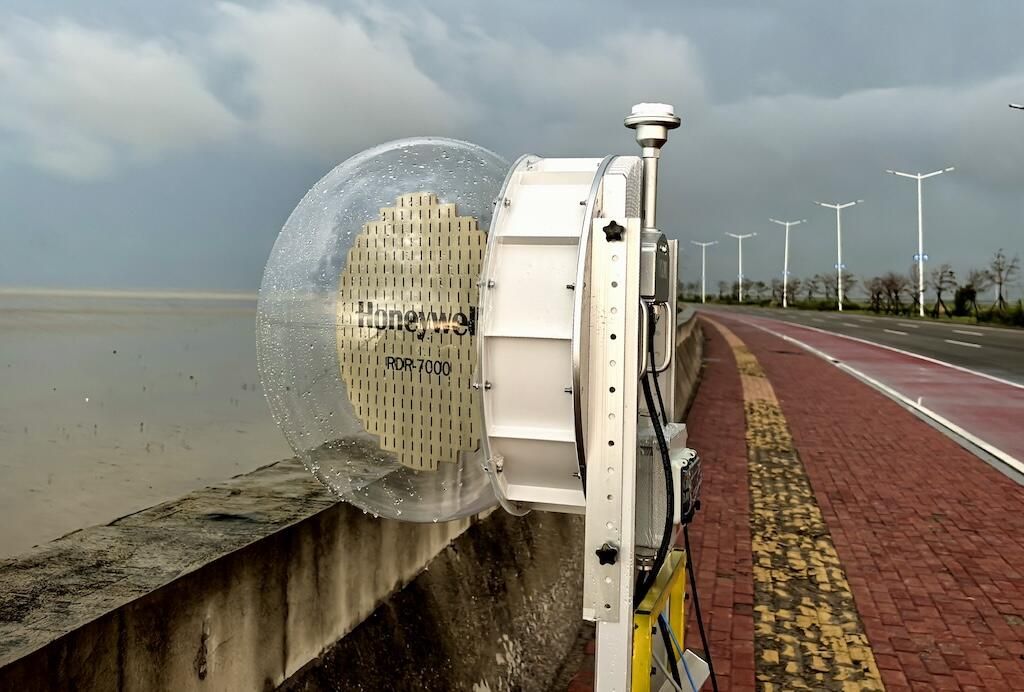
Honeywell Aerospace's IntuVue RDR-7000 is a weather radar system selected in 2026 for installation across Omni Taxi Aereo's fleet of 33 Leonardo AW139 helicopters. The fleetwide upgrade is intended to improve weather awareness during offshore operations, where rapidly changing conditions and limited diversion options can increase operational demands.
The RDR-7000 continuously scans the atmosphere and builds a three-dimensional picture of weather along the aircraft's flight path. Honeywell states that the system can identify hazards including turbulence, hail, lightning and wind shear while operating automatically to reduce the amount of radar adjustment required from the flight crew.
Omni Taxi Aereo selected the system for every AW139 in its fleet rather than only a subset of the helicopters. The selection was announced by Honeywell Aerospace in August 2026 and was reported by HeliHub, RotorHub, Military Aerospace and Vertical.
Fleetwide AW139 selection
Omni Taxi Aereo uses helicopters to transport passengers and equipment to offshore energy platforms. In August 2026, Honeywell announced that Omni had selected the RDR-7000 for all 33 of its Leonardo AW139 helicopters. The installation program was presented as a fleetwide avionics upgrade intended to provide consistent weather-monitoring capability across the operator's AW139 aircraft.
The supplied material describes the installation as an announced upgrade and does not provide a completion date for the fleet conversion. The 2026 date therefore represents the supported year of the planned AW139 integration program rather than confirmation that all 33 installations had already been completed.
Design
Three-dimensional weather scanning
The IntuVue RDR-7000 uses a three-dimensional volumetric scanning approach. Instead of presenting only a limited view of precipitation directly ahead, the system continuously scans the atmosphere and develops a broader picture of weather conditions along the flight path. Honeywell states that this approach allows the radar to distinguish between overlapping storm systems and to reveal hazardous weather that may be obscured by a nearer storm front.
Under optimal conditions, the radar can scan to a distance of up to 320 nautical miles. The supplied reports note that practical detection range varies with atmospheric conditions and aircraft altitude.
Hazard detection
The radar is intended to provide earlier warning of hazardous weather. Honeywell identifies turbulence, hail, lightning and wind shear among the conditions that the RDR-7000 can detect or present to the crew. This information is particularly relevant to offshore helicopter operations because weather may change rapidly while suitable diversion locations are limited.
Honeywell also reported that independent testing showed the system could predict turbulence with up to 93 percent accuracy. This figure refers to testing cited by the manufacturer and should not be interpreted as a guaranteed detection rate in every operating condition.
Automation and software
The RDR-7000 operates automatically and does not require pilots to continually adjust radar settings during flight. The design is intended to reduce workload by allowing crews to concentrate on aircraft operation and the developing weather picture rather than repeated manual radar management.
Software features can also be enabled remotely through over-the-air updates as they become available. Honeywell presents this capability as a way to introduce additional functions without requiring extended aircraft downtime solely for software installation.
Program status
As announced in August 2026, Omni Taxi Aereo planned to equip its complete fleet of 33 Leonardo AW139 helicopters with Honeywell's IntuVue RDR-7000. The supplied sources consistently describe the program as a fleetwide selection or upgrade. They do not provide an installation schedule, the number of helicopters already modified, or a date for completion of all 33 aircraft.
The AW139s involved are used for offshore missions, including transportation of passengers and equipment to energy platforms. The radar installation is intended to give crews earlier and clearer information about hazardous weather during these operations.
Specifications (RDR-7000 for AW139)
Weather sensing
- Scanning method: Three-dimensional volumetric weather scanning.
- Maximum stated scan distance: Up to 320 nautical miles under optimal conditions.
- Detected or displayed hazards: Turbulence, hail, lightning and wind shear.
- Turbulence prediction: Up to 93 percent accuracy in independent testing cited by Honeywell.
Operation
- Radar control: Automatic operation without continual pilot adjustment.
- Weather presentation: Real-time picture of conditions along the flight path, including the ability to distinguish overlapping storm systems.
- Software: Supports remote enabling of software features through over-the-air updates.
AW139 installation program
- Selected operator: Omni Taxi Aereo.
- Aircraft type: Leonardo AW139.
- Planned fleet coverage: 33 helicopters.
- Mission emphasis: Offshore helicopter operations.
 Argentina
 Armenia
 Australia
 Austria
 Austria-Hungary
 Belgium
 Brazil
 United Kingdom
 United States
 Brunei
 Bulgaria
 Canada
 Chile
Chile China
China Colonial America
 Colombia
 Confederate States
 Croatia
 Czech
Czech Denmark
 Egypt
Egypt Finland
 France
 Georgia
 Germany
 German Imperial
 Greece
 Holland
 Hungary
 India
India Indonesia
 Iran
Iran Iraq
Iraq Ireland
 Israel
 Italy
Italy Japan
Japan Japan (1940)
 Jordan
 Kingdom of Italy
 Malaysia
 Mexico
 Myanmar
 Nazi Germany
 Netherlands
 New Zealand
 North Korea
 Norway
 Pakistan
 Peru
Peru Philippines
 Poland
 Portugal
 Prussia
 Romania
 Russia
 Saudi Arabia
 Serbia
 Singapore
 Slovakia
 Slovenia
 South Africa
 South Korea
 Soviet Union
 Spain
Spain Sweden
 Switzerland
 Syria
Syria Taiwan
 Thailand
 Turkey
 UAE
UAE Ukraine
 Vietnam
 Yugoslavia