
History
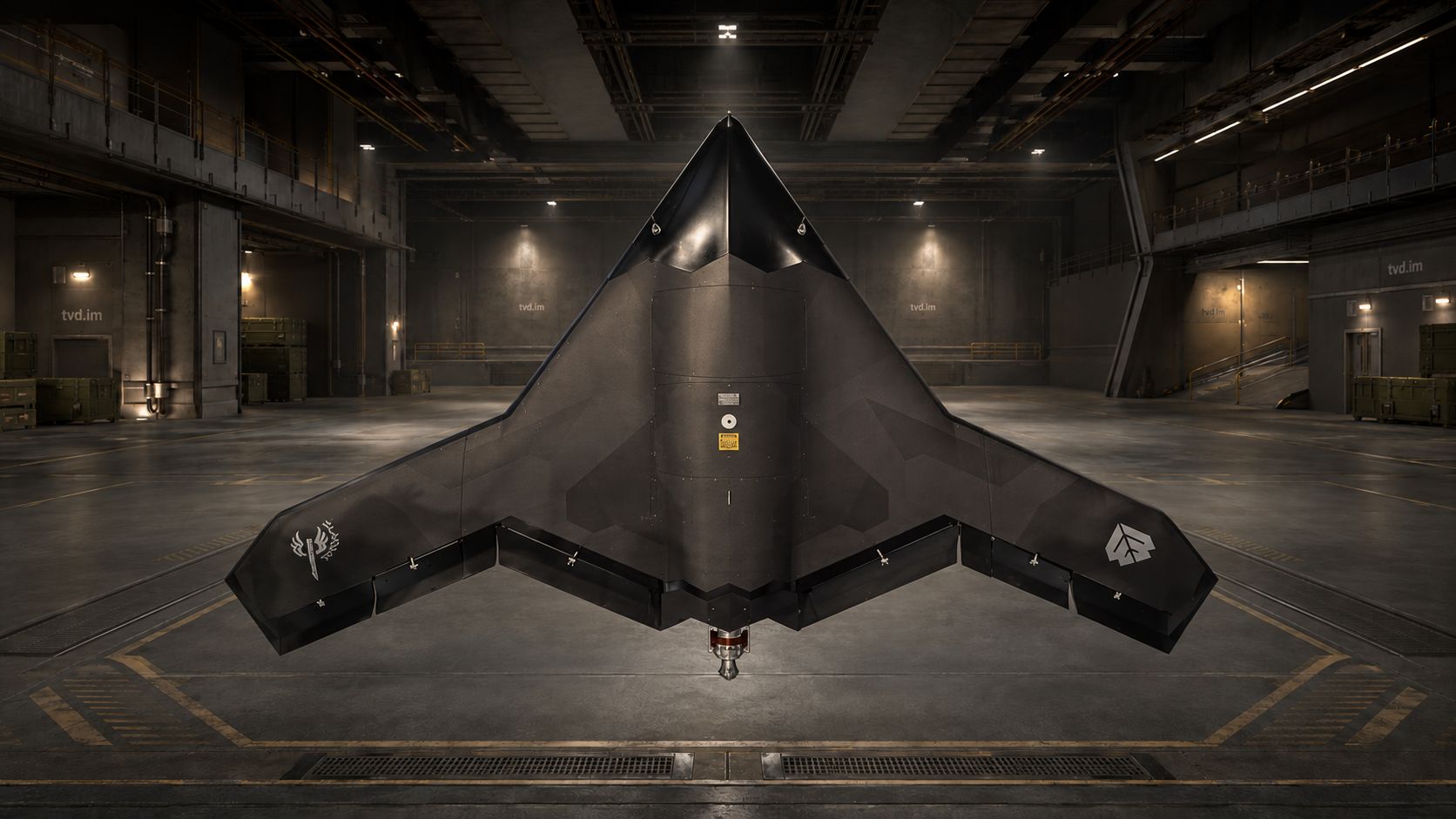
The WB Group Gladius 2 is a Polish jet-powered strike unmanned aerial vehicle developed for long-range attacks as part of the wider Gladius reconnaissance-strike system. The aircraft was publicly presented by WB Group at MSPO 2026 in Kielce, Poland.
Gladius 2 combines a flying-wing airframe, a Polish-made turbojet engine and a modular warhead of about 30 kg. Published range figures differ: reporting from the MSPO 2026 presentation gave approximately 250 km, while information released before the exhibition described an approximate range of 300 km.
The aircraft is intended to operate with existing elements of the Gladius system rather than as an isolated weapon. It can use containerized or vehicle-mounted launch arrangements and is integrated with the reconnaissance and command architecture associated with Gladius.
Development
The Gladius 2 program has roots in Polish work on longer-range strike-reconnaissance unmanned aircraft. In September 2022, the Polish Armaments Agency signed a PLN 50 million contract with WB Group covering Gladius 2 strike-reconnaissance UAS development. According to information reported at the time, the work concerned systems with ranges exceeding 100 km and included the development of several strike-reconnaissance prototypes as loitering munitions. Development work was scheduled for completion by 2026.
Before MSPO 2026, WB Group disclosed details of a new jet-powered Gladius 2 aircraft designed for substantially greater range than earlier Gladius strike systems. Reports based on company information described an approximate range of 300 km, reduced radar and infrared signatures, and compatibility with launch infrastructure associated with the existing Gladius system.
WB Group publicly displayed Gladius 2 at MSPO 2026 in Kielce in September 2026. Reporting from the exhibition described a range of approximately 250 km, endurance exceeding one hour and a maximum takeoff mass of about 100 kg. The Polish Armed Forces had reportedly already ordered the system, and low-rate initial production was underway.
Design
Airframe
Gladius 2 uses a flying-wing configuration with swept wings and a relatively flat lifting body. The design is intended to reduce radar cross-section and infrared signature. Available information describes reduced detectability rather than establishing that the aircraft meets a particular formal definition of stealth.
The maximum takeoff mass is approximately 100 kg. The airframe is dimensioned to remain compatible with launch equipment associated with the existing Gladius system.
Propulsion and performance
The UAV is powered by a Polish-made turbojet engine. Its reported cruising speed exceeds 150 km/h, while other reporting describes the aircraft as capable of high-subsonic flight without giving a confirmed maximum speed.
Information released during MSPO 2026 gave a flight range of approximately 250 km and endurance of more than one hour. Earlier pre-exhibition reporting, citing details disclosed by WB Group, gave an approximate range of 300 km. The difference may reflect different configurations or reporting stages, but the available sources do not provide a definitive explanation.
The normal operating altitude is reported as 500 to 1,500 m above ground level, with a maximum altitude of 5,000 m above sea level. Reporting around MSPO also described the aircraft as suitable for low-altitude flight.
Launch and system integration
Gladius 2 can be launched from a transport-launch container or from a mobile launcher vehicle. Reports also describe rocket-assisted launch from existing Gladius launchers, with some configurations able to operate without the launch booster. The system can reportedly be brought to combat-ready status within five minutes.
The aircraft is integrated with the wider Gladius reconnaissance-strike architecture. Existing Gladius units connect reconnaissance aircraft, strike weapons, launchers and command elements through WB Group's TOPAZ combat management system, allowing reconnaissance and targeting information to support long-range engagements.
Warhead
Gladius 2 carries a modular warhead weighing approximately 30 kg. Reported options include an HEDP multipurpose warhead and a TB thermobaric warhead.
Program status
As of September 2026, Gladius 2 had been publicly displayed at MSPO 2026 and was reported to be in low-rate initial production. The Polish Armed Forces had reportedly ordered the system. Public information available from the exhibition did not establish that the new jet-powered Gladius 2 had reached full-rate production or confirmed operational service.
WB Group has also stated that additional Gladius variants are being developed, although detailed information on those versions has not been disclosed.
Operators
- Poland – The Polish Armed Forces have reportedly ordered the Gladius 2 system. Low-rate initial production was reported in September 2026.
Specifications (Gladius 2)
General characteristics
- Type: Jet-powered strike unmanned aerial vehicle
- Configuration: Flying wing
- Maximum takeoff mass: approximately 100 kg
- Warhead: approximately 30 kg, modular
- Warhead options: HEDP multipurpose or TB thermobaric
- Powerplant: Polish-made turbojet engine
Performance
- Range: approximately 250 km according to MSPO 2026 reporting; approximately 300 km in earlier pre-exhibition reporting based on WB Group disclosures
- Endurance: more than 1 hour
- Cruise speed: more than 150 km/h
- Operating altitude: 500-1,500 m above ground level
- Maximum altitude: 5,000 m above sea level
Launch
- Launch methods: transport-launch container or mobile launcher vehicle
- Combat-ready time: no more than 5 minutes
Technical details reported around the public unveiling were summarized by Militarnyi, while pre-exhibition reporting citing WB Group information gave a longer approximate range in AdriaDefense. Earlier program development and the 2022 Gladius 2 contract were reported by Janes.
 Argentina
 Armenia
 Australia
 Austria
 Austria-Hungary
 Belgium
 Brazil
 United Kingdom
 United States
 Brunei
 Bulgaria
 Canada
 Chile
Chile China
China Colonial America
 Colombia
 Confederate States
 Croatia
 Czech
Czech Denmark
 Egypt
Egypt Finland
 France
 Georgia
 Germany
 German Imperial
 Greece
 Holland
 Hungary
 India
India Indonesia
 Iran
Iran Iraq
Iraq Ireland
 Israel
 Italy
Italy Japan
Japan Japan (1940)
 Jordan
 Kingdom of Italy
 Malaysia
 Mexico
 Myanmar
 Nazi Germany
 Netherlands
 New Zealand
 North Korea
 Norway
 Pakistan
 Peru
Peru Philippines
 Portugal
 Prussia
 Romania
 Russia
 Saudi Arabia
 Serbia
 Singapore
 Slovakia
 Slovenia
 South Africa
 South Korea
 Soviet Union
 Spain
Spain Sweden
 Switzerland
 Syria
Syria Taiwan
 Thailand
 Turkey
 UAE
UAE Ukraine
 Vietnam
 Yugoslavia