
History
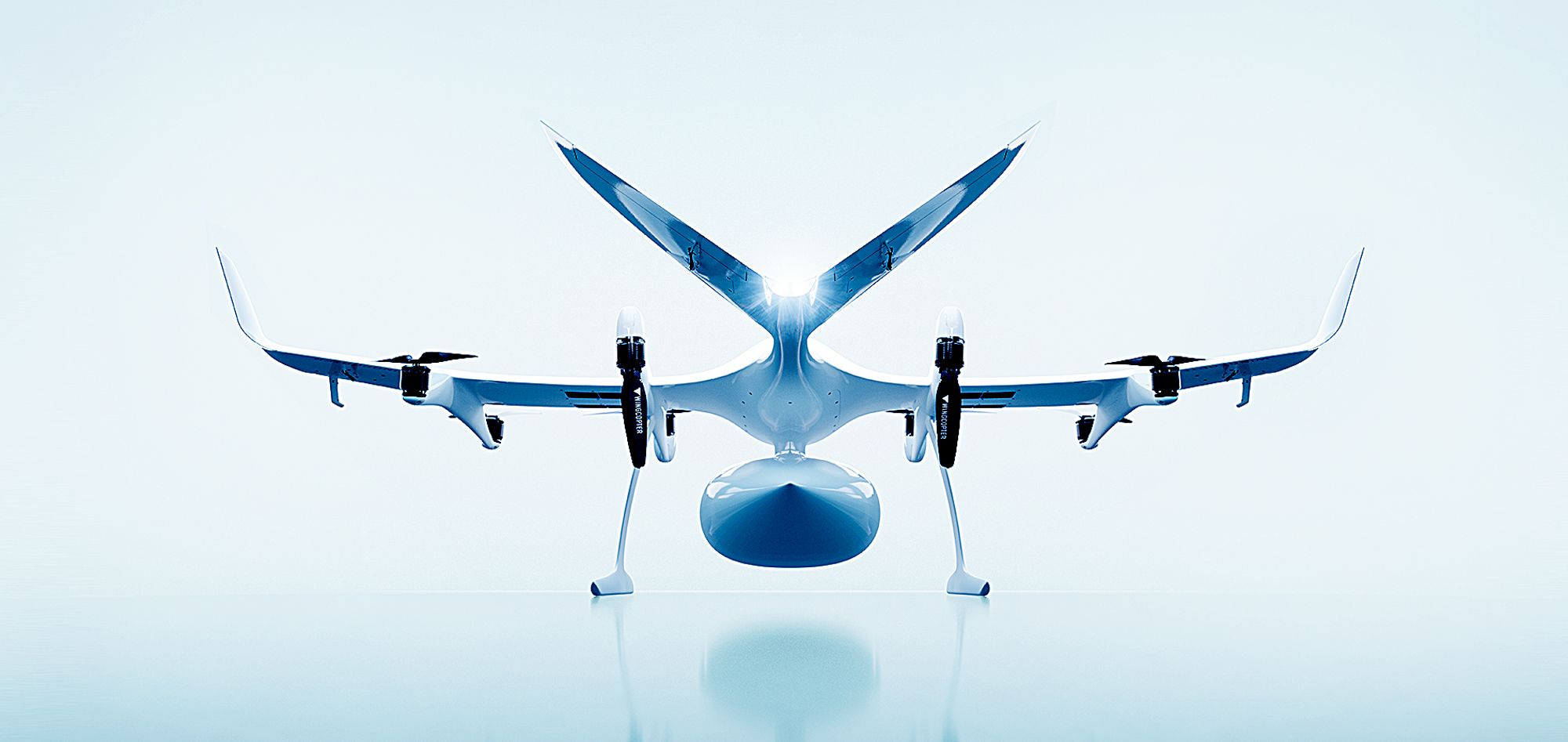
The Wingcopter 262 is a German all-electric fixed-wing vertical take-off and landing unmanned aircraft developed for tactical reconnaissance and persistent aerial surveillance. Wingcopter introduced the aircraft on 14 September 2026 for defence and security users.
The aircraft combines a tactical range of up to 150 km with a flight endurance of up to six hours. Its maximum take-off weight is 10 kg, while its 262 cm wingspan gives the Wingcopter 262 its designation.
The platform uses Wingcopter's tilt-rotor architecture to combine vertical take-off and landing with efficient fixed-wing cruise flight. It is designed for rapid deployment without dedicated launch infrastructure and can be prepared for a mission by one operator within minutes.
Development and introduction
The Wingcopter 262 draws on more than ten years of Wingcopter experience in developing, producing, and operating unmanned aircraft systems. The company created the aircraft specifically for tactical reconnaissance missions as part of the expansion of its activities into defence and security through Wingcopter Security & Defence.
Wingcopter formally introduced the Wingcopter 262 in Düsseldorf on 14 September 2026. The manufacturer's launch announcement described the aircraft as a modular reconnaissance platform intended to reach distant operating areas and maintain aerial surveillance for extended periods.
Wingcopter is also cooperating with Ukrainian company TAF Industries under the Build with Ukraine initiative. The cooperation covers mass production of Ukrainian reconnaissance drones and making the Wingcopter 262 available to Ukraine. The supplied sources do not confirm that Ukraine had placed the Wingcopter 262 into operational service at the time of its introduction.
Design
Airframe and propulsion
The Wingcopter 262 is a fixed-wing VTOL aircraft with an all-electric propulsion system and a tilt-rotor configuration. Its 262 cm wingspan is the origin of the model number. Vertical take-off and landing remove the need for a runway or separate launch system, while fixed-wing cruise supports longer-range flight.
The aircraft has a modular configuration intended to reduce preparation and turnaround time. Quick-swap batteries allow the power packs to be replaced rapidly between missions. Wingcopter states that a single operator can make the aircraft mission-ready within minutes.
Sensors and navigation
The reconnaissance system integrates AI-enabled electro-optical and infrared camera systems. It also includes data and video links for transmitting mission information.
The aircraft incorporates positioning technology tested under operational conditions in Ukraine. Wingcopter also describes the navigation system as resilient and capable of supporting operation in environments where GNSS satellite navigation is unavailable or denied.
Systems integration
The Wingcopter 262 is designed for integration with the open architectures of existing battle management systems. This allows the aircraft and its reconnaissance data to be incorporated into wider command and information networks where compatible interfaces are available.
Program status
The Wingcopter 262 was publicly introduced in September 2026 as a defence and security reconnaissance platform. Available source material describes cooperation intended to provide Ukraine with access to the aircraft, but does not establish confirmed operational deployment, procurement quantities, or a service-entry date.
The partnership between Wingcopter and TAF Industries is linked to the Build with Ukraine initiative. In addition to possible access to the Wingcopter 262, the cooperation concerns serial production of Ukrainian reconnaissance unmanned aircraft.
Specifications (Wingcopter 262)
General characteristics
- Type: all-electric fixed-wing VTOL reconnaissance unmanned aircraft
- Maximum take-off weight: 10 kg (22 lb)
- Wingspan: 2.62 m (103 in)
- Propulsion: all-electric tilt-rotor system
- Take-off and landing: vertical
Performance
- Tactical range: up to 150 km (93 mi)
- Flight endurance: up to six hours
Mission equipment
- Sensors: AI-enabled electro-optical and infrared camera systems
- Communications: data and video links
- Navigation: resilient navigation designed to support operation in GNSS-denied environments
- Integration: designed for open-architecture battle management systems
 Argentina
 Armenia
 Australia
 Austria
 Austria-Hungary
 Belgium
 Brazil
 United Kingdom
 United States
 Brunei
 Bulgaria
 Canada
 Chile
Chile China
China Colonial America
 Colombia
 Confederate States
 Croatia
 Czech
Czech Denmark
 Egypt
Egypt Finland
 France
 Georgia
 German Imperial
 Greece
 Holland
 Hungary
 India
India Indonesia
 Iran
Iran Iraq
Iraq Ireland
 Israel
 Italy
Italy Japan
Japan Japan (1940)
 Jordan
 Kingdom of Italy
 Malaysia
 Mexico
 Myanmar
 Nazi Germany
 Netherlands
 New Zealand
 North Korea
 Norway
 Pakistan
 Peru
Peru Philippines
 Poland
 Portugal
 Prussia
 Romania
 Russia
 Saudi Arabia
 Serbia
 Singapore
 Slovakia
 Slovenia
 South Africa
 South Korea
 Soviet Union
 Spain
Spain Sweden
 Switzerland
 Syria
Syria Taiwan
 Thailand
 Turkey
 UAE
UAE Ukraine
 Vietnam
 Yugoslavia