
History
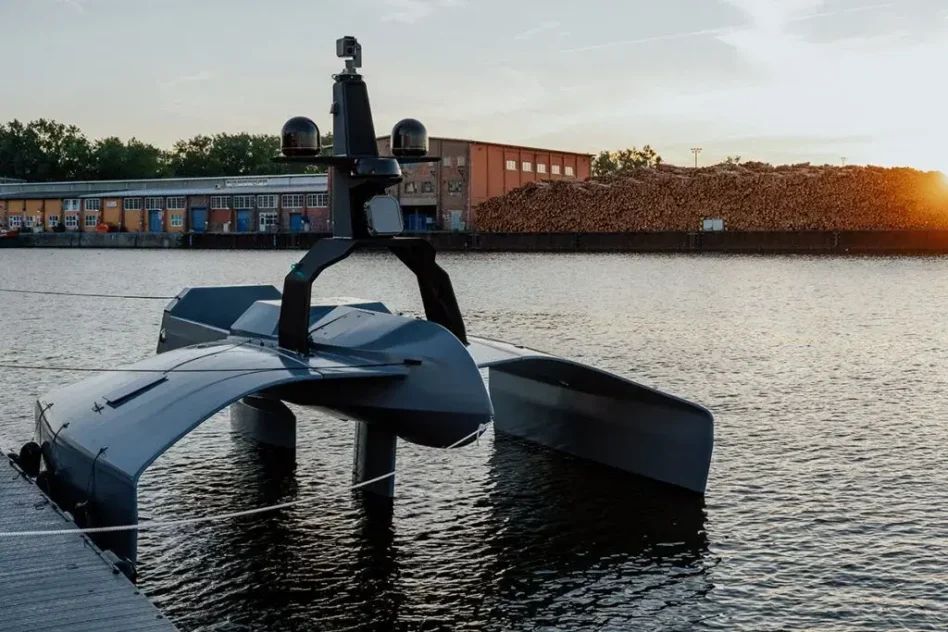
Quantum Systems Seavex is an autonomous unmanned surface vehicle developed for persistent maritime intelligence, surveillance and reconnaissance missions. Quantum Systems also designed the platform for critical-infrastructure protection and Counter-UAS operations.
The German company introduced Seavex on 14 September 2026 in Sesimbra, Portugal, during a NATO maritime exercise. The presentation marked Quantum Systems' expansion from unmanned air and land systems into the maritime domain.
Seavex is integrated into the MOSAIC UXS software architecture and can operate alongside other unmanned systems. Quantum Systems developed it as both a surveillance platform and a maritime mission hub capable of supporting aerial and underwater drones.
Development and launch
Quantum Systems announced Seavex together with the Subvex unmanned underwater vehicle. According to the company's launch announcement, both systems entered sea trials in Portugal to test and validate their capabilities in an operational maritime environment.
The company presented the maritime expansion as an extension of its existing multi-domain unmanned-system architecture. Seavex and Subvex use MOSAIC UXS as a common software framework so information from air, surface and underwater platforms can be combined into a shared operational picture.
Quantum Systems identified persistent surveillance, protection of critical maritime infrastructure, maritime border security, anti-submarine surveillance and blue-water surveillance among the missions supported by the combined Seavex and Subvex system. Seavex itself is the surface component and provides long-duration sensing as well as support for other unmanned platforms.
Design
Platform and autonomy
Seavex is an unmanned surface vehicle with a displacement of 4,500 kg. It measures 8.5 m by 6.5 m and has a draft of 1.8 m. Quantum Systems states an endurance of up to two months and a payload capacity of up to 400 kg.
The platform is designed around a modular architecture with two principal mission configurations: persistent maritime surveillance and active Counter-UAS protection. Both configurations share the same autonomous platform and are integrated through MOSAIC UXS.
Surveillance systems
The surveillance configuration combines radar and electro-optical sensors with onboard artificial-intelligence processing. The manufacturer's Seavex specifications list a medium-range multi-sensor electro-optical tracker with laser rangefinder, an anti-drone 4D radar with a range of about 28 km (15 nmi), a 2D surveillance radar with a range of about 89 km (48 nmi), and color and FLIR cameras. Visual odometry is also listed among the platform's sensing capabilities.
Quantum Systems describes Seavex as a persistent maritime ISR platform capable of operating as part of a distributed autonomous network. Multiple Seavex vehicles can work with aerial drones and Subvex underwater vehicles while contributing sensor information to a common operational picture.
Unmanned-system integration
For aerial operations, Seavex can use an integrated DronePort for autonomous UAV launch and recovery. This allows aerial reconnaissance assets to operate from the surface platform and extend surveillance beyond the immediate sensor horizon of the vessel.
Seavex can also support underwater unmanned vehicles. Quantum Systems states that it can dock with UUVs, recharge them and retrieve mission data. The paired Subvex vehicle is intended to extend reconnaissance below the surface and into deep-water areas.
Counter-UAS equipment
In its Counter-UAS configuration, Seavex combines air-threat detection and tracking with an integrated interceptor-drone launcher. Quantum Systems describes this configuration as supporting a detect-to-intercept workflow for protection of critical maritime infrastructure, naval assets and operational areas.
The manufacturer also describes coordinated operation by multiple Seavex platforms, allowing detection, tracking and response functions to be distributed over wider maritime areas. These capabilities were presented as part of the system introduced for testing in 2026 rather than as evidence of established operational service.
Program status
Seavex was publicly introduced on 14 September 2026 and was scheduled to test and validate its capabilities during sea trials associated with the NATO exercise in Portugal. The available source material does not identify a production contract, operational service entry, confirmed operator or delivered fleet.
Mission configurations
- Persistent Maritime Surveillance: ISR configuration using radar, electro-optical and infrared sensors, onboard AI processing, autonomous UAV launch and recovery, and integration with other Seavex and Subvex platforms.
- Counter-UAS: Active-protection configuration using integrated radar systems, aerial-threat tracking and an interceptor-drone launcher to support detection and interception of aerial threats over maritime areas.
Specifications (Seavex)
General characteristics
- Type: Autonomous unmanned surface vehicle
- Dimensions: 8.5 × 6.5 m
- Draft: 1.8 m
- Displacement: 4,500 kg
- Payload: Up to 400 kg
- Operating sea temperature: 0 °C to 40 °C
Performance
- Endurance: Up to two months
- Surveillance speed: About 5.6 km/h (3 knots)
- Maximum speed: About 27.8 km/h (15 knots)
Sensors and mission systems
- Electro-optical system: Medium-range multi-sensor EO tracker with laser rangefinder
- Counter-drone radar: 4D radar with about 28 km (15 nmi) stated range
- Surveillance radar: 2D radar with about 89 km (48 nmi) stated range
- Cameras: Color and FLIR cameras
- Navigation and sensing: Visual odometry
- UAV support: Integrated DronePort for autonomous launch and recovery
- UUV support: Docking, recharging and mission-data retrieval
- Software integration: MOSAIC UXS
Related equipment
- Quantum Systems Subvex: AI-enabled unmanned underwater vehicle introduced alongside Seavex and designed to operate as the underwater component of the same MOSAIC UXS maritime ecosystem.
 Argentina
 Armenia
 Australia
 Austria
 Austria-Hungary
 Belgium
 Brazil
 United Kingdom
 United States
 Brunei
 Bulgaria
 Canada
 Chile
Chile China
China Colonial America
 Colombia
 Confederate States
 Croatia
 Czech
Czech Denmark
 Egypt
Egypt Finland
 France
 Georgia
 German Imperial
 Greece
 Holland
 Hungary
 India
India Indonesia
 Iran
Iran Iraq
Iraq Ireland
 Israel
 Italy
Italy Japan
Japan Japan (1940)
 Jordan
 Kingdom of Italy
 Malaysia
 Mexico
 Myanmar
 Nazi Germany
 Netherlands
 New Zealand
 North Korea
 Norway
 Pakistan
 Peru
Peru Philippines
 Poland
 Portugal
 Prussia
 Romania
 Russia
 Saudi Arabia
 Serbia
 Singapore
 Slovakia
 Slovenia
 South Africa
 South Korea
 Soviet Union
 Spain
Spain Sweden
 Switzerland
 Syria
Syria Taiwan
 Thailand
 Turkey
 UAE
UAE Ukraine
 Vietnam
 Yugoslavia