
History
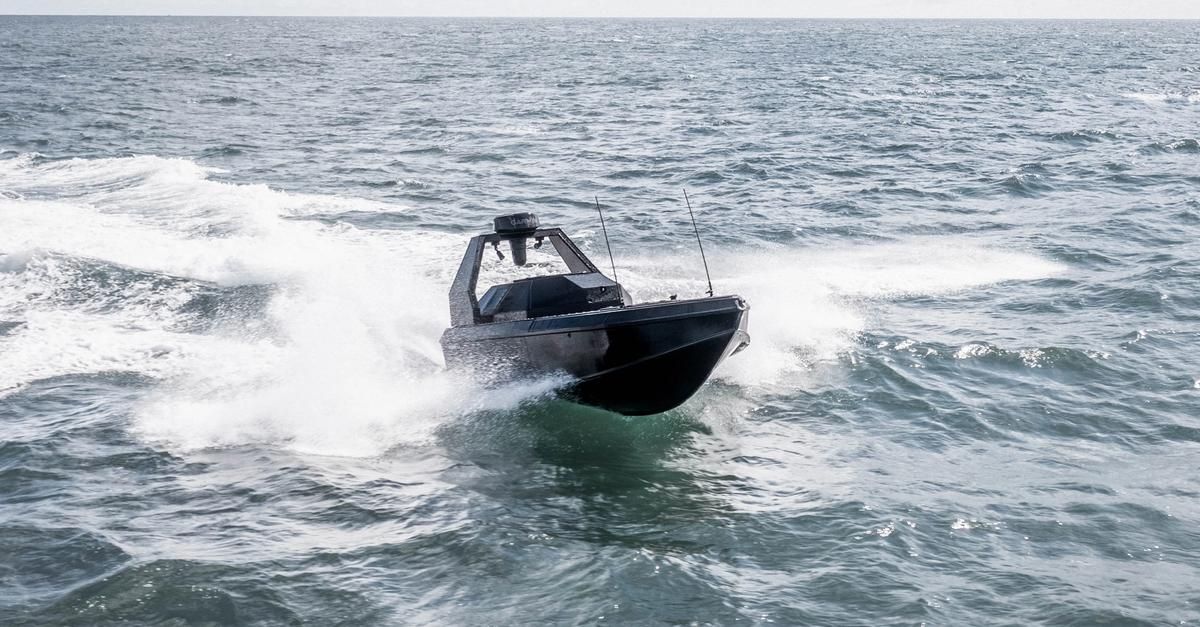
The STARK Vanta-6 is a six-metre unmanned surface vessel developed for maritime reconnaissance, surveillance, security and other modular missions in coastal and offshore waters. The platform combines high speed, long range and a payload capacity of up to 500 kg.
The Vanta-6 has also formed the basis of the Bundeswehr's Seetaube reconnaissance USV. Germany received the first Seetaube in August 2026 for operator training and sea trials before a planned entry into service.
The Vanta family was developed by STARK for reconnaissance and effect-oriented missions near the coast, as well as for the protection of ports and critical maritime infrastructure. The Vanta-6 is the larger of the Vanta-4 and Vanta-6 designs.
Testing and exercises
The Vanta-6 had reached physical testing by 2025. Two Vanta USVs participated in NATO's Dynamic Messenger and REPMUS 25 maritime unmanned-systems exercises in Portugal in September 2025. According to STARK, the vessels conducted daily missions that included escorting high-value targets, harbour-control tasks, over-the-horizon investigations and night-time intelligence, surveillance and reconnaissance patrols.
A December 2025 review described the Vanta-6 as a multi-role naval USV intended for coastal and offshore operations. It reported that the Vanta-6 and smaller Vanta-4 had both undergone testing and were designed for modular payload installation and replacement in the field. The platform's participation in the 2025 NATO exercises provided an early demonstration of sustained mission operations with other crewed and uncrewed maritime systems. More details were published by Baird Maritime.
Bundeswehr Seetaube programme
In August 2026, the Bundeswehr received a Vanta-based USV named Seetaube. STARK stated that the six-metre craft had been delivered to the Bundeswehr's Cyber and Information Domain Command as the first autonomous USV for the programme. The project was initiated through the Bundeswehr Cyber Innovation Hub in cooperation with the Bundeswehr Centre for Digitalisation.
The Seetaube was christened during August 2026. Following delivery, the programme entered a period of operator training and additional sea trials expected to continue for several months. No specific date for formal entry into service was announced. The Bundeswehr plans to use the craft primarily for maritime reconnaissance and as a flexible second bearing point for locating signal sources at sea.
The Seetaube is intended to improve the location of signals by providing an additional observation position separate from a crewed vessel. Data collected by its sensors can be transmitted to an operator terminal and incorporated into a wider operational picture. STARK said the craft can execute pre-planned missions with a high degree of automation while an operator supervises the mission and can intervene when required. STARK described the delivery in its August 2026 release, while Janes reported the Bundeswehr testing programme.
Design
The Vanta-6 is approximately 6.0 m long and uses a high-density polyethylene hull. The material was selected for durability in demanding maritime environments and resistance to minor impact damage. The vessel's modular configuration allows different mission payloads and sensors to be installed according to operational requirements.
Published figures give the Vanta-6 a mass of about 2,100 kg and a maximum payload capacity of 500 kg. STARK states that the Vanta family can exceed 45 knots. A separate technical review published in 2025 listed the Vanta-6 at 40 knots, indicating that published speed figures vary according to source or configuration.
Sensors and navigation
The standard Vanta-6 configuration has been described with a Garmin radar providing 360-degree coverage, resilient GNSS antennas and a stabilised electro-optical and infrared camera. These systems support surveillance during daylight, at night and in adverse weather conditions. Mission equipment can be changed because of the platform's modular payload architecture.
The Bundeswehr's Seetaube configuration is equipped with sensors, cameras and radar, although the Bundeswehr and STARK did not publish the exact sensor models in their August 2026 announcements. Its mission data is transmitted to the operating terminal for use in situational awareness and signal-location tasks.
Command and control
The Vanta family can be operated through STARK's Minerva command-and-control system. Published descriptions identify Minerva as an AI-enabled open-architecture system designed to coordinate unmanned systems and support interoperability. The Vanta platforms can operate with other surface vessels and aerial unmanned systems during coordinated missions.
For the Bundeswehr Seetaube, automation is based on pre-planned missions. The vessel can navigate independently within defined parameters while remaining under operator supervision. This arrangement allows the operator to intervene when necessary rather than requiring continuous direct control.
Mission equipment
The Vanta-6 was designed as a modular multi-role platform. Reported missions include maritime surveillance, intelligence collection, escort of high-value assets, harbour monitoring, protection of critical infrastructure and investigation of contacts beyond the operator's direct line of sight.
STARK has also demonstrated the launch of its tube-launched Cascade loitering munition from a Vanta platform, showing that the family can be configured to carry effectors as well as sensors. This capability does not mean that every Vanta-6 is armed. The Bundeswehr's Seetaube is configured primarily for reconnaissance, and reporting on the German programme describes it without effectors.
Program status
As of August 2026, the Vanta-6 was an established test platform that had participated in NATO maritime unmanned-systems exercises. The Bundeswehr had received its first Seetaube derivative and was preparing operator training and further trials at sea.
The Bundeswehr plans to place Seetaube into service after testing, but no formal in-service date had been announced. The craft is intended to supplement existing crewed ships and boats by providing an additional mobile sensor position for reconnaissance and signal geolocation.
Variants
- Vanta-6: Six-metre member of the Vanta unmanned surface vessel family, designed for modular maritime reconnaissance, surveillance, security and other missions.
- Seetaube: Bundeswehr reconnaissance configuration based on the six-metre Vanta platform. The first example was delivered in August 2026 for training and sea trials before planned entry into service.
Operators
- Germany: The Bundeswehr's Cyber and Information Domain Command received the first Seetaube in August 2026 for testing and operator training. Formal entry into service is planned after completion of trials.
Specifications (Vanta-6)
General characteristics
- Type: Unmanned surface vessel
- Length: 6.0 m (20 ft)
- Mass: approximately 2,100 kg
- Hull material: High-density polyethylene
- Maximum payload: 500 kg
Performance
- Maximum speed: more than 45 knots according to STARK; a 2025 technical review listed 40 knots
- Range: up to 1,685 km (910 nmi)
- Sea-state capability: reported as up to Sea State 4 by Janes; Baird Maritime reported operation in Sea State 5
Sensors and equipment
- Radar: Garmin radar with 360-degree coverage reported for the Vanta-6
- Electro-optical system: Stabilised electro-optical and infrared camera
- Navigation: GNSS-resilient antennas and autonomous navigation within defined mission parameters
- Command and control: Compatible with STARK Minerva open-architecture command-and-control system
Related equipment
- STARK Vanta-4: Smaller four-metre member of the same USV family, intended for missions where reduced size and operation in confined waters are advantageous.
 Argentina
 Armenia
 Australia
 Austria
 Austria-Hungary
 Belgium
 Brazil
 United Kingdom
 United States
 Brunei
 Bulgaria
 Canada
 Chile
Chile China
China Colonial America
 Colombia
 Confederate States
 Croatia
 Czech
Czech Denmark
 Egypt
Egypt Finland
 France
 Georgia
 German Imperial
 Greece
 Holland
 Hungary
 India
India Indonesia
 Iran
Iran Iraq
Iraq Ireland
 Israel
 Italy
Italy Japan
Japan Japan (1940)
 Jordan
 Kingdom of Italy
 Malaysia
 Mexico
 Myanmar
 Nazi Germany
 Netherlands
 New Zealand
 North Korea
 Norway
 Pakistan
 Peru
Peru Philippines
 Poland
 Portugal
 Prussia
 Romania
 Russia
 Saudi Arabia
 Serbia
 Singapore
 Slovakia
 Slovenia
 South Africa
 South Korea
 Soviet Union
 Spain
Spain Sweden
 Switzerland
 Syria
Syria Taiwan
 Thailand
 Turkey
 UAE
UAE Ukraine
 Vietnam
 Yugoslavia