
History
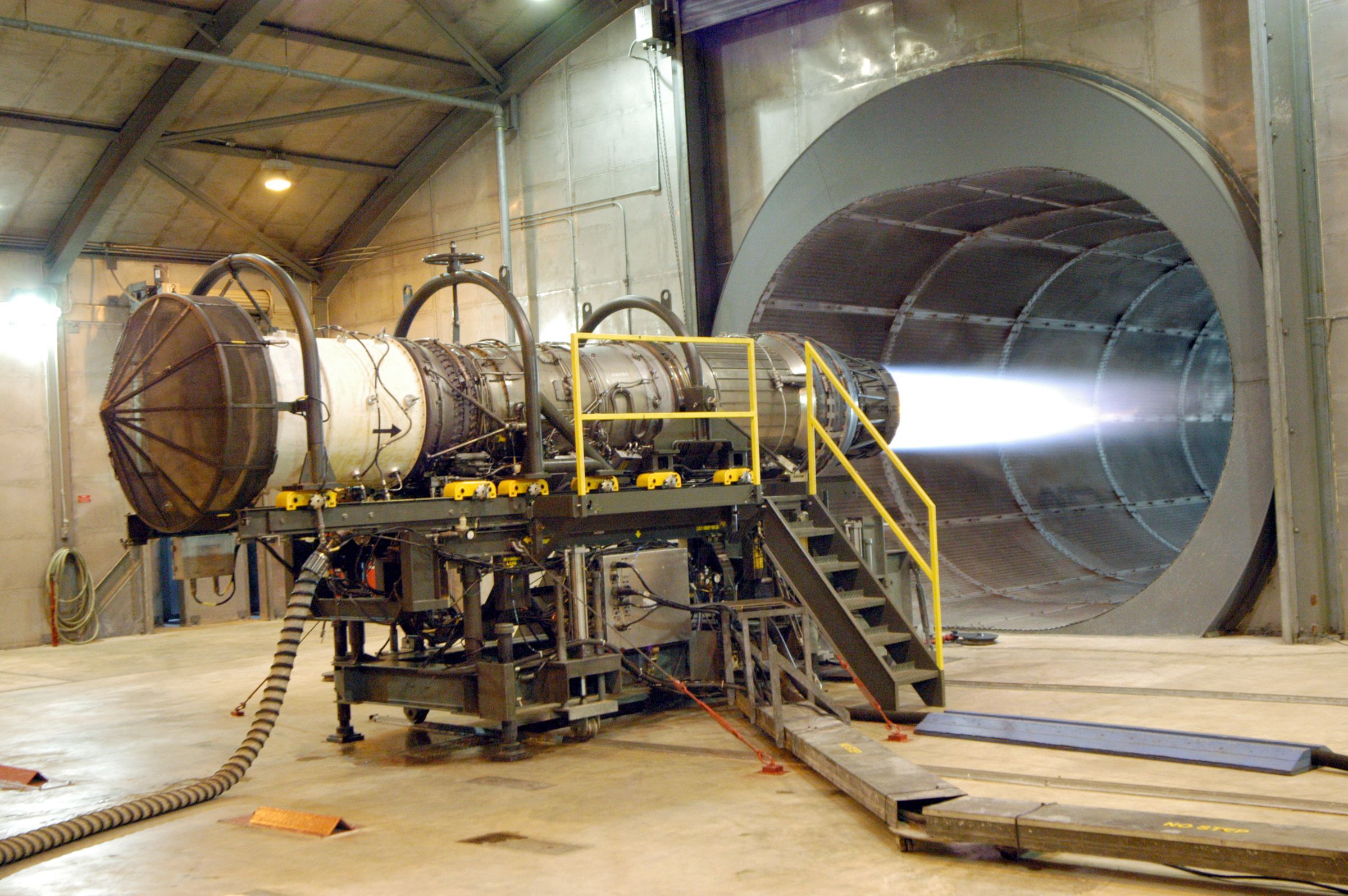
The Pratt & Whitney F100-PW-229 is an afterburning turbofan engine developed in the United States for fighter aircraft. It is a member of the F100 engine family and is used on versions of the F-15 and F-16. Pratt & Whitney lists a maximum thrust of 129.7 kN (29,160 lb) for the F100-PW-229.
The -229 was developed as an improved F100 variant combining increased performance with the modular construction and established support infrastructure of the F100 family. Pratt & Whitney states that the engine remains in production and is supported by an international F100 fleet operating F-15 and F-16 aircraft.
In 2026, Pratt & Whitney licensed Hermeus to manufacture the F100-PW-229 as a second production source. Hermeus intends to use the engine for its Quarterhorse high-speed unmanned aircraft while also supporting wider demand for new F100 engines.
Development and introduction
According to Pratt & Whitney, the first production F100-PW-229 was delivered in December 1989. A field service evaluation was successfully completed in September 1990, followed by the first operational introduction in April 1992.
The F100-PW-229 became a powerplant for the F-15E Strike Eagle and versions of the F-16. Pratt & Whitney describes the variant as the culmination of successive improvements to the F100 family and states that technologies and operating experience from later fighter-engine programs have also been applied to it. The company has additionally presented the engine as compatible with the F-15EX.
Service-life development
The F100-PW-229 program continued to focus on durability and maintenance intervals after its operational introduction. Pratt & Whitney records completion of a 6,000 total accumulated cycle accelerated mission test in September 2010. The broader F100 family passed 28 million engine flight hours in July 2018, and in February 2020 the first F100-PW-229 reached 6,000 total accumulated cycles.
Pratt & Whitney states that the -229 became the first fighter engine in its product line to extend its depot maintenance interval to 6,000 total accumulated cycles. Existing F100 technical data, tooling, ground-support equipment and maintenance organizations provide a sustainment base for operators of the engine.
Second-source production
In September 2026, Pratt & Whitney disclosed an agreement licensing Hermeus to manufacture the F100-PW-229. The arrangement made Hermeus a second source for the engine rather than an independent designer of a new powerplant. Hermeus said initial manufacturing would use its existing production facilities, with larger investments dependent on customer demand.
Hermeus has a direct requirement for the engine because the F100-PW-229 powers its Quarterhorse high-speed unmanned aircraft. The company is also developing the Chimera turbine-based combined-cycle propulsion concept using the F100 as a basis, but Chimera is a separate propulsion development and should not be confused with the standard F100-PW-229.
Design
The F100-PW-229 is an afterburning turbofan intended for high-performance combat aircraft. Pratt & Whitney describes the F100 as using a fully modular architecture. A technical study of the F100-PW-229 likewise emphasizes its modular construction and the role this arrangement plays in maintenance and repair. The engine can therefore be divided into major modules that can be serviced or replaced according to maintenance requirements rather than treating the complete engine as a single indivisible assembly. A detailed discussion of this architecture is available in the Combustion Engines study.
The engine has a bypass ratio of 0.36 and an overall pressure ratio of 32:1. Pratt & Whitney gives a maximum engine weight of 1,735 kg (3,826 lb), a length of 4.85 m (191 in), an inlet diameter of 0.88 m (34.8 in), and a maximum diameter of 1.18 m (46.5 in).
Performance characteristics
Pratt & Whitney lists maximum thrust as 129.7 kN (29,160 lb) and a thrust-to-weight ratio of 7.6. The manufacturer also emphasizes rapid throttle response and high non-afterburning military-power thrust in combat portions of the flight envelope. These characteristics were developed for fighter missions that demand rapid power changes during air-to-air and air-to-ground maneuvering.
Maintenance
The modular layout supports maintenance at multiple levels. The F100 fleet has an established infrastructure of technical data, tooling, support equipment, intermediate maintenance and depot facilities at F-15 and F-16 operating locations.
Maintenance of mature engines includes repair and replacement of turbine components exposed to high thermal and mechanical loads. TAT Technologies describes repair processes for third- and fourth-stage F100 turbine vanes, including F100-PW-229 components. Its extended process uses diffusion-healing techniques for cracking, erosion and surface wear that can exceed standard Technical Order repair limits. TAT states that this repair approach has been qualified for military use and has been used operationally for more than 25 years.
Operational history
The F100-PW-229 entered operational service in 1992 and has powered F-15E and F-16 aircraft. Pratt & Whitney reports that the wider F100 family has accumulated more than 30 million flight hours across 23 air forces. That total covers multiple F100 variants and should not be interpreted as flight hours accumulated exclusively by the F100-PW-229.
Pratt & Whitney continues to manufacture the F100 family and has stated that support will continue for existing F-15 and F-16 fleets as well as new-production aircraft. The 2026 licensing agreement with Hermeus was intended to expand the manufacturing base as projected demand for F100-class engines increased.
Program status
As of 2026, the F100-PW-229 remains in production. Pratt & Whitney is the original manufacturer, while Hermeus has been licensed as an additional manufacturing source. Hermeus stated that the timing and scale of its production would depend on customer requirements and that it would initially concentrate on domestic manufacturing and support of its Quarterhorse program.
Applications
- F-15E Strike Eagle: The F100-PW-229 is used as a powerplant for the multirole F-15E.
- F-16: The F100-PW-229 powers versions of the F-16 operated by multiple air forces.
- Hermeus Quarterhorse: The high-speed unmanned aircraft uses the F100-PW-229 during its iterative flight-development program.
Specifications (F100-PW-229)
General characteristics
- Type: Afterburning turbofan engine
- Length: 4.85 m (191 in)
- Inlet diameter: 0.88 m (34.8 in)
- Maximum diameter: 1.18 m (46.5 in)
- Maximum specified weight: 1,735 kg (3,826 lb)
- Bypass ratio: 0.36
- Overall pressure ratio: 32:1
Performance
- Maximum thrust: 129.7 kN (29,160 lb)
- Thrust-to-weight ratio: 7.6
 Argentina
 Armenia
 Australia
 Austria
 Austria-Hungary
 Belgium
 Brazil
 United Kingdom
 Brunei
 Bulgaria
 Canada
 Chile
Chile China
China Colonial America
 Colombia
 Confederate States
 Croatia
 Czech
Czech Denmark
 Egypt
Egypt Finland
 France
 Georgia
 Germany
 German Imperial
 Greece
 Holland
 Hungary
 India
India Indonesia
 Iran
Iran Iraq
Iraq Ireland
 Israel
 Italy
Italy Japan
Japan Japan (1940)
 Jordan
 Kingdom of Italy
 Malaysia
 Mexico
 Myanmar
 Nazi Germany
 Netherlands
 New Zealand
 North Korea
 Norway
 Pakistan
 Peru
Peru Philippines
 Poland
 Portugal
 Prussia
 Romania
 Russia
 Saudi Arabia
 Serbia
 Singapore
 Slovakia
 Slovenia
 South Africa
 South Korea
 Soviet Union
 Spain
Spain Sweden
 Switzerland
 Syria
Syria Taiwan
 Thailand
 Turkey
 UAE
UAE Ukraine
 Vietnam
 Yugoslavia