
History
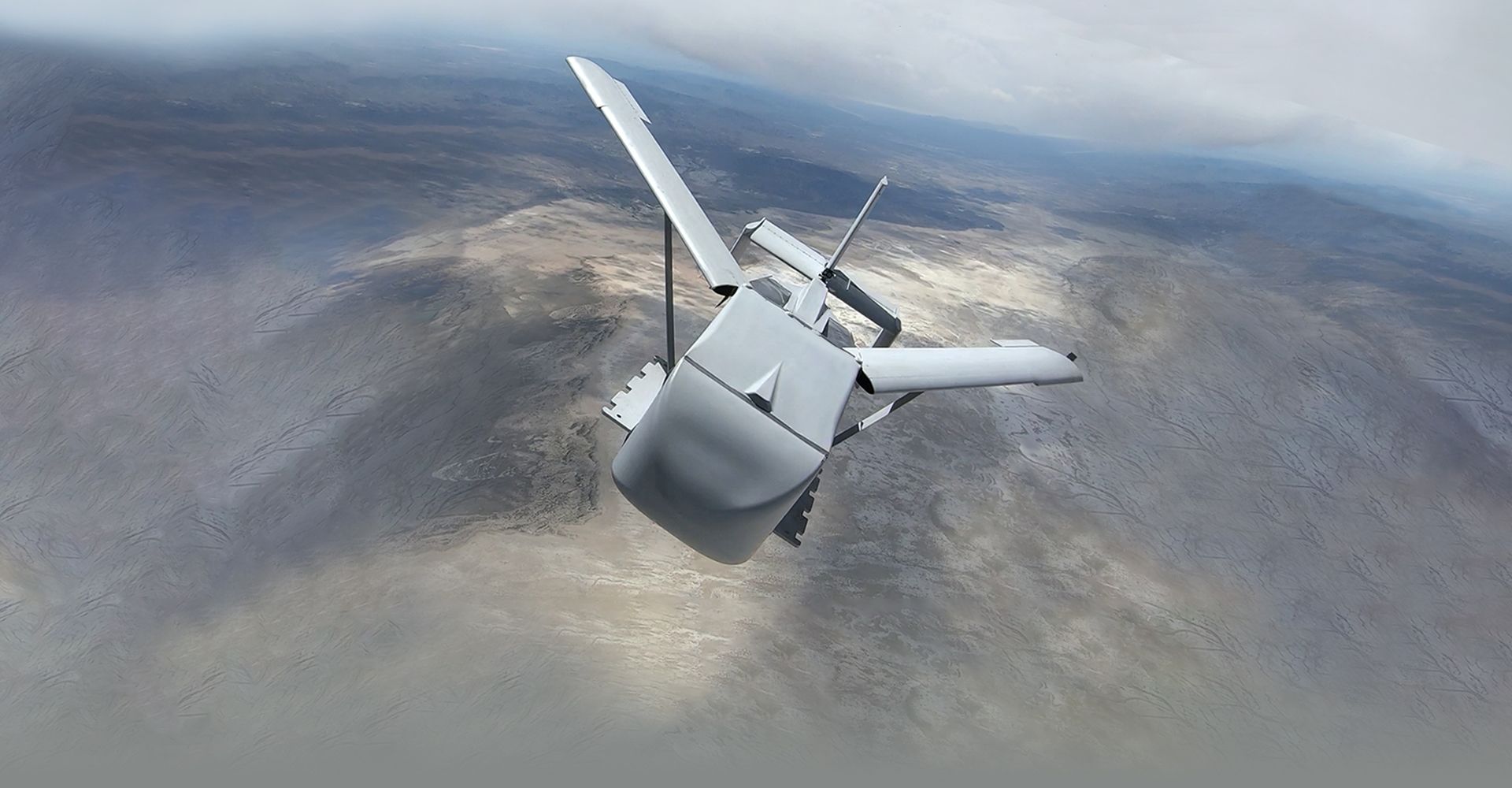
DZYNE Grasshopper is a low-cost, expendable autonomous aerial cargo glider developed with the U.S. Air Force for precision resupply in contested, denied, and austere environments. It allows a host aircraft to release supplies at a distance from the destination rather than flying directly over the receiving force.
The system carries up to 227 kg (500 lb) of cargo and autonomously navigates toward a pre-planned destination after deployment. It is designed to continue operating when GPS is degraded or unavailable and completes delivery by descending to the landing zone under a parachute.
Grasshopper progressed from a research effort to initial fielding in less than 12 months. Multiple vehicles were delivered to the U.S. Air Force in 2025, followed by special operations testing in Iceland during Exercise Northern Viking 2026.
Development and delivery
Grasshopper was created in response to a requirement for standoff cargo delivery that could reduce the exposure of manned aircraft and crews during resupply missions. DZYNE Technologies developed the system in cooperation with the U.S. Air Force, including the Air Force Research Laboratory, as an autonomous and comparatively inexpensive alternative to conventional air-drop methods that require the delivery aircraft to approach the drop zone closely.
On May 2, 2025, DZYNE announced delivery of multiple Grasshopper vehicles to the U.S. Air Force as part of a broader contested-logistics program. The manufacturer described the delivery as the transition of the system from research to initial fielding. Production was being expanded to support additional demand for the Grasshopper product line.
Northern Viking 2026
From August 22 to September 3, 2026, personnel of the 352d Special Operations Wing evaluated Grasshopper during Exercise Northern Viking in Iceland. The exercise was used to test non-standard aerial delivery methods for isolated ground units operating under austere High North conditions.
The trials demonstrated autonomous resupply in an environment where normal logistics infrastructure could be limited or vulnerable. The broader exercise involved the delivery of supplies such as food, water, medicine, and fuel while units refined tactics and procedures for long-range operations and dispersed logistics.
Design
Grasshopper is an expendable autonomous cargo glider rather than a recoverable transport aircraft. The standard system weighs approximately 261 kg (575 lb) and can carry up to 227 kg (500 lb) of cargo. Its construction and manufacturing approach were intended to keep each vehicle inexpensive enough for missions in which recovery would not be practical.
Deployment and flight
The vehicle is released from a host aircraft and automatically deploys its glider wings before transitioning to stable flight. It can be deployed from multiple types of aircraft, including fixed-wing transports and helicopters equipped with rear ramps.
After deployment, the system autonomously maneuvers toward a pre-programmed destination. Its guidance system is designed to operate in GPS-denied or GPS-degraded environments, allowing the vehicle to continue toward the planned delivery area without relying on continuous satellite navigation.
Terminal delivery
Near the destination, Grasshopper transitions from gliding flight to its terminal descent. A parachute is deployed for the final approach and landing, allowing the cargo compartment to reach the designated delivery zone at low speed. Ground personnel can then access and unload the payload.
Logistics concept
The system is intended to separate the host aircraft from the most hazardous portion of a resupply mission. Instead of requiring the aircraft to overfly the receiving unit, Grasshopper can be released from a standoff position and complete the remaining route autonomously. This concept can support military logistics as well as humanitarian assistance and disaster-relief missions requiring precise unmanned delivery.
Published program information in 2025 placed the production cost below US$40,000 per vehicle. The system is deliberately expendable and is not intended for recovery or reuse after completing a delivery.
Program status
Grasshopper had reached initial fielding by 2025, when multiple vehicles were delivered to the U.S. Air Force. In 2026, Air Force Special Operations Command personnel continued evaluating the system during operationally representative exercises, including the Northern Viking deployment in Iceland.
As of September 2026, the program had demonstrated delivery, autonomous navigation, parachute recovery of the payload, and operation during special-operations training in the High North. The available program milestones establish delivery and exercise testing but do not establish service-wide deployment or full-rate production.
Variants
- Grasshopper: Standard short- to mid-range expendable autonomous cargo glider with a maximum payload of 227 kg (500 lb).
- Long-Range Grasshopper: Longer-range derivative developed to retain the 227 kg (500 lb) payload while extending standoff distance. The planned version was described as turbine-powered with a target range of approximately 800 km (500 mi). Development was expected to continue through 2026, and later 2026 descriptions identified the Long-Range Grasshopper as part of the wider product family.
Operators
- United States Air Force: Received multiple Grasshopper vehicles in 2025. The 352d Special Operations Wing tested the system during Exercise Northern Viking 2026 in Iceland.
Specifications (Grasshopper)
General characteristics
- Type: Expendable autonomous aerial cargo glider
- Vehicle weight: Approximately 261 kg (575 lb)
- Maximum payload: 227 kg (500 lb)
- Recovery: Vehicle not intended for recovery or reuse
- Host platforms: Compatible with multiple fixed-wing aircraft and rear-ramp helicopters
Flight and guidance
- Navigation: Autonomous flight to a pre-programmed destination
- Degraded-navigation capability: Designed for operation when GPS is degraded or unavailable
- Flight configuration: Deployable glider wings after release from the host aircraft
- Terminal delivery: Parachute-assisted descent and landing at the designated delivery zone
 Argentina
 Armenia
 Australia
 Austria
 Austria-Hungary
 Belgium
 Brazil
 United Kingdom
 Brunei
 Bulgaria
 Canada
 Chile
Chile China
China Colonial America
 Colombia
 Confederate States
 Croatia
 Czech
Czech Denmark
 Egypt
Egypt Finland
 France
 Georgia
 Germany
 German Imperial
 Greece
 Holland
 Hungary
 India
India Indonesia
 Iran
Iran Iraq
Iraq Ireland
 Israel
 Italy
Italy Japan
Japan Japan (1940)
 Jordan
 Kingdom of Italy
 Malaysia
 Mexico
 Myanmar
 Nazi Germany
 Netherlands
 New Zealand
 North Korea
 Norway
 Pakistan
 Peru
Peru Philippines
 Poland
 Portugal
 Prussia
 Romania
 Russia
 Saudi Arabia
 Serbia
 Singapore
 Slovakia
 Slovenia
 South Africa
 South Korea
 Soviet Union
 Spain
Spain Sweden
 Switzerland
 Syria
Syria Taiwan
 Thailand
 Turkey
 UAE
UAE Ukraine
 Vietnam
 Yugoslavia