
History
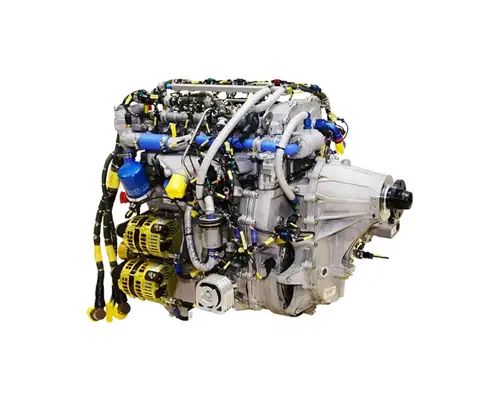
The TEI PD170 is a Turkish turbodiesel aviation engine developed by TUSAŞ Engine Industries (TEI) for medium-altitude long-endurance unmanned aerial vehicles. It produces approximately 172 hp and is designed to retain useful power at high altitude through a two-stage turbocharging system.
The engine was developed as part of Türkiye's effort to establish an indigenous UAV propulsion capability. It has been integrated with the TAI Anka, TAI Aksungur and Bayraktar TB3 unmanned aircraft and entered mass production after an extensive ground and flight-test program.
The PD170 combines a four-cylinder diesel configuration with common-rail fuel injection, liquid cooling, redundant electronic engine control and compatibility with both tractor and pusher aircraft installations.
Development
The development program originated in a UAV engine project initiated in 2012 to provide a domestic turbodiesel powerplant for MALE-class unmanned aircraft. Program records differ slightly on the date of the first engine ignition, placing it either on 22 December 2016 or in January 2017. The first manufactured engine was delivered to Turkish Aerospace in November 2017.
The PD170 completed its first flight on the TAI Anka in December 2018. After calibration, ground testing and flight testing, the engine reached the mass-production stage in 2019.
Integration subsequently expanded to additional UAV platforms. The PD170 flew on the TAI Aksungur in October 2021. Baykar selected the engine for the Bayraktar TB3, with flight testing of that aircraft using the PD170 beginning in 2023.
By November 2024, PD170 engines had accumulated about 2,000 flight hours across three UAV platforms. The engine had also completed a 45-hour Aksungur sortie and had operated at altitudes above 36,000 ft. TEI specifies a maximum operating altitude of 45,000 ft.
The first export of the PD170 was completed in early 2024 after earlier orders and export discussions with several countries. In September 2026, South Korea's defense procurement authorities also sought information on acquiring the engine for Korean unmanned-aircraft programs. This represented prospective procurement interest rather than confirmed operational use by South Korea.
Design
Engine configuration
The PD170 is a 2.1-liter, straight-four, liquid-cooled turbodiesel aviation engine. Fuel is supplied through a common-rail diesel injection system. The engine can operate on JP-8, JET-A1, JP-5 and EN 590 fuels, allowing it to use both aviation turbine fuels and automotive-specification diesel fuel.
A two-stage turbocharging system is used to maintain output as altitude increases. TEI specifies a critical altitude of 20,000 ft, at which the engine can still produce about 170 hp. Rated output decreases to approximately 130 hp at 30,000 ft and 90 hp at 40,000 ft.
Controls and electrical system
The engine uses a redundant electronic control unit with full-authority digital engine control functionality. Its control software is designed to be certifiable to DO-178C Design Assurance Level C. The alternator-control software is designed to the same certifiable standard.
The electrical system provides 9 kW through two 4.5 kW generating channels. The engine is designed for both tractor and pusher aircraft configurations, allowing installation on UAVs with different propeller arrangements.
Endurance and service characteristics
TEI specifies a dry weight of 162 kg and an engine life of 3,600 hours. Brake-specific fuel consumption at mean sea level is listed as 207 g/kWh, with a tolerance of approximately three grams per kilowatt-hour.
Program status
The PD170 has progressed beyond prototype development into series production and operational flight use. It powers Turkish UAV platforms including the Anka, Aksungur and Bayraktar TB3. Its operational use has also provided a basis for export sales and further international procurement discussions.
The engine is part of a broader family of Turkish aviation diesels. Development has continued toward lighter and more powerful derivatives intended to cover different UAV performance requirements.
Specifications (TEI PD170)
General characteristics
- Type: Four-cylinder turbodiesel aviation engine
- Configuration: Straight four-cylinder
- Displacement: 2.1 L
- Dry weight: 162 kg
- Cooling: Liquid cooled
- Fuel system: Common-rail diesel injection
- Air induction: Two-stage turbocharging
- Fuel: JP-8, JET-A1, JP-5 or EN 590
- Engine control: Redundant ECU with FADEC functionality
- Electrical power: 9 kW from two 4.5 kW channels
- Installation: Tractor or pusher configuration
- Specified engine life: 3,600 hours
Performance
- Maximum power: 172 hp, with a stated tolerance of ±2 hp
- Maximum continuous power: 172 hp, with a stated tolerance of ±2 hp
- Power at 20,000 ft: 170 hp
- Power at 30,000 ft: 130 hp
- Power at 40,000 ft: 90 hp
- Critical altitude: 20,000 ft
- Maximum altitude: 45,000 ft
- Brake-specific fuel consumption at mean sea level: 207 g/kWh, ±3 g/kWh
Related equipment
- TEI PD155: Earlier engine in the same development family.
- TEI PD180: A lighter derivative developed to provide up to approximately 180 hp for applications with somewhat lower high-altitude requirements.
- TEI PD222ST: Higher-power development of the engine family intended to provide approximately 225 hp while remaining close to the PD170 installation envelope.
 Argentina
 Armenia
 Australia
 Austria
 Austria-Hungary
 Belgium
 Brazil
 United Kingdom
 United States
 Brunei
 Bulgaria
 Canada
 Chile
Chile China
China Colonial America
 Colombia
 Confederate States
 Croatia
 Czech
Czech Denmark
 Egypt
Egypt Finland
 France
 Georgia
 Germany
 German Imperial
 Greece
 Holland
 Hungary
 India
India Indonesia
 Iran
Iran Iraq
Iraq Ireland
 Israel
 Italy
Italy Japan
Japan Japan (1940)
 Jordan
 Kingdom of Italy
 Malaysia
 Mexico
 Myanmar
 Nazi Germany
 Netherlands
 New Zealand
 North Korea
 Norway
 Pakistan
 Peru
Peru Philippines
 Poland
 Portugal
 Prussia
 Romania
 Russia
 Saudi Arabia
 Serbia
 Singapore
 Slovakia
 Slovenia
 South Africa
 South Korea
 Soviet Union
 Spain
Spain Sweden
 Switzerland
 Syria
Syria Taiwan
 Thailand
 UAE
UAE Ukraine
 Vietnam
 Yugoslavia