
History
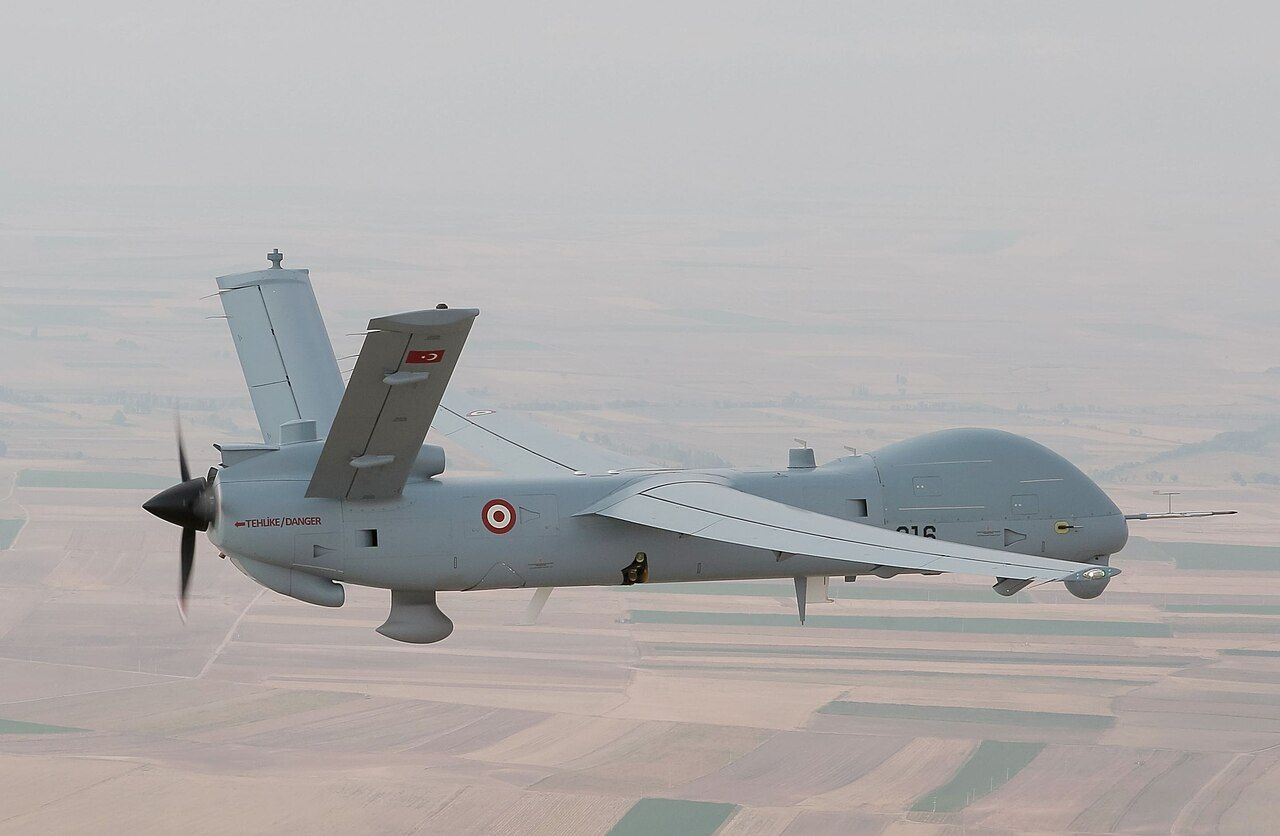
The Turkish Aerospace ANKA III is a jet-powered, flying-wing unmanned combat aerial vehicle developed in Türkiye. It is intended for intelligence, surveillance and reconnaissance, precision strike, electronic warfare and missions in contested airspace.
The aircraft combines reduced radar observability with internal weapon bays, autonomous flight functions and manned-unmanned teaming. It can also carry smaller air-launched unmanned aircraft, allowing it to operate as a sensor, communications and weapons node within a distributed force.
ANKA III remained in flight testing during 2026. Turkish Aerospace had frozen the production configuration and started production-related work, but a publicly confirmed operational entry into Turkish Air Force service had not been reported.
Development and first flight
Turkish Aerospace publicly presented the first ANKA III prototype in March 2023. Ground and runway testing followed in April. The design uses a tailless flying-wing layout to reduce radar reflections while providing space for fuel, mission equipment and internal weapons.
ANKA III completed its maiden flight on 28 December 2023. During the flight, which lasted one hour and ten minutes, the aircraft reached an altitude of 2,438 m and a speed of 278 km/h. A Turkish Aerospace Hürkuş served as the accompanying aircraft. Contemporary details of the flight were reported by The War Zone.
Flight and weapon testing
On 20 August 2024, the prototype performed its first in-flight landing-gear retraction test. On 20 September, ANKA III completed its first live-fire trial. It struck a target using a Roketsan TEBER-82 guidance kit and an Aselsan AF500 electro-optical system.
On 13 January 2025, ANKA III tested the release of a TOLUN guided munition from an internal weapon bay. Internal carriage is important because exposed weapons and pylons increase the radar signature of an otherwise low-observable aircraft.
On 8 April 2025, ANKA III released a SÜPER ŞİMŞEK jet-powered unmanned aircraft while flying at approximately 3,088 m and 278 km/h. The test demonstrated the ability to transport and launch an independent autonomous vehicle from the air. One ANKA III prototype was subsequently lost during a test flight associated with the Anatolian Eagle 2025 exercise on 25 June 2025.
A second prototype entered flight testing, and the program completed critical autopilot trials in December 2025. Turkish Aerospace used results from the first two prototypes to revise the configuration intended for production.
Production configuration
In January 2026, Turkish Aerospace chief executive Mehmet Demiroğlu stated that the critical design review had been completed, the design had been frozen and production work had started. Two additional prototypes incorporating the revised configuration were planned for construction during 2026. He also said that the company expected an order for more than 50 aircraft from the Turkish Air Force, although no procurement contract had then been publicly announced. The production announcement and current configuration were described by Türkiye Today.
On 14 August 2026, Turkish Aerospace released imagery of ANKA III flying with two SÜPER ŞİMŞEK aircraft beneath its wings. The configuration followed the earlier single-vehicle release test and demonstrated airborne carriage of two autonomous effectors. External carriage reduces the cleanliness of the aircraft's low-observable shape, but the smaller vehicles can be released before ANKA III continues in a cleaner configuration. The twin-carriage demonstration was documented by Army Recognition.
Design
Airframe
ANKA III has a tailless flying-wing configuration with swept leading edges and no conventional vertical tail. This arrangement is intended to reduce radar reflections and improve survivability in defended airspace. Internal payload stations allow selected weapons to be carried without permanently exposing them beneath the airframe.
The aircraft is designed for autonomous operation using line-of-sight and beyond-line-of-sight communications. It shares elements of its avionics architecture and ground-control system with the earlier ANKA and AKSUNGUR unmanned aircraft.
Propulsion and flight controls
The current ANKA III configuration uses one turbofan engine. Turkish Aerospace has also examined larger twin-engine concepts, but in January 2026 the company stated that completing and producing the single-engine ANKA III was the priority. A twin-engine aircraft therefore remained a study rather than an operational variant.
Development has used artificial-intelligence-supported modelling, simulation and flight-control technologies. These tools support the design and testing process, while the aircraft's stated autonomous functions include automatic flight and landing.
Sensors and mission equipment
Planned and listed sensor options include electro-optical and infrared equipment, synthetic-aperture radar, ground-moving-target indication and inverse synthetic-aperture radar. Other proposed equipment includes an active electronically scanned array radar, infrared search-and-track equipment and electro-optical targeting systems.
Electronic-warfare roles include communications intelligence, electronic intelligence, electronic-support measures, electronic attack and communications jamming. Satellite communications and radio-relay payloads are also listed. The combination is intended to support surveillance, targeting, communications and electronic-warfare missions as well as direct attack.
Weapons and external payloads
ANKA III has two internal and five external payload stations. Supported weapon categories include precision-guided bombs, laser-guided rockets and anti-tank missiles. Weapons demonstrated during testing include the externally carried TEBER-82 guided bomb and the internally released TOLUN guided glide bomb.
The aircraft has also been associated with the SOM-J air-launched cruise missile and future air-to-air weapons. These integrations should be distinguished from weapons already demonstrated in release or live-fire trials.
External stations can carry mission equipment, fuel tanks or air-launched unmanned vehicles. SÜPER ŞİMŞEK can be configured as a decoy, jammer, electronic-support platform or one-way attack aircraft. Its use would allow ANKA III to deploy smaller vehicles closer to defended areas while retaining its own sensing, coordination or strike role.
Program status
As of August 2026, ANKA III was a developmental aircraft undergoing flight, weapon and mission-system testing. The production design had been frozen and production activity had begun, while two updated prototypes were planned. Available program information described an expected Turkish Air Force order rather than a publicly confirmed completed procurement.
Turkish Aerospace plans to integrate ANKA III into a manned-unmanned teaming architecture involving Hürjet and the KAAN fighter. In this concept, crewed aircraft could supervise unmanned aircraft, while ANKA III could carry sensors, weapons or smaller autonomous vehicles. No public demonstration had yet shown KAAN, ANKA III and SÜPER ŞİMŞEK operating together as a complete combat formation.
Variants
- ANKA III prototype: Single-turbofan developmental aircraft used for flight, weapon-release, autonomy and mission-system trials.
- Production configuration: Revised single-engine design frozen after evaluation of the first two prototypes. Two updated prototypes were planned for 2026 while production preparations continued.
- Twin-engine concept: A larger configuration studied by Turkish Aerospace. The company stated that it was not the program's immediate priority.
Specifications (ANKA III production configuration)
Published dimensions differ between early prototype descriptions and the configuration reported after the design review. The following figures represent the production configuration reported in 2026 and summarized by Airforce Technology and other supplied program reporting.
General characteristics
- Type: Unmanned combat aerial vehicle
- Manufacturer: Turkish Aerospace Industries
- Length: 7.9 m
- Wingspan: 12.5 m
- Height: 2.5 m
- Maximum takeoff weight: 6,500 kg
- Payload capacity: 1,200 kg
- Powerplant: One turbofan engine
- Payload stations: Two internal and five external stations
Performance
- Maximum speed: Mach 0.7, approximately 787 km/h at 9,144 m
- Cruise speed: Mach 0.42, approximately 460 km/h at 9,144 m
- Service ceiling: 12,192 m
- Endurance: Up to 10 hours at 9,144 m
Mission systems
- Surveillance: Electro-optical and infrared sensors, synthetic-aperture radar and moving-target indication
- Electronic warfare: COMINT, ELINT, electronic-support measures, electronic attack and communications jamming
- Communications: Satellite communications and radio relay
- Autonomous operations: Manned-unmanned teaming, AI-supported swarm functions and carriage of air-launched unmanned aircraft
Armament
- Guided bombs: TOLUN and TEBER-82 demonstrated during testing
- Planned weapon classes: Precision-guided bombs, laser-guided rockets, anti-tank missiles, air-to-surface missiles and air-to-air missiles
- Air-launched unmanned aircraft: SÜPER ŞİMŞEK carried externally and demonstrated in flight
 Argentina
 Armenia
 Australia
 Austria
 Austria-Hungary
 Belgium
 Brazil
 United Kingdom
 United States
 Brunei
 Bulgaria
 Canada
 Chile
Chile China
China Colonial America
 Colombia
 Confederate States
 Croatia
 Czech
Czech Denmark
 Egypt
Egypt Finland
 France
 Georgia
 Germany
 German Imperial
 Greece
 Holland
 Hungary
 India
India Indonesia
 Iran
Iran Iraq
Iraq Ireland
 Israel
 Italy
Italy Japan
Japan Japan (1940)
 Jordan
 Kingdom of Italy
 Malaysia
 Mexico
 Myanmar
 Nazi Germany
 Netherlands
 New Zealand
 North Korea
 Norway
 Pakistan
 Peru
Peru Philippines
 Poland
 Portugal
 Prussia
 Romania
 Russia
 Saudi Arabia
 Serbia
 Singapore
 Slovakia
 Slovenia
 South Africa
 South Korea
 Soviet Union
 Spain
Spain Sweden
 Switzerland
 Syria
Syria Taiwan
 Thailand
 UAE
UAE Ukraine
 Vietnam
 Yugoslavia