
History
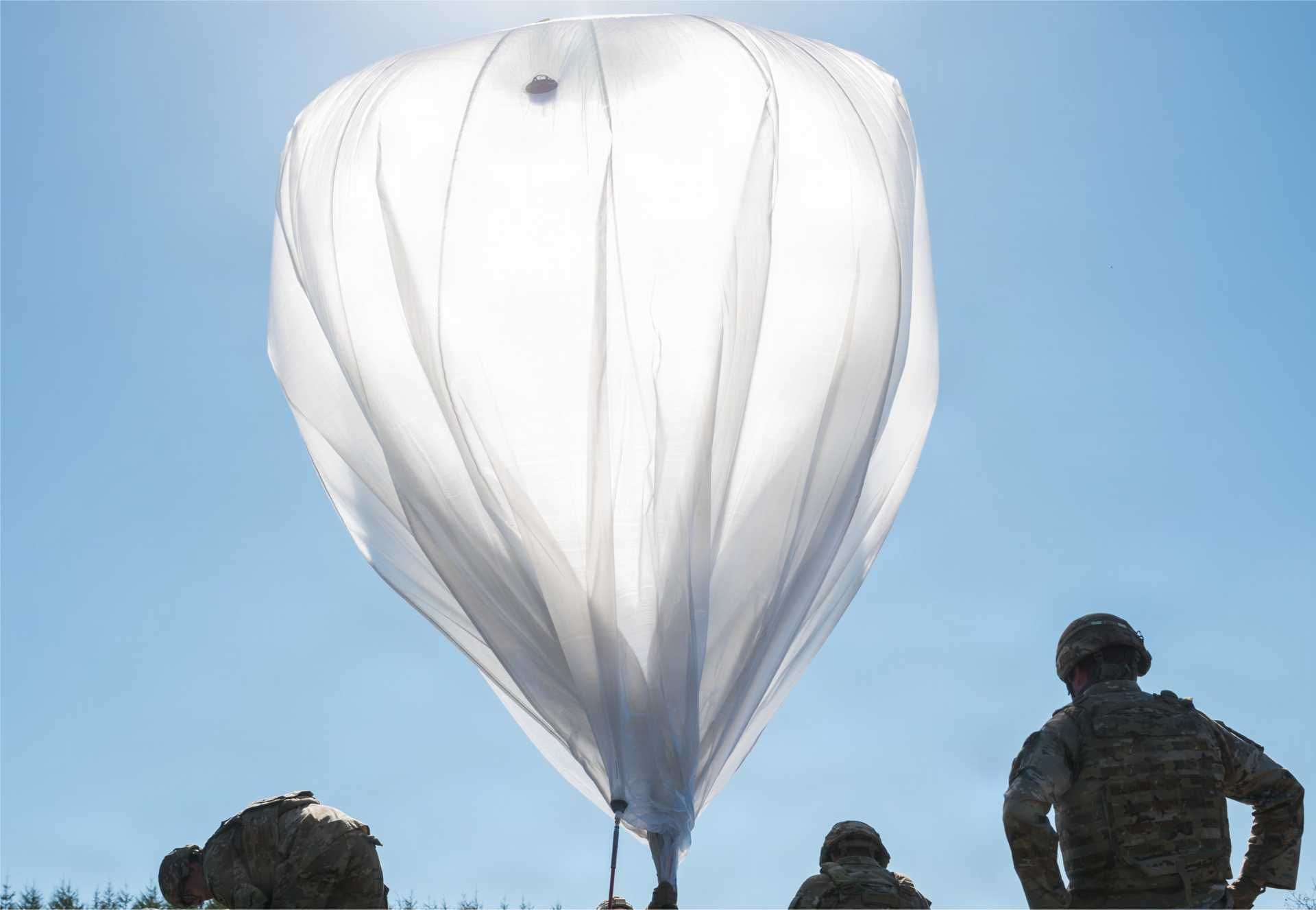
Swamp Gas Balloon is a U.S. Air Force high-altitude balloon development program intended to create a persistent airborne platform for intelligence-related missions. Potential mission areas include surveillance, communications relay, and electronic sensing, but the specific operational payload has not been disclosed.
Aerostar Technical Solutions is developing a minimum viable product prototype in response to a High-Altitude Balloon Operational Urgency. The effort is intended to address an immediate operational requirement while establishing whether the platform can provide useful persistence, controllability, payload integration, and connectivity.
The program remains in development and should not be treated as an operational capability. Important characteristics including operating altitude, endurance, payload capacity, sensor configuration, and the final mission equipment have not been publicly specified.
Development
On September 28, 2026, Aerostar received a $64,437,723 contract combining firm-fixed-price and cost-reimbursable elements. The award covers development of the minimum viable product prototype. Work is being performed in Arlington, Virginia, and is scheduled for completion on March 23, 2028.
The planned prototype is intended to demonstrate whether a high-altitude balloon can provide persistent coverage over large areas while supporting military sensing or communications functions. Successful development would require the system to maintain a useful position, support an appropriate payload, provide electrical power and data connectivity, and remain operational for the required period.
Design
Swamp Gas is being developed as a high-altitude balloon platform rather than a conventional powered aircraft or satellite. Its military value is expected to depend heavily on persistence at altitude and the ability to maintain a useful position relative to the operational area.
Station-keeping is a key technical requirement for this type of system. A balloon must exploit atmospheric conditions or another navigation method to remain near a desired area. The effectiveness of surveillance or communications coverage therefore depends on how reliably the platform can control or manage its position.
The prototype's payload configuration has not been disclosed. Potential equipment for a high-altitude intelligence platform could include electro-optical or infrared sensors, radar, signals-intelligence equipment, or communications relays, but none of these payloads has been confirmed for Swamp Gas. Each would impose different requirements for electrical power, antennas, onboard processing, and data links.
The program is intended to explore the advantages of operating between terrestrial systems, conventional aircraft, and satellites. A high-altitude balloon can potentially remain aloft longer than many aircraft while carrying payloads that can be recovered, modified, or replaced more readily than equipment placed in orbit.
Program status
Swamp Gas is in the prototype development phase. Aerostar is responsible for producing a minimum viable product for further assessment, and the current development effort is scheduled to run through March 23, 2028.
The U.S. Air Force has not disclosed the balloon's planned altitude, endurance, payload capacity, sensor fit, or final operational mission. These characteristics will determine whether the prototype can satisfy the operational requirement and whether the concept can progress beyond the development stage.
If the prototype demonstrates adequate persistence, station-keeping, payload integration, and communications performance, a high-altitude balloon could add another layer to distributed military sensing and communications architectures. Such a system would complement rather than replace aircraft, ground systems, or satellites.
Specifications (minimum viable product prototype)
General characteristics
- Type: High-altitude balloon prototype.
- Developer: Aerostar Technical Solutions.
- Customer: U.S. Air Force.
- Intended role: Persistent high-altitude intelligence-related missions.
- Potential mission areas: Surveillance, communications relay, and electronic sensing; the final payload and mission configuration have not been disclosed.
- Development contract value: $64,437,723.
- Contract structure: Firm-fixed-price and cost-reimbursable elements.
- Development location: Arlington, Virginia, United States.
- Scheduled development completion: March 23, 2028.
 Argentina
 Armenia
 Australia
 Austria
 Austria-Hungary
 Belgium
 Brazil
 United Kingdom
 Brunei
 Bulgaria
 Canada
 Chile
Chile China
China Colonial America
 Colombia
 Confederate States
 Croatia
 Czech
Czech Denmark
 Egypt
Egypt Finland
 France
 Georgia
 Germany
 German Imperial
 Greece
 Holland
 Hungary
 India
India Indonesia
 Iran
Iran Iraq
Iraq Ireland
 Israel
 Italy
Italy Japan
Japan Japan (1940)
 Jordan
 Kingdom of Italy
 Malaysia
 Mexico
 Myanmar
 Nazi Germany
 Netherlands
 New Zealand
 North Korea
 Norway
 Pakistan
 Peru
Peru Philippines
 Poland
 Portugal
 Prussia
 Romania
 Russia
 Saudi Arabia
 Serbia
 Singapore
 Slovakia
 Slovenia
 South Africa
 South Korea
 Soviet Union
 Spain
Spain Sweden
 Switzerland
 Syria
Syria Taiwan
 Thailand
 Turkey
 UAE
UAE Ukraine
 Vietnam
 Yugoslavia