
History
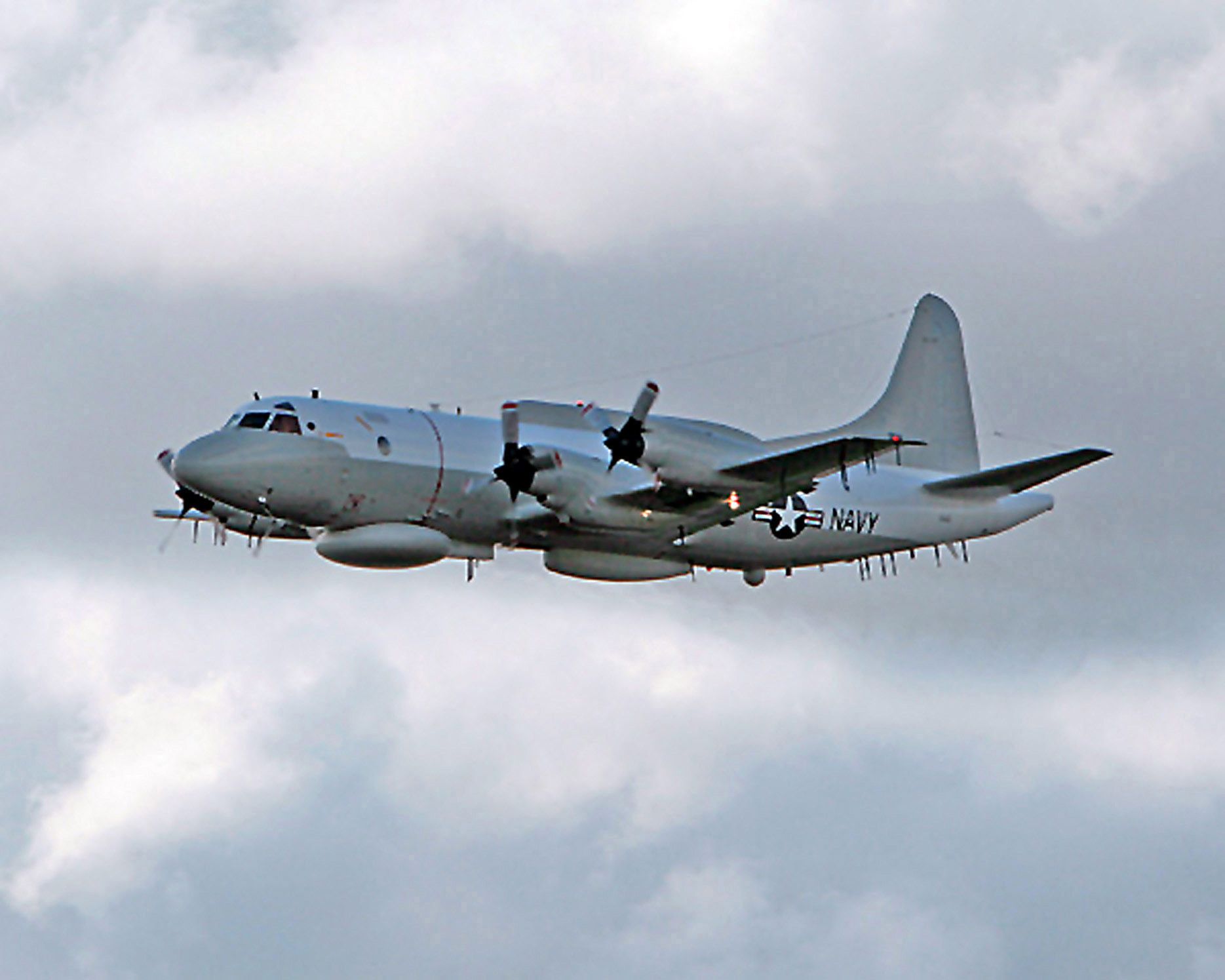
The P-3 Orion Airborne Early Warning (AEW) was a modified version of the Lockheed P-3 Orion maritime patrol aircraft, fitted with a large rotating radar dome on top of the fuselage. Lockheed developed the AEW conversion in the first half of the 1980s. The initial conversion was based on a P-3B formerly assigned to the Royal Australian Air Force, and its maiden flight occurred in 1984. The U.S. Customs Service, predecessor of the U.S. Customs and Border Protection (CBP), began operating the P-3 AEW in the late 1980s. The Customs Service had previously borrowed U.S. Navy E-2C Hawkeye aircraft to meet its antinarcotics surveillance requirements but needed an aircraft with longer range and on-station time. A 1989 U.S. General Accounting Office report confirmed that the P-3B AEW radar performance met specifications and that the aircraft was less costly to operate per square mile of area covered than the E-2C, owing to its higher cruising speed and longer endurance, with at least twice the in-flight endurance.
Starting in the 1990s, the USCS acquired additional P-3 AEWs equipped with the newer AN/APS-145 radar, and the original three aircraft were eventually refitted with APS-145 units as well. The fleet reached a peak strength of eight aircraft. In the 2010s, CBP put its P-3 fleet through a Service Life Extension Program, which involved replacing wings and tails and stripping each aircraft to bare metal for inspection. The P-3 AEWs were used primarily for counter-narcotics interdiction but also supported disaster relief and humanitarian missions, including air traffic coordination during Hurricane Harvey relief operations in Texas in 2017. CBP officially retired its final P-3 AEW on September 30, 2026, after a last flight from the National Air Security Operations Center Jacksonville in Jacksonville, Florida.
Design
The P-3 AEW retained the basic airframe of the P-3 Orion, a four-engine turboprop developed from the Lockheed L-188 Electra airliner. The most visually distinctive feature was the large saucer-shaped radome mounted atop the fuselage, housing a rotating pulse-Doppler surveillance radar. The initial three aircraft carried the AN/APS-138 radar, the same type used on early E-2C Hawkeye airborne early warning and control aircraft. Later conversions and refits used the AN/APS-145 radar. The aircraft also carried a sensor turret with electro-optical and infrared cameras for close visual investigation of radar contacts. Communications equipment included VHF and UHF radios and, by the end of the aircraft's service, satellite communications links. Beginning in the early 2000s, CBP's P-3s received glass cockpits as part of ongoing modernization.
Powerplant
Four Allison T56-A-14 turboprop engines, rated at approximately 4,600 shaft horsepower each, provided propulsion. The same engine family powered the C-130 Hercules and E-2 Hawkeye.
Operational history
The U.S. Customs and Border Protection was the sole operator of the P-3 AEW and was the only law enforcement agency known to have flown a dedicated airborne early warning aircraft. The fleet was based at the National Air Security Operations Center Jacksonville and conducted wide-area surveillance across the Caribbean, the Gulf of Mexico, and the transit zones of Central and South America. Crews used the airborne radar to detect, track, and disrupt drug-smuggling operations. CBP regularly paired P-3 AEWs with its Long Range Tracker variants to combine radar surveillance with electro-optical, infrared, and surface-search radar capabilities on the same mission. The fleet was retired on September 30, 2026, amid broader retirement of P-3 Orions across U.S. government agencies as the aging airframes became increasingly difficult to sustain.
Variants
- AN/APS-138 fit (initial) – The first three P-3 AEWs, converted from second-hand P-3Bs (including one former Royal Australian Air Force airframe), equipped with the AN/APS-138 surveillance radar. Later refitted with AN/APS-145 radars.
- AN/APS-145 fit – Additional aircraft acquired in the 1990s with the AN/APS-145 radar, as well as the earlier three aircraft after their refit. All eight aircraft in the peak fleet carried the APS-145 by the end of their service.
Operators
- United States – U.S. Customs and Border Protection (formerly U.S. Customs Service). Eight P-3 AEWs at peak strength. In service from the late 1980s; retired September 30, 2026.
Specifications (P-3 AEW)
General characteristics
- Crew: 8 (pilot, copilot, flight engineer, and radar/sensor operators)
- Length: 35.61 m (116 ft 10 in)
- Wingspan: 30.37 m (99 ft 8 in)
- Height: 10.27 m (33 ft 9 in)
- Maximum takeoff weight: 61,462 kg (135,500 lb)
Performance
- Maximum speed: 611 km/h (380 mph)
- Service ceiling: 8,534 m (28,000 ft)
- Range: 7,408 km (4,000 nmi / 4,603 mi)
Powerplant
- Engines: 4 × Allison T56-A-14 turboprop, 3,429 kW (4,600 shp) each
Avionics
- Surveillance radar: AN/APS-138 (initial three), AN/APS-145 (later acquisitions and refits)
- Sensor turret: Electro-optical / infrared cameras
- Communications: VHF, UHF radios; satellite communications links (late service)
 Argentina
 Armenia
 Australia
 Austria
 Austria-Hungary
 Belgium
 Brazil
 United Kingdom
 Brunei
 Bulgaria
 Canada
 Chile
Chile China
China Colonial America
 Colombia
 Confederate States
 Croatia
 Czech
Czech Denmark
 Egypt
Egypt Finland
 France
 Georgia
 Germany
 German Imperial
 Greece
 Holland
 Hungary
 India
India Indonesia
 Iran
Iran Iraq
Iraq Ireland
 Israel
 Italy
Italy Japan
Japan Japan (1940)
 Jordan
 Kingdom of Italy
 Malaysia
 Mexico
 Myanmar
 Nazi Germany
 Netherlands
 New Zealand
 North Korea
 Norway
 Pakistan
 Peru
Peru Philippines
 Poland
 Portugal
 Prussia
 Romania
 Russia
 Saudi Arabia
 Serbia
 Singapore
 Slovakia
 Slovenia
 South Africa
 South Korea
 Soviet Union
 Spain
Spain Sweden
 Switzerland
 Syria
Syria Taiwan
 Thailand
 Turkey
 UAE
UAE Ukraine
 Vietnam
 Yugoslavia