History
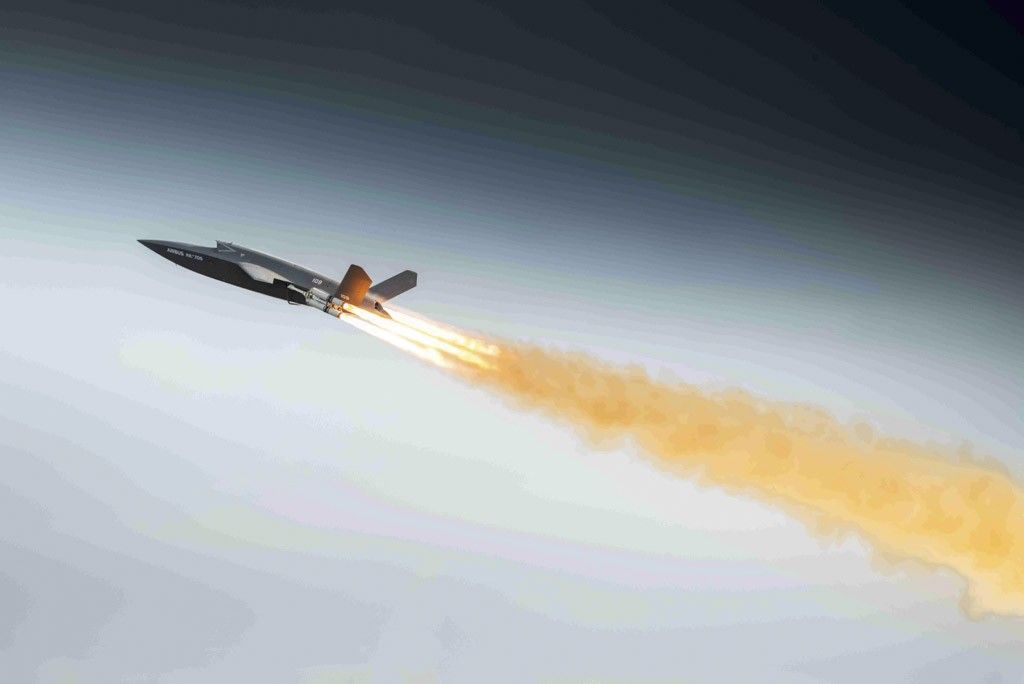
The Airbus U740 Valkyrie completed its first flight in Europe on 12 October 2026 at an undisclosed test facility in northern Europe, becoming the first collaborative combat aircraft (CCA) to fly on the continent. The flight achieved all stated objectives, including a runway-independent rocket-assisted take-off, manoeuvres at various altitudes and speeds up to Mach 0.8, and in-flight mission adjustments.
The U740 is developed in a partnership between Airbus and Kratos Defense & Security Solutions, under an agreement signed in 2025. The airframe is based on the Kratos XQ-58A, which first flew in the United States in 2019, and is equipped with Airbus' Multi-platform Autonomous Reconfigurable and Secure (MARS) mission system. MARS is designed to serve as the aircraft's European mission architecture, providing sovereign control over software, mission applications, data, and system hardware while using AI-enhanced software to conduct missions autonomously and coordinate groups of aircraft. A strict control hierarchy keeps a human on the loop for all critical decisions in compliance with rules of engagement and ethical and legal standards.
Airbus describes the first flight as confirming that the program is on track to deliver a combat-ready uncrewed CCA by 2029, addressing the operational requirements of the German Luftwaffe and other European armed forces. The aircraft is intended to operate alongside crewed combat aircraft such as the Eurofighter, extending their range, firepower, and survivability, and is designed to deliver both kinetic and non-kinetic effects. Subsequent flight tests are planned to evaluate the integration of the MARS mission system.
Specifications
The U740 Valkyrie has a length of 9.1 m (30 ft) and a wingspan of 8.2 m (27 ft). Maximum take-off weight is stated as over 6,000 lb (approximately 3 metric tonnes). Range is given as exceeding 3,000 miles in Kratos materials and exceeding 5,000 km (approximately 3,100 miles) in other reporting. Service ceiling is 45,000 ft. Maximum speed reached during the first flight was Mach 0.8.
The aircraft features an internal weapons bay for air-to-air and air-to-ground munitions and additional payload stations beneath the wings. Launch is possible via a runway-independent rocket-assisted rail system or conventional runway-based operations.
 Argentina
 Armenia
 Australia
 Austria
 Austria-Hungary
 Belgium
 Brazil
 United Kingdom
 United States
 Brunei
 Bulgaria
 Canada
 Chile
 China
 Colonial America
 Colombia
 Confederate States
 Croatia
 Czech
 Denmark
 Egypt
 Finland
 France
 Georgia
 Germany
 German Imperial
 Greece
 Holland
 Hungary
 India
 Indonesia
 Iran
 Iraq
 Ireland
 Israel
 Italy
 Japan
 Japan (1940)
 Jordan
 Kingdom of Italy
 Malaysia
 Mexico
 Myanmar
 Nazi Germany
 Netherlands
 New Zealand
 North Korea
 Norway
 Pakistan
 Peru
 Philippines
 Poland
 Portugal
 Prussia
 Romania

 Russia
 Saudi Arabia
 Serbia
 Singapore
 Slovakia
 Slovenia
 South Africa
 South Korea
 Soviet Union
 Spain
 Sweden
 Switzerland
 Syria
 Taiwan
 Thailand
 Turkey
 UAE
 Ukraine
 Vietnam
 Yugoslavia