
History
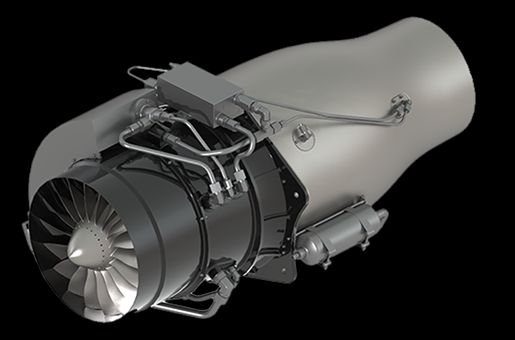
The GEK800 is a small turbofan engine developed by Kratos Defense & Security Solutions and GE Aerospace for long-range missiles and other uncrewed aircraft applications. The engine produces approximately 3.56 kN (800 lbf) of thrust and has also received the U.S. Military Engine Type Designation F143-ZZ-100.
The program is intended to provide an affordable propulsion option for cruise missiles, collaborative combat aircraft, and other uncrewed aerial vehicles. In August 2026, the U.S. Air Force awarded an Engineering, Manufacturing and Development contract to advance the GEK800 as a second-source propulsion system for the Joint Air-to-Surface Standoff Missile.
Development has combined Kratos experience with small propulsion systems and GE Aerospace expertise in propulsion development and production. The companies have described the GEK800 as part of a scalable family of engines intended for applications requiring relatively low-cost jet propulsion.
Development
Kratos initially developed and ground-tested the engine over a period of years before beginning additional joint development work with GE Aerospace in 2023. The Technology Maturation and Risk Reduction effort combined internal investment with support and funding from the Air Force Research Laboratory. A secondary report states that the engine was publicly unveiled in July 2024. The Defense Post reported this development history when covering the later JASSM engine award.
GE Aerospace and Kratos subsequently established a formal teaming framework covering development, manufacture, testing, and potential fielding of the GEK800 and additional engines in higher thrust classes. The arrangement expanded an earlier memorandum of understanding between the companies.
Testing
The joint team completed more than 50 engine starts during ground testing at Kratos and GE Aerospace facilities. In late September and October 2025, the GEK800 underwent altitude, durability, and limits testing at Purdue University's Maurice J. Zucrow Laboratories. The campaign covered simulated altitudes of approximately 1,500 to 10,700 m (5,000 to 35,000 ft).
The altitude campaign examined engine operability under simulated flight conditions and identified rotor-speed limits and compressor-system boundaries. Testing was completed in October 2025. GE Aerospace described the work in its altitude-testing announcement.
Experience from the GEK800 program was also used in development of the larger GEK1500. In February 2026, GE Aerospace and Kratos received a U.S. Air Force contract to complete preliminary design work for that 1,500 lbf-class engine. The companies said lessons from GEK800 altitude testing were being applied to thrust, electrical power generation, and life-cycle-cost objectives for the larger design. GE Aerospace described the GEK1500 as leveraging the GEK800 cruise-missile-engine architecture.
JASSM second-source program
On 17 August 2026, GE Aerospace and Kratos announced that the GEK800 had received the U.S. Military Engine Type Designation F143-ZZ-100. The U.S. Air Force also awarded the companies an Engineering, Manufacturing and Development contract to continue development of the turbofan as a second-source propulsion system for the Joint Air-to-Surface Standoff Missile. The companies announced the designation and contract in a GE Aerospace release.
The Engineering, Manufacturing and Development award does not mean that production JASSM missiles are already powered by the F143 or that the engine has entered operational service. The disclosed sources did not provide the contract value or period of performance.
Design
The GEK800 is a turbofan designed around an approximately 3.56 kN (800 lbf) thrust class. Its intended applications include long-range missiles, cruise missiles, uncrewed aerial systems, and collaborative combat-type aircraft.
GE Aerospace has described the GEK800 as using a limited-life design approach intended to control cost for applications that do not require the service life of conventional reusable aircraft engines. The architecture is also described as scalable, forming part of a prospective engine family spanning approximately 800 to 3,000 lbf of thrust.
The available sources do not disclose the engine's dimensions, mass, compressor or turbine configuration, bypass ratio, fuel consumption, or electrical output. The program's published testing information instead concentrates on durability, operability, rotor-speed limits, compressor-system boundaries, and suitability for affordable high-rate production.
Program status
As of August 2026, the GEK800 remained in development. It had completed extensive ground testing and altitude, durability, and limits testing, and had entered a U.S. Air Force Engineering, Manufacturing and Development effort for evaluation as a second-source JASSM propulsion system.
The F143-ZZ-100 military designation identifies the GEK800 within the U.S. military engine designation system, but it does not by itself indicate operational service or production installation in JASSM missiles.
Specifications (GEK800 / F143-ZZ-100)
General characteristics
- Type: Turbofan engine
- Developers: Kratos Defense & Security Solutions and GE Aerospace
- Military designation: F143-ZZ-100
- Intended applications: Long-range missiles, cruise missiles, uncrewed aerial systems, and collaborative combat-type aircraft
- Design approach: Limited-life architecture intended to support lower-cost propulsion applications
Performance
- Rated thrust class: Approximately 3.56 kN (800 lbf)
- Demonstrated altitude-test range: Approximately 1,500 to 10,700 m (5,000 to 35,000 ft)
- Ground testing: More than 50 engine starts reported by August 2026
Related equipment
- GEK1500: A larger 1,500 lbf-class engine under development by GE Aerospace and Kratos. Its design leverages the GEK800 architecture and lessons from GEK800 testing.
- AGM-158 JASSM: The long-range air-launched cruise missile for which the U.S. Air Force selected the GEK800 for Engineering, Manufacturing and Development as a potential second-source propulsion system.
 Argentina
 Armenia
 Australia
 Austria
 Austria-Hungary
 Belgium
 Brazil
 United Kingdom
 Brunei
 Bulgaria
 Canada
 Chile
Chile China
China Colonial America
 Colombia
 Confederate States
 Croatia
 Czech
Czech Denmark
 Egypt
Egypt Finland
 France
 Georgia
 Germany
 German Imperial
 Greece
 Holland
 Hungary
 India
India Indonesia
 Iran
Iran Iraq
Iraq Ireland
 Israel
 Italy
Italy Japan
Japan Japan (1940)
 Jordan
 Kingdom of Italy
 Malaysia
 Mexico
 Myanmar
 Nazi Germany
 Netherlands
 New Zealand
 North Korea
 Norway
 Pakistan
 Peru
Peru Philippines
 Poland
 Portugal
 Prussia
 Romania
 Russia
 Saudi Arabia
 Serbia
 Singapore
 Slovakia
 Slovenia
 South Africa
 South Korea
 Soviet Union
 Spain
Spain Sweden
 Switzerland
 Syria
Syria Taiwan
 Thailand
 Turkey
 UAE
UAE Ukraine
 Vietnam
 Yugoslavia