
History
AeroVironment began development of the Switchblade 600 in late 2018 as a larger anti-armour variant of its loitering munition family. The system was flight-tested in 2019 and publicly unveiled in October 2020 after completing 60 test flights from ground launches against fixed and moving targets. In March 2021, the U.S. Special Operations Command awarded AeroVironment a $26.1 million contract to field the system aboard Combatant Craft Medium and Heavy boats under the U.S. Naval Special Warfare Command Maritime Precision Engagement program.
The first operational deliveries to Ukraine arrived in late 2022, and the first confirmed combat use occurred in spring 2023 against Russian armoured vehicles. In June 2024, a Switchblade 600 struck a Russian Buk surface-to-air missile launcher in Donetsk Oblast after travelling more than 30 kilometres. In October 2023, the U.S. Army ordered more than 100 Switchblade 600s for the Low Altitude Stalking and Strike Ordnance (LASSO) program at company level. In August 2024, the U.S. Army awarded AeroVironment a contract worth nearly $1 billion to deliver Switchblade 300 and 600 systems over five years, followed by a $186 million delivery order for Switchblade 600 Block 2 in February 2026.
Lithuania signed a procurement contract with the U.S. government in December 2022, valued at approximately €45 million, making it the first country outside the United States to acquire the system. The package includes launching and control equipment, a simulation system for personnel training, and a maintenance package. Lithuania's Ministry of National Defence announced on 7 October 2026 that the first shipment had reached the Lithuanian Armed Forces, providing a long-range precision strike option against armoured targets on NATO's eastern flank. The ministry did not specify which variant was delivered or the number of munitions in the first shipment.
Specifications
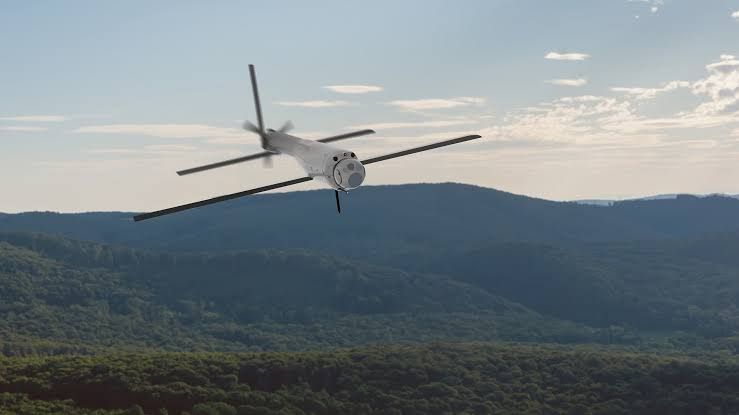
The baseline Switchblade 600 is a self-contained, tube-launched man-portable system with a spring-loaded wing deployment mechanism. Setup typically takes under 10 minutes, and the system can be launched from fixed defensive positions, combat vehicles, or aerial platforms. AeroVironment's published figures list a munition weight of 33 lb (15 kg) and an all-up round of 65 lb (approximately 29.5 kg), with an airframe length of 1.3 m and a single electric motor for propulsion. The system uses a tablet-based fire-control interface with encrypted data links and a Selective Availability Anti-Spoofing Module (SAASM) GPS receiver. A wave-off capability allows operators to abort a mission after launch. The anti-armour warhead is based on the FGM-148 Javelin warhead and is designed to engage heavy armoured vehicles from an overhead trajectory.
AeroVironment's specifications state a baseline standoff range of 40 km or more and forward pass range of 55 miles or more (approximately 88 km), with endurance exceeding 40 minutes. The Lithuanian Ministry of National Defence, describing AeroVironment's specifications, cites a demonstrated stand-off range exceeding 60 km, increasing to more than 90 km with Forward Pass capability. Sprint speed is 185 km/h (115 mph / 100 kt) and loiter speed is 113 km/h (70 mph / 61 kt).
The Switchblade 600 Block 2 extends these capabilities with a forward pass range exceeding 110 km (62 miles), endurance of more than 50 minutes, a munition weight of 36 lb (approximately 16.3 kg), and an all-up round of 68 lb (approximately 30.8 kg). It adds a secondary payload bay for multi-mission flexibility, AI/ML-enabled automatic target recognition with dual gimbaled EO/IR sensors, a Silvas MANET radio for networked operations, and IP67 maritime environmental hardening. Beyond-range relay and handoff exceeds 100 km.
Operators
The Switchblade 600 is operated by the United States, Ukraine, and Lithuania. Within the United States, the Army fields the system under the LASSO program at company level, and Naval Special Warfare employs it aboard surface craft for Maritime Precision Engagement missions. Ukraine received its first units in late 2022 and has used the system in combat since spring 2023. Lithuania received its first delivery in October 2026.
 Argentina
 Armenia
 Australia
 Austria
 Austria-Hungary
 Belgium
 Brazil
 United Kingdom
 Brunei
 Bulgaria
 Canada
 Chile
 China
 Colonial America
 Colombia
 Confederate States
 Croatia
 Czech
 Denmark
 Egypt
 Finland
 France
 Georgia
 Germany
 German Imperial
 Greece
 Holland
 Hungary
 India
 Indonesia
 Iran
 Iraq
 Ireland
 Israel
 Italy
 Japan
 Japan (1940)
 Jordan
 Kingdom of Italy
 Malaysia
 Mexico
 Myanmar
 Nazi Germany
 Netherlands
 New Zealand
 North Korea
 Norway
 Pakistan
 Peru
 Philippines
 Poland
 Portugal
 Prussia
 Romania

 Russia
 Saudi Arabia
 Serbia
 Singapore
 Slovakia
 Slovenia
 South Africa
 South Korea
 Soviet Union
 Spain
 Sweden
 Switzerland
 Syria
 Taiwan
 Thailand
 Turkey
 UAE
 Ukraine
 Vietnam
 Yugoslavia