
History
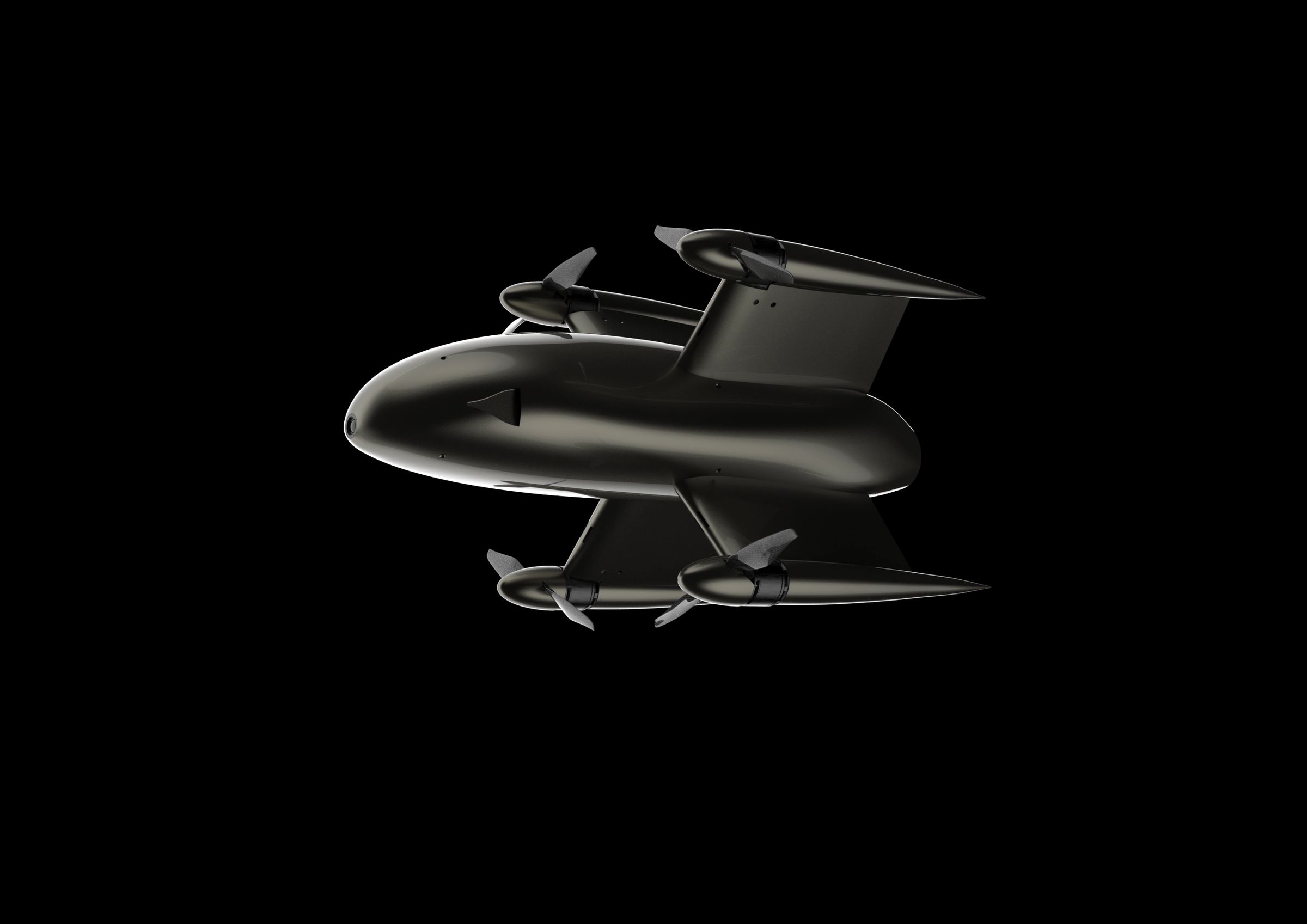
The Bandit-X is a hard-kill interceptor unmanned aerial vehicle developed by ARMMO Defense Technologies, a Spanish company based in Zafra, Extremadura, co-founded by Jaime Abrisqueta and Sandra Tomé. The system is designed to fly out, find, and physically destroy hostile drones rather than jam or spoof them.
In June 2026, ARMMO completed live flight tests of the Bandit-X before military operators at the Lešť International Military Training Centre in Slovakia as part of NATO's Eastern Flank Deterrence Initiative, coordinated by NATO Landcom. The tests validated the full operational cycle including takeoff, flight stability and navigation, high-speed operations, target interception, and recovery.
Following the Slovakia trials, ARMMO received a NATO Stock Number for the Bandit-X, facilitating procurement and sustainment by alliance militaries. The company also displayed the interceptor on its ARW39CAT-A autonomous catamaran at Eurosatory 2026.
In October 2026, Bandit-X launch containers were fitted to a General Dynamics European Land Systems ASCOD tracked cargo carrier during the Atlas 26 counter-drone exercise at the Médano del Loro training range in Huelva, Spain. The exercise, running from 19 to 23 October and organised by the Spanish Army's Anti-Aircraft Artillery Command, brought together the Spanish Army, Navy, Air and Space Force, Civil Guard, and National Police under a single command to test joint tactics against small drones, evaluating both soft-kill and hard-kill countermeasures.
Specifications
The Bandit-X features a cylindrical fuselage with an aerodynamically shaped nose, X-configuration wings carrying electric motors with two-blade propellers at the wingtips, and X-ailerons at the rear rotated 45 degrees relative to the wings, enabling vertical takeoff and landing from a flat surface.
A forward-mounted sensor, available in day or thermal and digital or analogue variants, provides terminal guidance by locking onto the target in the final phase of flight after operator validation. Inertial navigation combined with the terminal optical lock-on permits operation in GPS-denied environments; the analogue sensor option is retained for its lower susceptibility to jamming compared to digital alternatives.
The payload bay accommodates up to two fragmentation warheads of 400 grams each, totalling 0.8 kg, with detonation ensured by a proximity fuse. The system is capable of operating in swarms.
At Eurosatory 2026, ARMMO stated a maximum speed of 350 km/h, an operational range of 15 km, a service ceiling of 5,000 metres, and a flight time of 12 to 15 minutes. By the Atlas 26 exercise in October 2026, ARMMO reported the current version flies at more than 360 km/h and reaches 50 to 60 km. A planned upgrade targets 420 km/h and a 1 kg payload.
Program Status
ARMMO produces the Bandit-X using 3D printing from a dedicated facility in Zafra housing multiple printers, a production approach that also allows easy delocalisation of manufacturing to customer countries for export contracts. The company obtained ISO 9001 certification in parallel with the NATO Stock Number.
A modular containerised launch system was demonstrated at Eurosatory 2026, with the ARW39CAT-A catamaran carrying 20 interceptors; a smaller base module compatible with uncrewed ground vehicles and other land platforms has also been developed. A revised configuration with front-mounted pulling propellers and a more aerodynamic fuselage is under development, as is a longer-range derivative with swept wings and an elongated fuselage.
 Argentina
 Armenia
 Australia
 Austria
 Austria-Hungary
 Belgium
 Brazil
 United Kingdom
 United States
 Brunei
 Bulgaria
 Canada
 Chile
 China
 Colonial America
 Colombia
 Confederate States
 Croatia
 Czech
 Denmark
 Egypt
 Finland
 France
 Georgia
 Germany
 German Imperial
 Greece
 Holland
 Hungary
 India
 Indonesia
 Iran
 Iraq
 Ireland
 Israel
 Italy
 Japan
 Japan (1940)
 Jordan
 Kingdom of Italy
 Malaysia
 Mexico
 Myanmar
 Nazi Germany
 Netherlands
 New Zealand
 North Korea
 Norway
 Pakistan
 Peru
 Philippines
 Poland
 Portugal
 Prussia
 Romania

 Russia
 Saudi Arabia
 Serbia
 Singapore
 Slovakia
 Slovenia
 South Africa
 South Korea
 Soviet Union
 Sweden
 Switzerland
 Syria
 Taiwan
 Thailand
 Turkey
 UAE
 Ukraine
 Vietnam
 Yugoslavia