


History
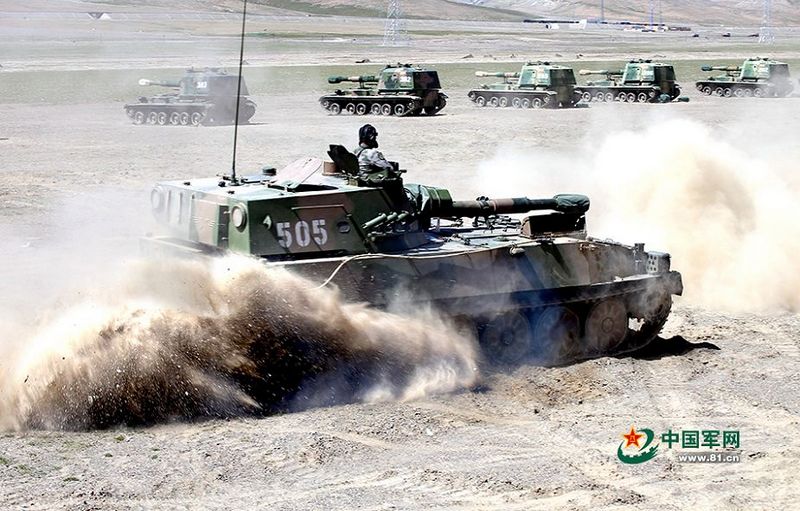
For the booming Chinese military industry, it only made sense to install the 155mm rifled gun and adapt it to use standard 155mm NATO shells to expand its export range. This is the case with the Type 89 155mm system, which combines all modern features including an auxiliary power unit (APU) for limited self-propelled capabilities.
This new gun was developed in the 1980s and is based on a Space Research Corporation (SRC) design.
At the heart of the Type 89 is a conventional artillery system using a multi-wheeled, heavy-duty, split frame, transported by mobile vehicles. The barrel sits on the mounting assembly, allowing for height changes and some lateral movement from the centerline. The recoil mechanism is an integral part of the Type 89 launch function.
The multi-slotted muzzle brake also provides some recoil reduction. With semi-automatic bolt action, the weapon provides a healthy rate of fire for sustained fire support from a distance. A typical crew consists of five people, and supplies are provided by accompanying ammunition carriers.
The use of a standard 155mm NATO projectile means the Type 89 can fire a variety of warhead types, and uses a Rocket Assisted Projectile (RAP) to greatly increase combat range.
The complete Type 89 system weighs 12 tons and has a base range of up to 24 miles. Its rate of fire is two to four rounds per minute.
Specification
Basic
Roles
- fire support/attack/damage
Dimensions
Production model)
Performance
Performance
Production mode;
for everyone else in our database)
Armor
1 x 155mm barrel.
Depends on the ammunition carrier.
Changes
Model 89 - Basic Series Names
 Argentina
 Armenia
 Australia
 Austria
 Austria-Hungary
 Belgium
 Brazil
 United Kingdom
 United States
 Brunei
 Bulgaria
 Canada
 Chile
Chile Colonial America
 Colombia
 Confederate States
 Croatia
 Czech
Czech Denmark
 Egypt
Egypt Finland
 France
 Georgia
 Germany
 German Imperial
 Greece
 Holland
 Hungary
 India
India Indonesia
 Iran
Iran Iraq
Iraq Ireland
 Israel
 Italy
Italy Japan
Japan Japan (1940)
 Jordan
 Kingdom of Italy
 Malaysia
 Mexico
 Myanmar
 Nazi Germany
 Netherlands
 New Zealand
 North Korea
 Norway
 Pakistan
 Peru
Peru Philippines
 Poland
 Portugal
 Prussia
 Romania
 Russia
 Saudi Arabia
 Serbia
 Singapore
 Slovakia
 Slovenia
 South Africa
 South Korea
 Soviet Union
 Spain
Spain Sweden
 Switzerland
 Syria
Syria Taiwan
 Thailand
 Turkey
 UAE
UAE Ukraine
 Vietnam
 Yugoslavia