
History
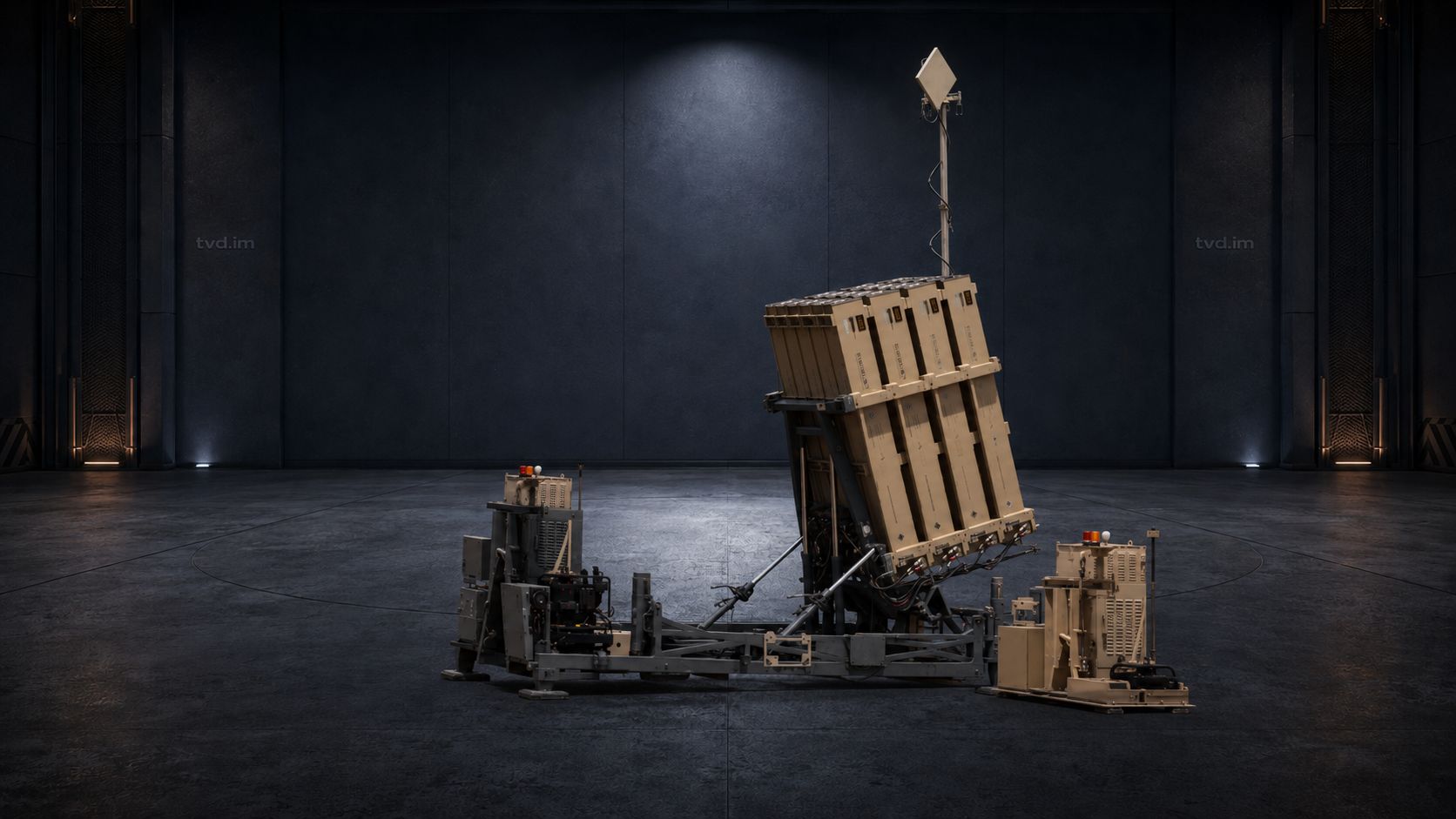
Rafael Iron Dome is an Israeli mobile air-defense system developed to intercept short-range rockets, artillery projectiles, mortars, and other aerial threats. It forms the lowest tier of Israel's layered missile-defense architecture.
An Iron Dome battery combines an EL/M-2084 radar, a battle-management and weapon-control system, launchers, and Tamir interceptor missiles. Its fire-control system predicts where an incoming threat will land and can avoid engaging projectiles that are expected to fall outside defended areas.
The land-based system entered operational service in 2011. Rafael subsequently developed the naval C-Dome and mobile I-Dome configurations around the same interceptor family.
Rocket attacks from the Gaza Strip during the early 2000s created an urgent requirement for protection against short-range threats. The experience of the 2006 Lebanon War, during which Hezbollah launched almost 4,000 rockets at Israel, accelerated work on an active defense system.
Israel selected Rafael's Iron Dome concept in 2007. Rafael led the project, ELTA developed the EL/M-2084 active electronically scanned array radar, and mPrest Systems produced the battle-management and weapon-control system. Early tests took place in July 2008, and final development tests were completed in 2010.
Iron Dome became operational on 7 April 2011, when it intercepted a Grad rocket launched from Gaza. The United States began financially supporting the program during the same period. A 2014 co-production agreement expanded manufacturing in the United States, and CSIS reported that approximately 75 percent of Tamir interceptor components were later made there. Rafael and Raytheon established a joint venture in 2020 to produce complete interceptors in the United States.
Design
Battery architecture
A standard Iron Dome battery consists of three principal elements: the EL/M-2084 detection and tracking radar, the battle-management and weapon-control system, and three or four missile launchers. Each launcher can carry up to 20 ready-to-fire Tamir interceptors.
The battery components can be transported on military trucks and deployed to protect population centers, strategic infrastructure, military installations, or field forces. The distributed layout allows the radar, command system, and launchers to operate from separate positions.
Detection and engagement
The EL/M-2084 radar detects an incoming projectile and tracks its trajectory. Track data passes to the battle-management system, which calculates the expected impact point and determines whether the projectile threatens a defended area. Threats expected to land in open terrain or at sea can be left unengaged, conserving interceptors.
When an engagement is authorized, the system launches a Tamir interceptor and sends trajectory corrections through a command datalink. The interceptor uses an onboard active radar seeker during the terminal phase. Its high-explosive blast-fragmentation warhead is intended to destroy the target in the air.
Iron Dome can engage multiple threats simultaneously and operate by day or night in adverse weather. Rafael states that the current system family can counter rockets, artillery projectiles, mortars, unmanned aerial vehicles, cruise missiles, and other missile threats. The modular architecture permits integration with external sensors and command systems.
Tamir interceptor
Tamir is a highly maneuverable guided interceptor with control fins, a command datalink, an active radar seeker, and a proximity-fuzed warhead. It is used throughout the Iron Dome family, including the land-based, naval, and mobile configurations.
Operational history
Iron Dome saw intensive use during the November 2012 fighting between Israel and Hamas. Israeli officials stated that it intercepted approximately 85 percent of the rockets selected for engagement because they threatened strategic sites or populated areas.
Nine batteries were operational during the 2014 Israel-Gaza conflict. CSIS reported that the system engaged about 800 of the 4,500 rockets and mortars launched into Israel because those projectiles were assessed as threats to populated areas. It reportedly destroyed 735 of the selected targets, corresponding to an interception rate of about 90 percent.
Israel continued to introduce software and hardware updates after these operations. Tests completed in March 2021 evaluated the system against simultaneous rocket, missile, and unmanned-aircraft attacks. During the fighting in May 2021, Iron Dome intercepted rockets directed toward populated areas and recorded its first confirmed interceptions of drones. Published estimates of its success rate differed, while Israeli officials reported approximately 90 percent for targets selected for engagement.
Rafael currently reports more than 10,000 successful interceptions and a success rate exceeding 90 percent. These figures are manufacturer claims and refer to threats that the system selected for engagement rather than every projectile detected.
The United States Army acquired two Iron Dome batteries as an interim component of its Indirect Fire Protection Capability program. It activated units for evaluation in 2020 and received the second battery in January 2021. Integration with the Army's Integrated Air and Missile Defense Battle Command System remained a technical issue because the original Iron Dome command architecture was not directly compatible with it.
A proposal associated with Senator Lindsey Graham sought to transfer the two American-owned batteries to Ukraine in 2023. According to reporting cited by the source material, Israel blocked the transfer because of concern that protected technology could reach Iran. Israel instead returned Patriot equipment to the United States, after which Patriot systems were redirected to support Ukrainian air defense.
Variants
- Iron Dome: Original land-based battery using separate radar, battle-management, and launcher elements.
- C-Dome: Naval member of the Iron Dome family. It was demonstrated against multiple airborne targets in a live-fire test in November 2017 and was developed for installation on warships.
- I-Dome: Highly mobile configuration that combines major system elements on vehicles for the protection of maneuvering forces, military areas, and critical infrastructure.
Operators
- Israel: Primary operator. Israel deployed the first operational units in 2011 and has used the system extensively against rockets, mortars, and unmanned aircraft.
- United States: The United States Army acquired two batteries for evaluation and interim air-defense requirements. The second battery was delivered in January 2021. Rafael also states that the United States Marine Corps selected the system family for expeditionary air defense.
Specifications (land-based Iron Dome with Tamir interceptor)
Battery
- Primary role: Mobile short-range air and missile defense
- Main elements: EL/M-2084 detection and tracking radar, battle-management and weapon-control system, and missile firing units
- Launchers per battery: Three to four
- Interceptors per launcher: Up to 20
- Maximum reported engagement range: Up to 70 km
- Reported defended area: Up to approximately 150 km², depending on deployment and threat geometry
- Coverage: 360-degree hemispheric coverage
- Operating conditions: Day, night, and adverse weather
Tamir interceptor
- Length: 3 m
- Diameter: 160 mm
- Launch weight: 90 kg
- Guidance: Command datalink with onboard active radar seeker
- Warhead: High-explosive blast-fragmentation warhead
Supported target types
- Original mission: Short-range rockets and artillery projectiles
- Additional reported targets: Mortars, unmanned aerial vehicles, cruise missiles, and selected missile threats
Related equipment
Within Israel's layered defense architecture, Iron Dome covers the shortest engagement tier. David's Sling and the Arrow systems address longer-range missile threats. The EL/M-2084 radar is also used as a fire-control sensor for David's Sling.
 Argentina
 Armenia
 Australia
 Austria
 Austria-Hungary
 Belgium
 Brazil
 United Kingdom
 United States
 Brunei
 Bulgaria
 Canada
 Chile
Chile China
China Colonial America
 Colombia
 Confederate States
 Croatia
 Czech
Czech Denmark
 Egypt
Egypt Finland
 France
 Georgia
 Germany
 German Imperial
 Greece
 Holland
 Hungary
 India
India Indonesia
 Iran
Iran Iraq
Iraq Ireland
 Italy
Italy Japan
Japan Japan (1940)
 Jordan
 Kingdom of Italy
 Malaysia
 Mexico
 Myanmar
 Nazi Germany
 Netherlands
 New Zealand
 North Korea
 Norway
 Pakistan
 Peru
Peru Philippines
 Poland
 Portugal
 Prussia
 Romania
 Russia
 Saudi Arabia
 Serbia
 Singapore
 Slovakia
 Slovenia
 South Africa
 South Korea
 Soviet Union
 Spain
Spain Sweden
 Switzerland
 Syria
Syria Taiwan
 Thailand
 Turkey
 UAE
UAE Ukraine
 Vietnam
 Yugoslavia