

History
The Planshet-M-IR is a Russian automated artillery fire-control and command system developed within the High Precision Systems holding company. It is installed on a protected wheeled vehicle and supports artillery commanders at battery and battalion level.
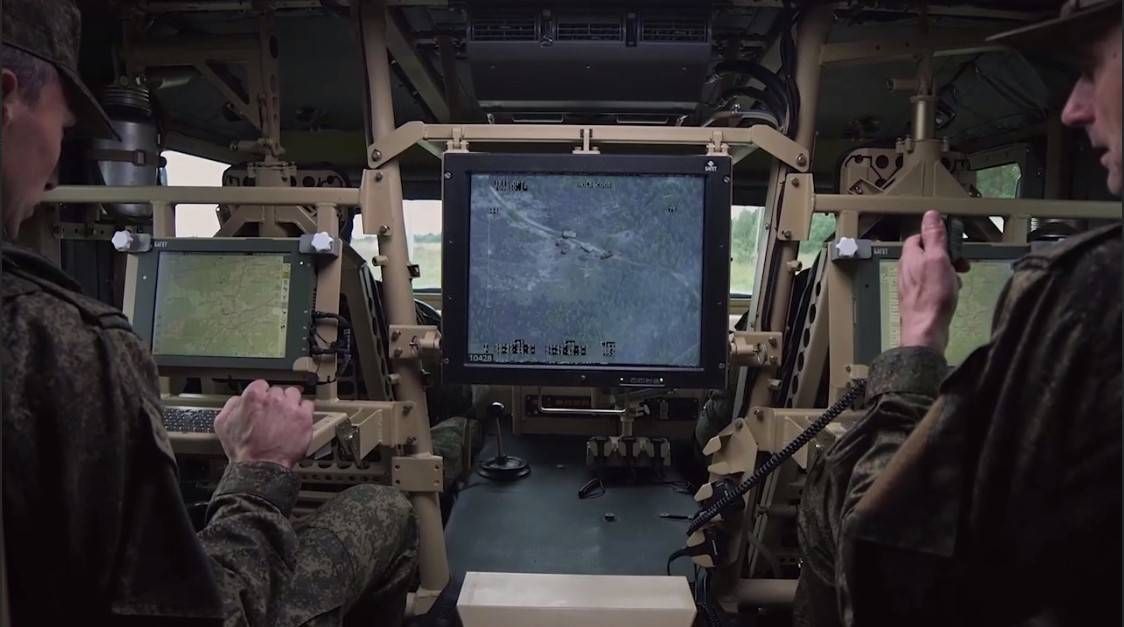
The system collects target information, supports firing-data preparation, and distributes commands to self-propelled and towed artillery, multiple launch rocket systems, and mortars. It can receive digital coordinates and live video from reconnaissance drones.
Planshet-M-IR was developed as a vehicle-mounted evolution of the portable Planshet-A artillery automation system. Its protected chassis provides a mobile workspace for commanders and reduces personnel exposure during fire-control operations.
Development
Planshet-A was created by VNII Signal to automate the work of artillery battalion, battery, gun, and mortar commanders. It passed Russian state testing in 2019. The portable system was designed to process coordinates, meteorological information, and data from reconnaissance equipment for different artillery weapons.
By August 2022, High Precision Systems was preparing the more advanced Planshet-M-IR configuration for preliminary testing. The equipment had been integrated into an Atlet armored vehicle. The program was presented as an initiative development by VNII Signal within the High Precision Systems organization.
Available reporting indicates that vehicle-mounted systems entered Russian service by 2023. Rostec subsequently stated that serial deliveries had continued for several years, although it did not disclose production totals.
Production and deliveries
On 30 July 2026, Rostec announced that High Precision Systems had delivered another batch of Planshet-M-IR systems to the Russian Ministry of Defence. The number of vehicles was not disclosed. Rostec described the delivered equipment as artillery fire-control systems mounted on armored vehicle chassis.
According to the Rostec delivery report published by TASS, operational experience was being used to refine the system's functionality. The manufacturer stated that the equipment reduced the time required to prepare initial firing data and improved the effectiveness of artillery fire.
Design
Planshet-M-IR combines an automated fire-control suite with a protected wheeled vehicle. Early descriptions identified the platform as the Atlet 4x4 armored vehicle, while the 2026 Ukrainian report described delivered systems as being installed on Patrul armored vehicles. Publicly available reports therefore indicate that the equipment has appeared on more than one protected chassis, or that the chassis identification changed between development and production configurations.
Command and fire-control equipment
The system receives, processes, and distributes digital target data. It is intended to coordinate self-propelled artillery, towed guns, multiple launch rocket systems, and mortars. This allows one command system to support units equipped with different weapon types.
Planshet-M-IR can exchange information with reconnaissance drones and provide the commander with target coordinates and video in real time. These inputs support target assignment and subsequent fire correction. Earlier Planshet-family descriptions also identify compatibility with laser rangefinders, thermal-imaging equipment, radio systems, and automated meteorological instruments.
An onboard weather station measures temperature, atmospheric pressure, and humidity. These environmental values can be included when preparing firing data because atmospheric conditions influence artillery trajectories.
Remote work
The commander and other operators can work inside the vehicle. Portable digital tablets may also be moved away from the vehicle, allowing personnel to continue controlling the unit from a separate position when required.
Protection and mobility
Installation on an armored vehicle protects the command equipment and reduces risks to its operators compared with an exposed position. The wheeled chassis also allows the fire-control post to relocate with the supported artillery formation. Published sources do not provide confirmed protection levels, engine details, vehicle weight, or mobility performance for the production configuration.
Operational history
Planshet-M-IR is operated by the Russian Armed Forces. Rostec has stated that the system has been used under real operational conditions, but the company has not published unit assignments or detailed deployment records.
The system contributes to counter-battery activity by combining reconnaissance information, rapid firing-data preparation, and fire adjustment. Its drone connection enables artillery commanders to observe targets and assess the results of fire without relying only on voice reports.
The July 2026 delivery confirmed continued procurement of vehicle-mounted Planshet-M-IR systems. Neither Rostec nor the Russian Ministry of Defence disclosed the batch size or the total number in service.
Related equipment
- Planshet-A: Portable automated command-and-control system for artillery and mortar units. It formed the technological basis for the vehicle-mounted Planshet-M-IR.
- Atlet: Russian 4x4 protected vehicle used for the documented development configuration of Planshet-M-IR.
Operators
- Russia: Operated by the Russian Armed Forces. Serial deliveries of armored vehicle-mounted systems are confirmed, but quantities have not been published.
Specifications (Planshet-M-IR)
General characteristics
- Type: Mobile automated artillery fire-control and command system
- Platform: Protected wheeled armored vehicle
- Command level: Artillery battery and battalion
- Operator stations: Vehicle-mounted workstations and removable digital tablets
Supported weapon systems
- Artillery: Self-propelled and towed artillery systems
- Rocket artillery: Multiple launch rocket systems
- Mortars: Mortar units
Data and sensors
- Target information: Digital target coordinates and real-time drone video
- Reconnaissance inputs: Unmanned aircraft and compatible observation equipment
- Meteorological inputs: Temperature, atmospheric pressure, and humidity
- Primary functions: Intelligence-data collection, firing-data preparation, weapon coordination, and fire adjustment
 Argentina
 Armenia
 Australia
 Austria
 Austria-Hungary
 Belgium
 Brazil
 United Kingdom
 United States
 Brunei
 Bulgaria
 Canada
 Chile
Chile China
China Colonial America
 Colombia
 Confederate States
 Croatia
 Czech
Czech Denmark
 Egypt
Egypt Finland
 France
 Georgia
 Germany
 German Imperial
 Greece
 Holland
 Hungary
 India
India Indonesia
 Iran
Iran Iraq
Iraq Ireland
 Israel
 Italy
Italy Japan
Japan Japan (1940)
 Jordan
 Kingdom of Italy
 Malaysia
 Mexico
 Myanmar
 Nazi Germany
 Netherlands
 New Zealand
 North Korea
 Norway
 Pakistan
 Peru
Peru Philippines
 Poland
 Portugal
 Prussia
 Romania
 Saudi Arabia
 Serbia
 Singapore
 Slovakia
 Slovenia
 South Africa
 South Korea
 Soviet Union
 Spain
Spain Sweden
 Switzerland
 Syria
Syria Taiwan
 Thailand
 Turkey
 UAE
UAE Ukraine
 Vietnam
 Yugoslavia