
History
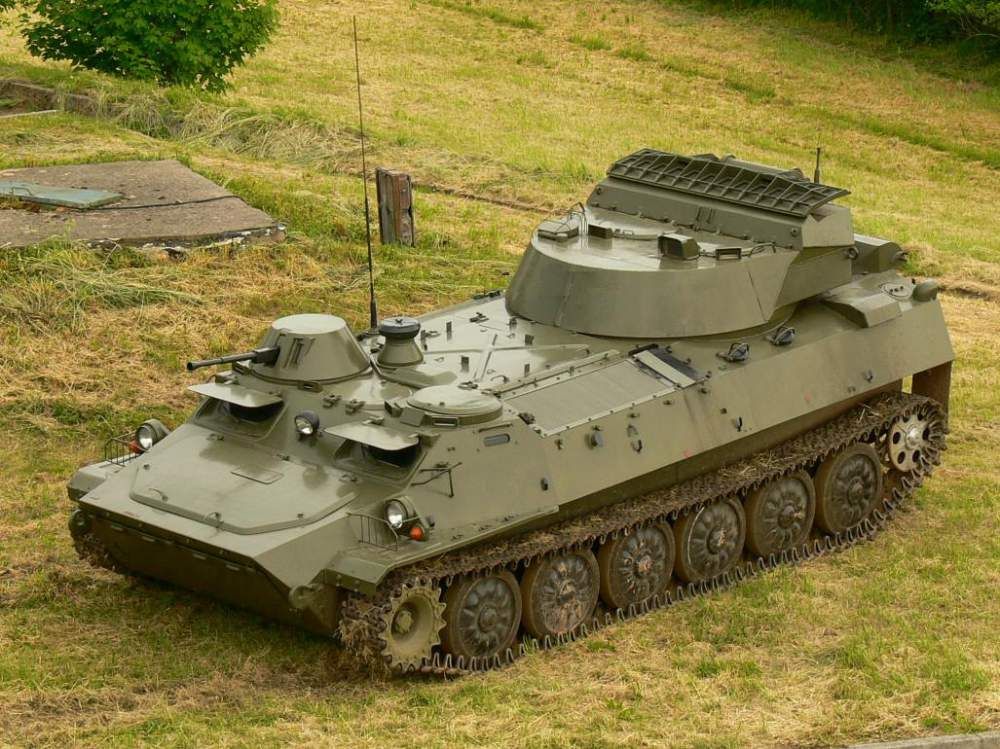
The SNAR-10 is a Soviet ground reconnaissance radar installed on the tracked MT-LB armored vehicle. It was designed to observe battlefield activity while operating with mobile land forces.
Its primary tasks are detecting moving ground and surface targets and locating artillery-shell bursts. The resulting radar data can help artillery units observe and correct their fire.
A modernized SNAR-10M1, designated 1RL232-2M and also known as Leopard-M, was presented at the Oboronexpo exhibition in 2014. A contemporary SNAR-10M1 report described updated operator stations, automated data transmission, satellite navigation, and digital terrain maps.
In January 2019, SNAR-10M1 systems entered service with artillery units of Russia's Central Military District. Reports from Army Recognition and Defence Blog stated that the modernized radar could detect targets at distances of up to 40 km.
Ukrainian forces captured a Russian SNAR-10M1 mobile radar in 2022. On 7 August 2026, the Danish Panzermuseum East transferred an original SNAR-10 station to the Ukrainian Defense Forces as part of a donation that also included a BMP-1 infantry fighting vehicle. This transfer is the earliest dated physical milestone explicitly documented for the exact original SNAR-10 in the available evidence.
Design
The SNAR-10 combines radar equipment with the mobility of an MT-LB tracked armored chassis. The vehicle carries the radar and its operators across terrain while providing protection against small-arms fire and shell fragments.
The original radar uses Doppler signal characteristics to distinguish targets. Doppler processing measures changes in the returned signal caused by movement. This enables the station to identify moving targets against the surrounding terrain.
The station can detect moving ground targets, surface vessels, and the impact points of artillery shells. Observation of shell bursts allows an artillery unit to compare the actual impact location with the intended target and adjust subsequent fire.
The SNAR-10M1 retains the MT-LB-based arrangement but introduces modernized radar processing and operator equipment. It also has internal and external communications for automated data transfer, an autonomous navigation system, GLONASS and GPS satellite navigation, and digital terrain maps. Its crew consists of four personnel. The reported deployment time is no more than 5.5 minutes, while autonomous operation can continue for at least three days.
Operational history
Russia operated the modernized SNAR-10M1 with artillery formations. A system delivered to the Central Military District in 2019 was assigned to strengthen the reconnaissance capabilities of artillery units in a tank formation stationed in the southern Urals.
Ukraine has obtained examples through capture and foreign assistance. Ukrainian forces captured an SNAR-10M1 in 2022. In 2026, a Danish museum supplied an original SNAR-10 to the Ukrainian Defense Forces.
Variants
- SNAR-10: Original Soviet ground reconnaissance station on the MT-LB tracked chassis. It detects moving ground and surface targets and observes artillery-shell bursts.
- SNAR-10M1: Modernized version designated 1RL232-2M and also called Leopard-M. It incorporates updated radar processing, communications, automated data transmission, satellite navigation, and digital mapping.
Operators
- Russia: Operates the modernized SNAR-10M1. A system entered service with the Central Military District in 2019.
- Ukraine: Captured an SNAR-10M1 in 2022 and received an original SNAR-10 from Panzermuseum East in Denmark in 2026.
Specifications (SNAR-10)
General characteristics
- Type: Mobile ground reconnaissance and artillery-observation radar
- Platform: MT-LB tracked armored vehicle
- Primary functions: Detection of moving ground and surface targets and observation of artillery-shell bursts
Detection performance
- Moving ground-target detection range: Up to 17 km
- Surface-target detection range: Up to 30 km
- Ground shell-burst observation range: 4–10 km
- Shell-burst observation range over water: 14–23 km
 Argentina
 Armenia
 Australia
 Austria
 Austria-Hungary
 Belgium
 Brazil
 United Kingdom
 United States
 Brunei
 Bulgaria
 Canada
 Chile
Chile China
China Colonial America
 Colombia
 Confederate States
 Croatia
 Czech
Czech Denmark
 Egypt
Egypt Finland
 France
 Georgia
 Germany
 German Imperial
 Greece
 Holland
 Hungary
 India
India Indonesia
 Iran
Iran Iraq
Iraq Ireland
 Israel
 Italy
Italy Japan
Japan Japan (1940)
 Jordan
 Kingdom of Italy
 Malaysia
 Mexico
 Myanmar
 Nazi Germany
 Netherlands
 New Zealand
 North Korea
 Norway
 Pakistan
 Peru
Peru Philippines
 Poland
 Portugal
 Prussia
 Romania
 Russia
 Saudi Arabia
 Serbia
 Singapore
 Slovakia
 Slovenia
 South Africa
 South Korea
 Spain
Spain Sweden
 Switzerland
 Syria
Syria Taiwan
 Thailand
 Turkey
 UAE
UAE Ukraine
 Vietnam
 Yugoslavia