
History
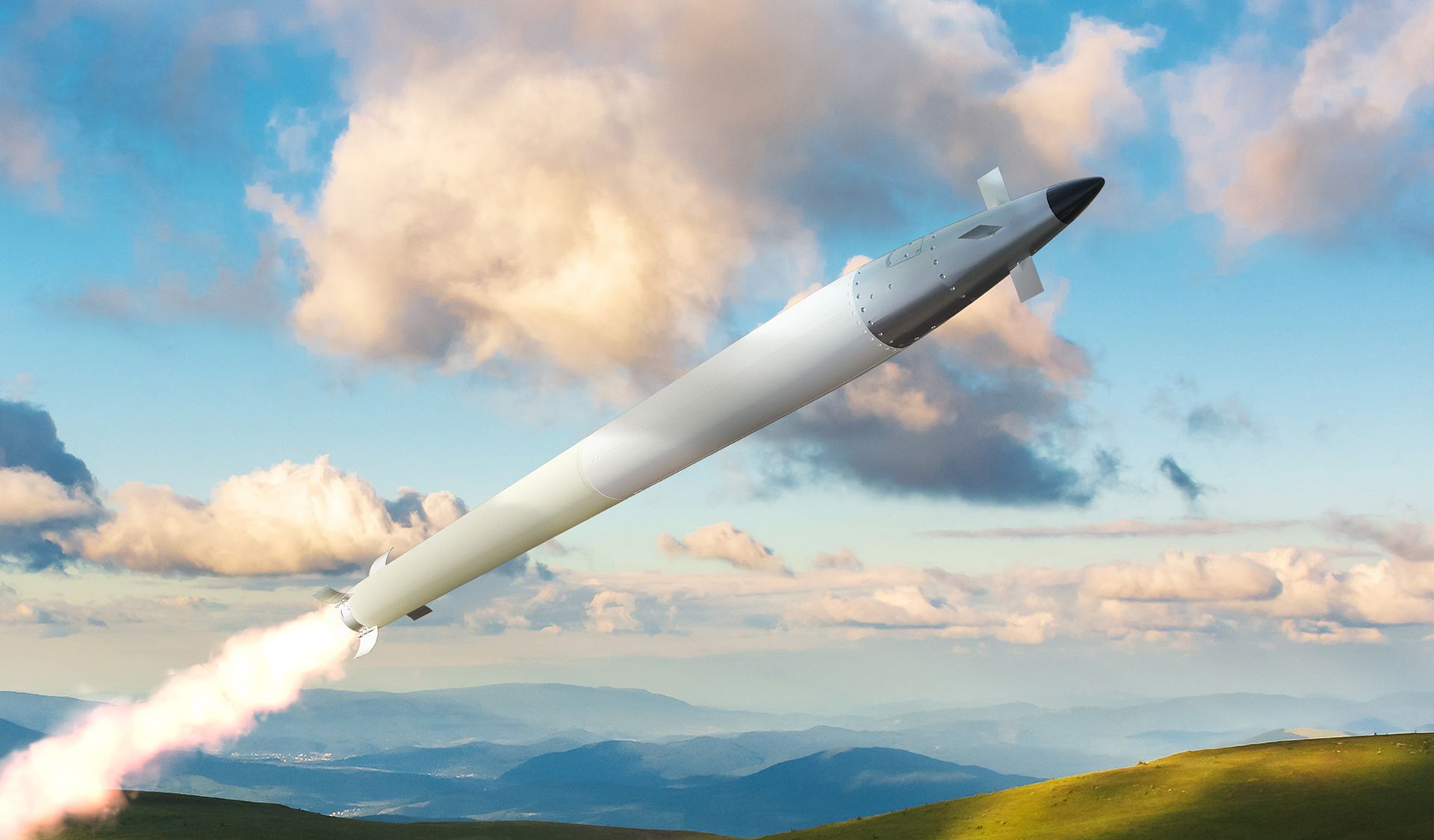
The Guided Multiple Launch Rocket System (GMLRS) is a family of precision-guided surface-to-surface artillery rockets developed for the M270 MLRS family and M142 HIMARS launchers. The family combines inertial and satellite navigation with several warhead options and has evolved from the original GMLRS into the longer-range ER GMLRS.
GMLRS emerged from the wider MLRS development effort as militaries sought greater range and accuracy than the original unguided rockets could provide. The guided program involved the United States, United Kingdom, France, Germany and Italy, while Lockheed Martin became the principal manufacturer.
The family has been used operationally and remains in production while the Extended-Range GMLRS is undergoing continued development and qualification. Lockheed Martin describes the family as an all-weather precision-strike capability fired from both M270-series and HIMARS launchers.
Development
The original MLRS program grew from the U.S. Army General Support Rocket System work begun in the 1970s. By the end of the 1990s, a requirement had emerged for a guided MLRS rocket. The multinational GMLRS program included the United States, United Kingdom, France, Germany and Italy, with the United States providing half of the funding according to the supplied historical source.
The United States issued an urgent requirement in early 2005 for a GMLRS version with a single unitary warhead. The first unitary-warhead GMLRS was delivered to the U.S. Army in June 2005 and was first used operationally in September 2005. The United Kingdom became the first export customer that same month and planned to introduce the weapon into service from 2007.
Development later shifted toward restoring an area-effects capability without conventional cluster submunitions. Production contracts for the Alternative Warhead were issued in 2016, with initial production rounds delivered that year. Testing of Extended-Range GMLRS began in 2018.
Extended-range development
ER GMLRS extends the maximum stated range to 150 km. Lockheed Martin states that the developmental rocket uses a larger motor and tail-driven control, while retaining compatibility with HIMARS and M270-family launchers. A December 2025 test demonstrated a 112 km flight with the Alternative Warhead version, and in February 2026 an M270A2 conducted its first launch of the ER GMLRS Alternative Warhead variant during qualification activity. More information is available from the Lockheed Martin GMLRS page and the ER GMLRS project profile.
Production and procurement
The supplied August 2026 source reports that Lockheed Martin had produced slightly more than 75,000 GMLRS-family rockets by August 2025 and had previously announced plans to raise annual capacity to 14,000 rockets. Lockheed Martin's general product page separately states that more than 60,000 GMLRS rockets have been produced, but does not attach a date to that figure; the later dated production total is therefore the more specific figure in the supplied material.
The U.S. Army is planning a major future procurement covering GMLRS and ER GMLRS. The supplied source states that the Army could procure up to 133,000 rockets through 2034 and has asked potential manufacturers to describe their ability to produce 19,002 rockets annually in multiple variants. Deliveries at that rate are planned from 2030, while the Army is considering whether the level could be reached from 2028.
Design
GMLRS is a solid-propellant guided artillery rocket designed for launch from standardized MLRS launch pod containers. A pod holds six rockets. M270-family launchers carry two six-round pods, while HIMARS carries one pod. Lockheed Martin identifies both launcher families as compatible with GMLRS.
The rocket is built around three principal elements: the rocket motor, guidance system and warhead. Guidance combines inertial navigation with GPS. The supplied source describes the current M30A2 and M31A2 as using satellite and inertial guidance, while the historical technical source describes GMLRS guidance as inertial navigation combined with jam-resistant GPS.
Warheads
The M31 family uses a unitary blast-fragmentation warhead intended for precision attacks on point targets. Lockheed Martin describes GMLRS Unitary as carrying a 200 lb class unitary warhead and having a range exceeding 70 km.
The Alternative Warhead variant is intended for area targets without conventional unexploded submunition effects. Lockheed Martin describes it as a 200 lb class fragmenting warhead. The supplied technical source identifies M30A1 as the Alternative Warhead version and M30A2 as the corresponding variant using an Insensitive Munition Propulsion System.
The supplied August 2026 source describes the current M30A2 as using a fragmentation warhead with tungsten balls for personnel and lightly armored targets, while M31A2 uses a unitary high-explosive warhead for point targets. Both are described there as having a range of up to 84 km.
Extended-Range GMLRS
ER GMLRS retains the basic GMLRS mission while increasing maximum range to 150 km. The longer range is achieved through a larger rocket motor, a revised body form and tail-mounted control surfaces. Lockheed Martin states that the design has enhanced maneuverability through tail-driven control and retains commonality with legacy GMLRS.
ER GMLRS is being developed with both Unitary and Alternative Warhead configurations. According to the supplied sources, it uses the same basic GPS and inertial-navigation approach as the shorter-range family. The British Army also identifies ER GMLRS as part of the planned payload suite for its modernized M270 force. The British Army GMLRS page describes GMLRS as a central element of its deep-fires capability.
Operational history
The unitary GMLRS was first used operationally in September 2005 after its initial delivery to the U.S. Army earlier that year. U.S. Army, U.S. Marine Corps and British Royal Artillery units subsequently fired several thousand GMLRS rockets in Iraq and Afghanistan. The supplied historical source reports reliability above 98 percent, consistent with Lockheed Martin's statement that GMLRS reliability exceeds 98 percent.
British GMLRS forces deployed to Afghanistan in February 2007. The British Army continues to describe the M270 firing GMLRS as a mainstay of its deep and shaping fires capability.
Variants
- M30A1 GMLRS Alternative Warhead: Area-effects version using a fragmenting Alternative Warhead rather than a unitary high-explosive warhead.
- M30A2 GMLRS Alternative Warhead: Development of the M30A1 incorporating an Insensitive Munition Propulsion System. The supplied source describes its warhead as using tungsten fragmentation elements and gives a maximum range of up to 84 km.
- M31 GMLRS Unitary: Unit carrying a single blast-fragmentation warhead. The supplied technical source gives a 90 kg warhead for the M31.
- M31A1 GMLRS Unitary: Improved M31 version with an enhanced fuzing system that provides airburst options.
- M31A2 GMLRS Unitary: M31-family version incorporating the same Insensitive Munition Propulsion System identified for the M30A2. The supplied source gives a maximum range of up to 84 km.
- ER GMLRS Unitary: Extended-range developmental version with a unitary warhead and a stated maximum range of 150 km.
- ER GMLRS Alternative Warhead: Extended-range developmental version with an area-effects Alternative Warhead and a stated maximum range of 150 km.
Operators
- United States: The U.S. Army has operated GMLRS since 2005. U.S. Army and U.S. Marine Corps units have used GMLRS operationally, and the Army is planning additional large-scale procurement of GMLRS and ER GMLRS through 2034.
- United Kingdom: The United Kingdom became the first export customer in 2005. Royal Artillery units have used GMLRS operationally, including in Afghanistan, and the British Army plans to incorporate ER GMLRS into its modernized M270 force.
Specifications (M31 GMLRS)
General characteristics
- Type: Guided surface-to-surface artillery rocket
- Length: 3.94 m
- Diameter: 227 mm
- Weight: 302 kg
- Warhead: 90 kg unitary blast-fragmentation warhead
- Guidance: Inertial navigation and GPS
- Compatible launchers: M270 MLRS family and M142 HIMARS
Performance
- Range: More than 70 km for GMLRS Unitary according to Lockheed Martin; the supplied current source gives up to 84 km for M31A2
Specifications (ER GMLRS)
General characteristics
- Type: Extended-range guided surface-to-surface artillery rocket
- Length: 3.93 m
- Warhead options: Unitary or Alternative Warhead
- Guidance: GPS and inertial navigation
- Compatible launchers: M270 MLRS family and M142 HIMARS
Performance
- Maximum range: Up to 150 km
Related equipment
- M270 MLRS: Tracked multiple-launch rocket system compatible with GMLRS and ER GMLRS, carrying two six-rocket pods.
- M142 HIMARS: Wheeled multiple-launch rocket system compatible with GMLRS and ER GMLRS, carrying one six-rocket pod.
 Argentina
 Armenia
 Australia
 Austria
 Austria-Hungary
 Belgium
 Brazil
 United Kingdom
 Brunei
 Bulgaria
 Canada
 Chile
Chile China
China Colonial America
 Colombia
 Confederate States
 Croatia
 Czech
Czech Denmark
 Egypt
Egypt Finland
 France
 Georgia
 Germany
 German Imperial
 Greece
 Holland
 Hungary
 India
India Indonesia
 Iran
Iran Iraq
Iraq Ireland
 Israel
 Italy
Italy Japan
Japan Japan (1940)
 Jordan
 Kingdom of Italy
 Malaysia
 Mexico
 Myanmar
 Nazi Germany
 Netherlands
 New Zealand
 North Korea
 Norway
 Pakistan
 Peru
Peru Philippines
 Poland
 Portugal
 Prussia
 Romania
 Russia
 Saudi Arabia
 Serbia
 Singapore
 Slovakia
 Slovenia
 South Africa
 South Korea
 Soviet Union
 Spain
Spain Sweden
 Switzerland
 Syria
Syria Taiwan
 Thailand
 Turkey
 UAE
UAE Ukraine
 Vietnam
 Yugoslavia