
History
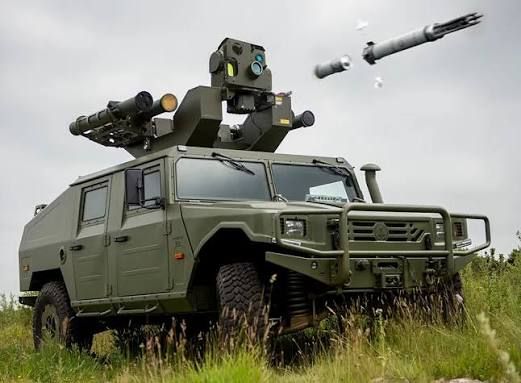
Thales RapidRanger is a British lightweight mobile short-range air-defence system designed around a compact automated launcher that can be installed on wheeled or tracked vehicles. The system combines four ready-to-fire missiles with electro-optical surveillance, automatic target tracking and an integral 360-degree surveillance capability.
RapidRanger can employ Starstreak 2 or Lightweight Multirole Missile, also known as LMM or Martlet, and the two missile types can be carried in combination. Its modular launcher weighs less than 500 kg, allowing integration with relatively light tactical vehicles.
The system has been selected for mobile short-range air defence and has entered Ukrainian service during the Russia-Ukraine war. Ukrainian RapidRanger systems publicly shown in 2026 were installed on Spanish URO VAMTAC tactical vehicles and carried LMM missiles.
Development and procurement
RapidRanger was developed by Thales as a modular mobile air-defence launcher. According to the Thales RapidRanger description, the system weighs less than 500 kg and uses an open architecture that permits integration of Starstreak and LMM missiles. The design can be fitted to different wheeled or tracked vehicles.
In October 2024, the Portuguese Army publicly identified RapidRanger as the system selected to replace its retired Chaparral air-defence equipment. Contemporary reporting stated that the planned Portuguese configuration would use the VAMTAC ST5 vehicle and four missiles, although a signed procurement contract had not yet been made public at that time.
In 2025, the United Kingdom announced a military assistance package for Ukraine associated with RapidRanger and a commitment to provide thousands of LMM missiles. Later reporting linked the package to 5,000 LMM missiles and technology-transfer plans covering missile production and components of the RapidRanger system.
By March 2026, RapidRanger had been publicly observed with Ukrainian mobile air-defence forces. Ukrainian reporting showed a RapidRanger installation on a URO VAMTAC vehicle and described it as operationally deployed within mobile air-defence units.
On 2 September 2026, the 1030th Aquila Anti-Aircraft Missile and Artillery Regiment of Ukraine's 3rd Army Corps released photographs of its RapidRanger systems. The regiment described the lightweight automated system as filling the gap between mobile fire groups and heavier, less mobile air-defence systems. The photographed launchers carried LMM missiles. The regiment's release was described as the first public showing of these systems in combat conditions, although RapidRanger had already been identified in Ukrainian service in earlier March 2026 footage.
Design
RapidRanger is based on an autonomous launcher module weighing less than 500 kg. Its modular construction permits installation on a vehicle that has sufficient payload capacity, including wheeled and tracked platforms. The Ukrainian configuration publicly shown in 2026 uses the Spanish URO VAMTAC tactical vehicle.
The launcher carries four missiles in ready-to-fire positions. It can use Starstreak 2, LMM, or a mixed missile load depending on the mission. Both weapon options use laser-based guidance rather than conventional heat-seeking guidance.
Sensors and fire control
The system includes daylight and thermal imaging equipment for target observation and engagement in reduced visibility and at night. Automatic target tracking reduces the amount of manual tracking required from the operator.
RapidRanger is designed with an integral 360-degree surveillance sensor. Thales has described possible surveillance arrangements including passive infrared search and track equipment or an integrated surveillance and tracking radar, allowing the launcher to function as an autonomous air-defence unit.
Ukrainian reporting gives a target detection range of more than 15 km and an effective target acquisition range of more than 7 km. These figures describe the RapidRanger sensor and engagement process rather than the maximum performance of every compatible missile.
Command and control
The launcher uses an open architecture and can be integrated with external command-and-control systems. This permits RapidRanger to operate as an autonomous launcher or as part of a wider air-defence network in which target information and engagement commands are shared with other sensors and command elements.
Missiles
RapidRanger can carry four Starstreak 2 or LMM missiles, including a mixed load. LMM is a lightweight multirole missile used against aerial and other targets. Ukrainian RapidRanger systems photographed in September 2026 were equipped with LMM missiles.
The missiles are guided using a laser beam-riding method. This guidance principle does not depend on the target producing a strong infrared signature, making the system applicable to aerial targets that may be difficult for conventional infrared-guided missiles to track.
Operational history
Ukraine is the first operator confirmed by the supplied material to have publicly shown RapidRanger in operational service. The system has been deployed within Ukrainian mobile air-defence formations during the Russia-Ukraine war.
RapidRanger was publicly identified in Ukraine by March 2026. In September 2026, the 1030th Aquila Anti-Aircraft Missile and Artillery Regiment of the 3rd Army Corps released detailed photographs of its VAMTAC-mounted launchers. The photographed systems carried LMM missiles and were described as a mobile layer between lighter mobile fire groups and heavier air-defence systems.
A Russian Ministry of Defense claim published in July 2026 stated that Russian forces had destroyed a British RapidRanger system. The supplied material presents this as a Russian claim and does not provide independent confirmation of the reported loss.
Operators
- Ukraine: RapidRanger systems are in service with Ukrainian air-defence forces. The 1030th Aquila Anti-Aircraft Missile and Artillery Regiment of the 3rd Army Corps publicly displayed VAMTAC-mounted systems equipped with LMM missiles in September 2026.
Specifications (RapidRanger)
General characteristics
- System type: Lightweight automated mobile short-range air-defence launcher.
- Launcher mass: Less than 500 kg.
- Vehicle integration: Modular installation on suitable wheeled or tracked vehicles.
- Ukrainian carrier vehicle: URO VAMTAC tactical off-road vehicle.
- Ready-to-fire missiles: Four.
- Compatible missiles: Starstreak 2 and Lightweight Multirole Missile.
- Missile load: A single missile type or a mixed Starstreak 2 and LMM load.
Sensors and engagement
- Observation equipment: Daylight and thermal imaging systems.
- Surveillance coverage: 360 degrees.
- Target tracking: Automatic tracking capability.
- Reported detection range: More than 15 km.
- Reported effective target acquisition range: More than 7 km.
- Guidance: Laser beam-riding guidance for compatible missiles.
- Command and control: Open architecture supporting integration with external C2 systems.
 Argentina
 Armenia
 Australia
 Austria
 Austria-Hungary
 Belgium
 Brazil
 United States
 Brunei
 Bulgaria
 Canada
 Chile
Chile China
China Colonial America
 Colombia
 Confederate States
 Croatia
 Czech
Czech Denmark
 Egypt
Egypt Finland
 France
 Georgia
 Germany
 German Imperial
 Greece
 Holland
 Hungary
 India
India Indonesia
 Iran
Iran Iraq
Iraq Ireland
 Israel
 Italy
Italy Japan
Japan Japan (1940)
 Jordan
 Kingdom of Italy
 Malaysia
 Mexico
 Myanmar
 Nazi Germany
 Netherlands
 New Zealand
 North Korea
 Norway
 Pakistan
 Peru
Peru Philippines
 Poland
 Portugal
 Prussia
 Romania
 Russia
 Saudi Arabia
 Serbia
 Singapore
 Slovakia
 Slovenia
 South Africa
 South Korea
 Soviet Union
 Spain
Spain Sweden
 Switzerland
 Syria
Syria Taiwan
 Thailand
 Turkey
 UAE
UAE Ukraine
 Vietnam
 Yugoslavia