
History
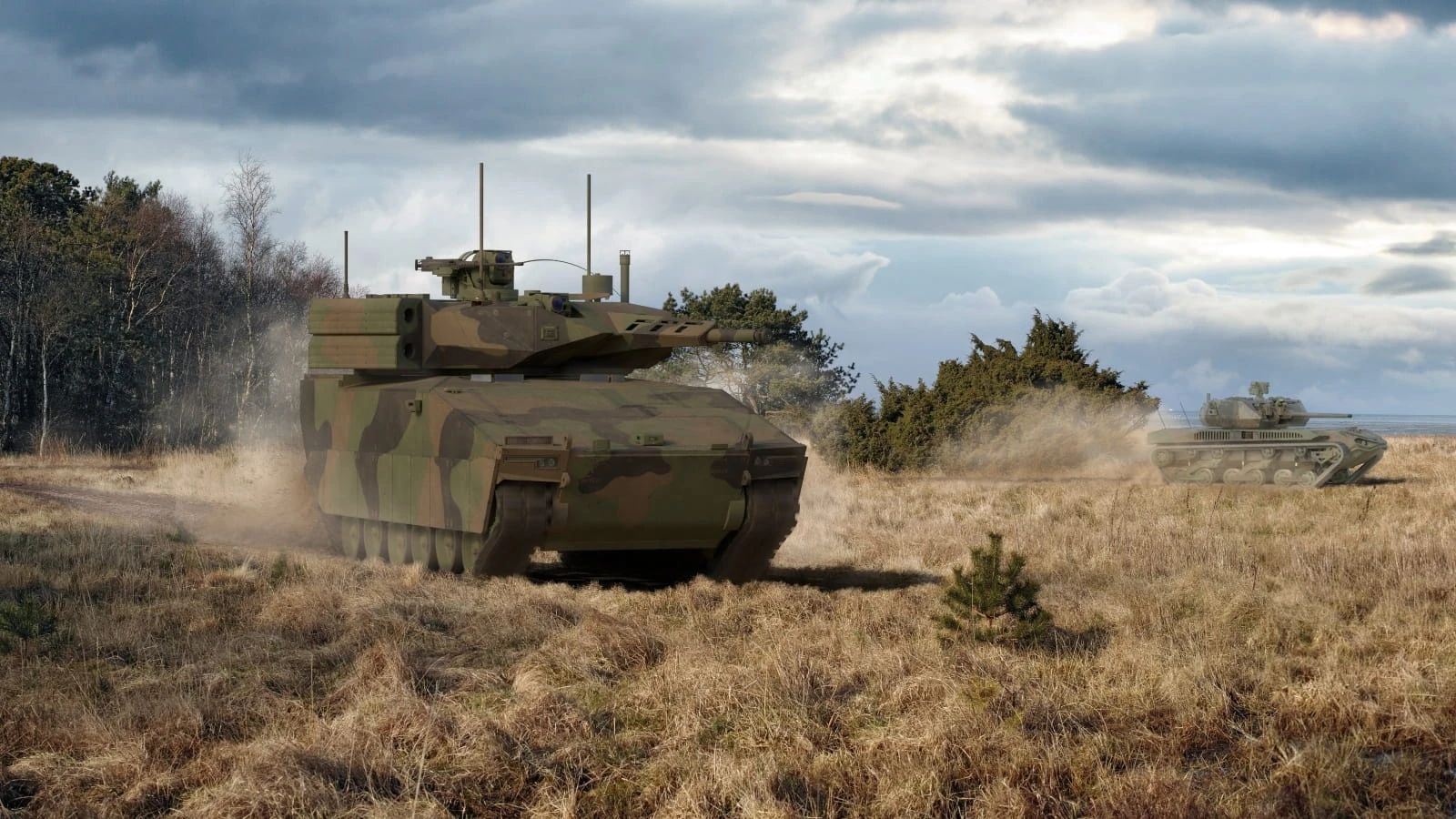
The General Dynamics Land Systems Wolf XM30 is a tracked infantry fighting vehicle prototype developed for the U.S. Army XM30 Mechanized Infantry Combat Vehicle program. The program is intended to produce a replacement for the M2 Bradley infantry fighting vehicle and was previously known as the Optionally Manned Fighting Vehicle program.
General Dynamics Land Systems and American Rheinmetall Vehicles are the two remaining competitors in the XM30 program. Their vehicles are being evaluated to determine which design best meets Army requirements for firepower, protection, mobility, digital integration, and future growth.
The first publicly disclosed Wolf XM30 prototype was delivered to the U.S. Army at Aberdeen Proving Ground, Maryland, on August 21, 2026. General Dynamics Land Systems later released a photograph showing the prototype completely covered by a black tarp while being transported on a flatbed trailer.
Development
The modern XM30 effort followed several U.S. Army attempts to replace the Bradley. The Army established the Next Generation Combat Vehicle initiative in 2018 and redesignated the Bradley replacement effort as the Optionally Manned Fighting Vehicle program later that year. After an earlier competition was terminated, the Army restarted the acquisition approach and issued a request for digital designs in December 2020.
In July 2021, five industry teams received concept-design contracts. General Dynamics Land Systems, American Rheinmetall Vehicles, BAE Systems Land and Armaments, Oshkosh Defense, and Point Blank Enterprises participated in this phase. According to the Defense Security Monitor, the combined value of these initial contracts was approximately $299.4 million.
In June 2023, the Army selected General Dynamics Land Systems and American Rheinmetall Vehicles for detailed design and prototype development. General Dynamics received a contract valued at approximately $767.8 million, while American Rheinmetall received approximately $812.6 million. The competing designs subsequently progressed through design reviews and preparations for physical prototype construction.
The General Dynamics design became known as the Wolf XM30. Reporting by Army Technology describes the Wolf as an evolution of the company's earlier Griffin III concept. General Dynamics has not publicly released a complete technical specification for the delivered Wolf prototype.
Prototype delivery and testing
General Dynamics Land Systems delivered its first Wolf XM30 prototype to Aberdeen Proving Ground on August 21, 2026. American Rheinmetall also delivered its first competing XM30 prototype, placing both designs in Army hands for government-led developmental and performance testing.
The evaluation is intended to compare the two designs under engineering tests and soldier-operated exercises. Planned assessment areas include mobility, reliability, maintenance, crew workload, infantry operations, sensors, weapons, and integration with other elements of armored formations. An operational evaluation involving the 1st Armored Brigade Combat Team, 1st Cavalry Division, was reported as part of the planned competition before a possible selection decision in 2027. Additional details about the planned evaluation were reported by Army Recognition.
Design
The Wolf XM30 is a tracked infantry fighting vehicle designed around the U.S. Army's requirements for the XM30 program. The broader program requires a smaller crew than the Bradley and accommodation for an infantry squad element. Requirements published during the competition called for a two-person crew and space for six infantry soldiers.
The XM30 program also requires substantial growth capacity for future technology and a modular open electronic architecture. The design approach is intended to make later integration of sensors, communications equipment, protection systems, and other electronic capabilities easier than on older combat vehicles.
Mobility and power system
Requirements for the competition specified a tracked vehicle with a hybrid-electric drive. This architecture is intended to support the electrical demands of advanced sensors, protection equipment, and future subsystems while providing the mobility expected of a vehicle operating with armored formations. Detailed engine, motor, battery, speed, range, weight, and suspension specifications for the delivered Wolf prototype have not been publicly disclosed in the supplied material.
Crew and infantry compartment
The XM30 requirement calls for a crew of two and capacity for six infantry soldiers. Soldier feedback was incorporated during earlier design phases of the program, including considerations involving interior arrangement, ramp configuration, visibility, and maintenance access. Public photographs of the delivered Wolf prototype have not revealed its internal layout because the vehicle was transported under a full covering.
Armament and sensors
The Army's XM30 requirements have emphasized a remotely operated turret and significantly greater direct-fire capability than the Bradley's 25 mm cannon. Program documentation and reporting have associated XM30 with the 50 mm XM913 automatic cannon, while earlier requirements also allowed a 30 mm turret configuration capable of later conversion to the larger caliber. The exact weapon installation carried by the first covered Wolf prototype has not been publicly confirmed in the supplied material.
The wider XM30 requirement also includes advanced electro-optical sensors, digital connectivity, and active protection against anti-tank threats. These systems are intended to improve situational awareness and survivability. Detailed sensor models and the exact protection-system configuration fitted to the first Wolf prototype have not been disclosed.
Program status
As of September 2026, the Wolf XM30 is a prototype undergoing U.S. Army evaluation and is not an operational production vehicle. The General Dynamics and American Rheinmetall designs are competing under the same XM30 program, and both have entered government testing.
Current plans call for continued developmental testing, soldier evaluation, field maneuver exercises, and larger combat simulations. Reporting in 2026 indicated that the Army could select a preferred design in 2027, although the timetable remains subject to program decisions and test results.
The outcome of the competition will determine whether the Wolf progresses into production as the Army's future Bradley replacement. Until a selection and production decision is made, the Wolf should be regarded as a competitive prototype rather than an adopted U.S. Army infantry fighting vehicle.
Variants
- Wolf XM30 prototype: General Dynamics Land Systems prototype developed for the U.S. Army XM30 competition. The first publicly confirmed example was delivered to Aberdeen Proving Ground in August 2026.
Specifications (Wolf XM30 prototype)
General characteristics
- Type: Tracked infantry fighting vehicle prototype.
- Developer: General Dynamics Land Systems.
- Crew requirement: Two.
- Infantry capacity requirement: Six soldiers.
- Drive requirement: Hybrid-electric.
Armament and systems
- Main armament requirement: XM30 competition requirements have included the 50 mm XM913 automatic cannon or an earlier 30 mm configuration designed for upgrade to the larger caliber; the exact armament fitted to the first Wolf prototype has not been publicly confirmed.
- Turret requirement: Remotely operated turret.
- Protection requirement: Active protection capability against anti-tank threats.
- Electronic architecture: Modular open systems architecture intended to support future technology integration.
 Argentina
 Armenia
 Australia
 Austria
 Austria-Hungary
 Belgium
 Brazil
 United Kingdom
 Brunei
 Bulgaria
 Canada
 Chile
Chile China
China Colonial America
 Colombia
 Confederate States
 Croatia
 Czech
Czech Denmark
 Egypt
Egypt Finland
 France
 Georgia
 Germany
 German Imperial
 Greece
 Holland
 Hungary
 India
India Indonesia
 Iran
Iran Iraq
Iraq Ireland
 Israel
 Italy
Italy Japan
Japan Japan (1940)
 Jordan
 Kingdom of Italy
 Malaysia
 Mexico
 Myanmar
 Nazi Germany
 Netherlands
 New Zealand
 North Korea
 Norway
 Pakistan
 Peru
Peru Philippines
 Poland
 Portugal
 Prussia
 Romania
 Russia
 Saudi Arabia
 Serbia
 Singapore
 Slovakia
 Slovenia
 South Africa
 South Korea
 Soviet Union
 Spain
Spain Sweden
 Switzerland
 Syria
Syria Taiwan
 Thailand
 Turkey
 UAE
UAE Ukraine
 Vietnam
 Yugoslavia