
History
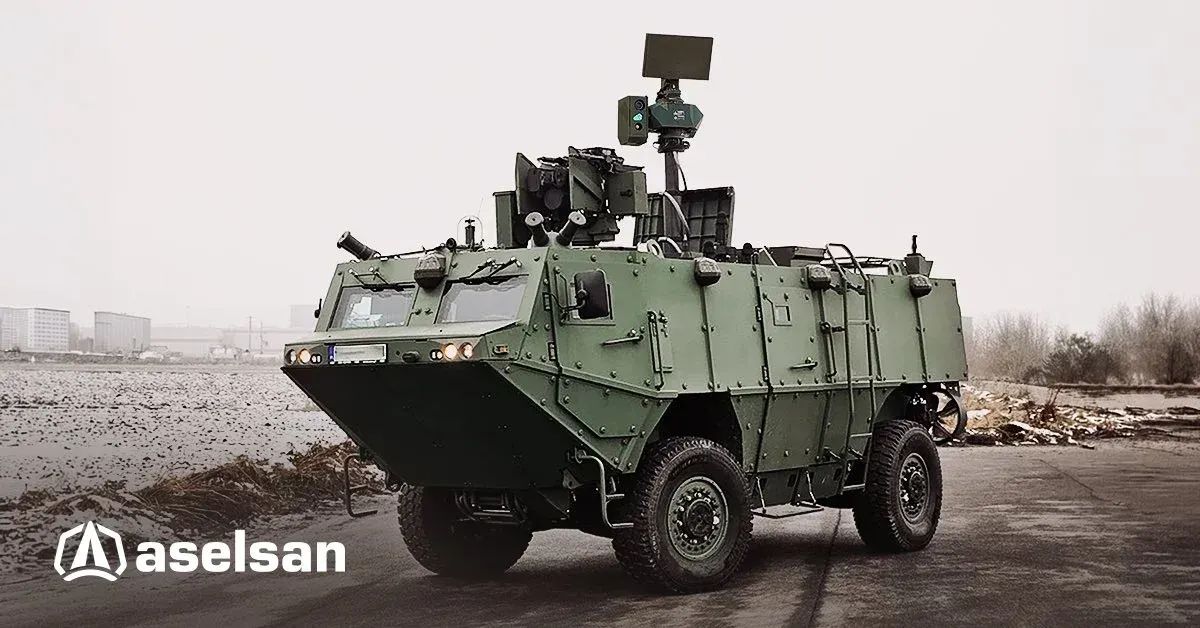
ASELSAN ARSUS is a Turkish vehicle-mounted reconnaissance and surveillance system developed to combine radar, electro-optical sensors, navigation equipment and communications in a single mast-mounted suite. The system is intended to detect, identify, locate and report targets while allowing its host platform to remain partly concealed behind terrain or cover.
ARSUS has been selected for integration with vehicles produced by Polish manufacturer AMZ Kutno for the Polish Armed Forces. The Polish configuration is associated with the LOTR Kleszcz reconnaissance vehicle program, in which the sensor suite is installed on a Bóbr-3-derived 4×4 platform.
The Polish program has progressed beyond the demonstrator stage. According to reporting on the program, ASELSAN recorded the first delivery of ARSUS 100 to a European customer in 2025 after integration work on AMZ Kutno vehicles intended for Polish use.
Polish program
ASELSAN and AMZ Kutno established a framework agreement in 2024 covering cooperation on ARSUS reconnaissance systems. This created the basis for integration of the Turkish sensor suite with Polish reconnaissance vehicles and for subsequent deliveries.
On 8 September 2026, during the MSPO 2026 defense exhibition in Kielce, ASELSAN and AMZ Kutno signed a follow-on export contract for 24 additional ARSUS reconnaissance and surveillance system sets for the Polish Armed Forces. The new systems are scheduled for delivery during 2028 and 2029 and will supplement deliveries already planned under the wider program through 2035. The value of the 24-system contract was not disclosed. The agreement was reported by Defence Industry Europe and IN Defence.
Design
ARSUS 100 is built around an elevating sensor mast. Raising the sensor package gives the host vehicle a higher observation point and allows crews to conduct surveillance while keeping more of the vehicle below the skyline or behind cover. Sensor leveling and stabilized tracking are intended to maintain useful observation and targeting accuracy when the vehicle is positioned on uneven ground.
Radar and electro-optical sensors
The ARSUS 100 sensor suite combines a Ku-band pulse-Doppler radar with electro-optical equipment. The radar supports track-while-scan operation, multi-target tracking and automatic target tracking. It can provide continuous 360-degree surveillance or operate within selected sectors.
For visual identification and closer observation, the system includes cooled thermal imaging and high-definition daylight cameras. A laser rangefinder supports precise distance measurement, while a laser designator is also incorporated into the sensor package. Together with the navigation system, these sensors allow the suite to generate target-location information for reconnaissance and fire-support tasks.
Navigation, communications and integration
ARSUS 100 incorporates an inertial navigation system and is designed to combine sensor observations with target-location data. Images, video and target information can be transmitted through radio links to command systems.
ASELSAN describes ARSUS as compatible with C4I networks and based on an open, modular architecture. This approach allows sensor and communications elements to be integrated into a wider reconnaissance network without requiring the complete surveillance package to be redesigned.
Program status
ARSUS has entered the delivery phase for European use, with a first reported ARSUS 100 delivery recorded in 2025. In Poland, the system is being integrated with AMZ Kutno reconnaissance vehicles for the Polish Armed Forces.
The additional 24 systems ordered in September 2026 are planned for delivery in 2028 and 2029. They form part of a broader cooperation program under which further deliveries are already planned through 2035.
Specifications (ARSUS 100)
General characteristics
- Type: Vehicle-mounted reconnaissance and surveillance sensor suite
- Installation: Elevating mast on vehicle or stationary platform
- Architecture: Open and modular
- Navigation: Inertial navigation system
- Network integration: Compatible with C4I networks and radio-based transfer of target information, images and video
Sensors
- Radar: Ku-band pulse-Doppler radar
- Radar functions: Track-while-scan, multi-target tracking and automatic target tracking
- Radar coverage: Continuous 360-degree surveillance or selected-sector operation
- Thermal imaging: Cooled thermal imaging system
- Daylight imaging: High-definition day cameras
- Laser equipment: Laser rangefinder and laser designator
- Mast functions: Elevating sensor position with leveling and stabilized tracking
 Argentina
 Armenia
 Australia
 Austria
 Austria-Hungary
 Belgium
 Brazil
 United Kingdom
 United States
 Brunei
 Bulgaria
 Canada
 Chile
Chile China
China Colonial America
 Colombia
 Confederate States
 Croatia
 Czech
Czech Denmark
 Egypt
Egypt Finland
 France
 Georgia
 Germany
 German Imperial
 Greece
 Holland
 Hungary
 India
India Indonesia
 Iran
Iran Iraq
Iraq Ireland
 Israel
 Italy
Italy Japan
Japan Japan (1940)
 Jordan
 Kingdom of Italy
 Malaysia
 Mexico
 Myanmar
 Nazi Germany
 Netherlands
 New Zealand
 North Korea
 Norway
 Pakistan
 Peru
Peru Philippines
 Poland
 Portugal
 Prussia
 Romania
 Russia
 Saudi Arabia
 Serbia
 Singapore
 Slovakia
 Slovenia
 South Africa
 South Korea
 Soviet Union
 Spain
Spain Sweden
 Switzerland
 Syria
Syria Taiwan
 Thailand
 UAE
UAE Ukraine
 Vietnam
 Yugoslavia