
History
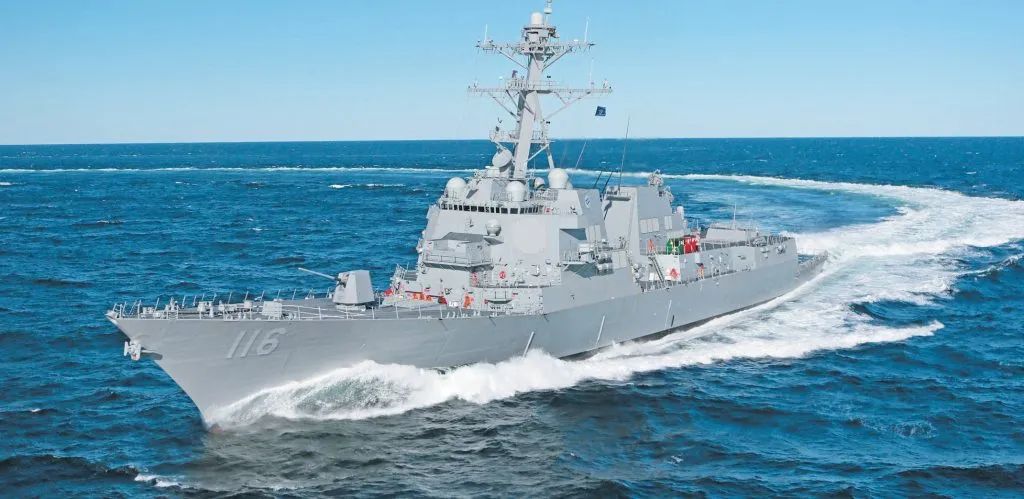
John E. Kilmer (DDG-134) is a U.S. Navy Arleigh Burke-class Flight III guided-missile destroyer under construction at General Dynamics Bath Iron Works in Bath, Maine. The ship is designed as a multi-mission surface combatant with air and missile defense, strike, anti-surface, and anti-submarine capabilities.
DDG-134 belongs to the Flight III configuration, which introduces the AN/SPY-6(V)1 Air and Missile Defense Radar while retaining the Aegis combat-system architecture and the Arleigh Burke class's multi-mission role. The radar and combat system are intended to improve detection, tracking, and engagement of complex air and missile threats.
The ship is named for Hospital Corpsman John Edward Kilmer, who received the Medal of Honor posthumously for actions during the Korean War. He was mortally wounded on August 13, 1952, while providing medical aid to Marines during the Battle of Bunker Hill.
Construction
The keel for the future USS John E. Kilmer was laid at General Dynamics Bath Iron Works on September 10, 2026. The U.S. Navy described the keel-laying milestone as the joining of the ship's first major modular components at land level. During the ceremony, the keel was authenticated by etching the initials of the ship's sponsor into the keel plate. The event was announced by the U.S. Navy and marked DDG-134's transition into major hull assembly. The official announcement is available from the U.S. Navy.
The ship's sponsor is Linda Gilday, a former U.S. Navy civilian engineer and program manager and the wife of Admiral Michael M. Gilday, the 32nd Chief of Naval Operations. DDG-134 is being built as part of the continuing Arleigh Burke-class production program.
Design
DDG-134 uses the Arleigh Burke Flight III configuration. Flight III ships retain the basic Arleigh Burke hull concept while incorporating major electrical, cooling, sensor, and combat-system changes required for the newer air and missile defense radar. The design remains centered on multi-mission operations across air, surface, and subsurface warfare.
Radar and combat system
The principal Flight III sensor upgrade is the AN/SPY-6(V)1 Air and Missile Defense Radar. It provides greater sensitivity and tracking capacity than the radar fitted to earlier Arleigh Burke flights and is intended to improve detection and engagement of aircraft, cruise missiles, ballistic missiles, and other high-speed threats.
DDG-134 is equipped with the Aegis combat system, which integrates sensors, command-and-control functions, fire control, and multiple weapon systems. This allows the destroyer to contribute to fleet air defense, missile defense, surface warfare, anti-submarine warfare, and land-attack missions.
Weapons
The Arleigh Burke design uses the Mk 41 Vertical Launching System. Flight III ships retain the class arrangement of 96 vertical-launch cells, allowing the ship to carry mission-dependent combinations of Standard-series surface-to-air and missile-defense weapons, Tomahawk land-attack cruise missiles, Evolved Sea Sparrow Missiles, and vertical-launch anti-submarine weapons. Actual missile loadouts vary according to assigned missions.
The class also uses the Mk 45 Mod 4 127 mm naval gun and Mk 32 torpedo tubes for lightweight anti-submarine torpedoes. Flight IIA and later ships include aviation facilities for embarked helicopters used in anti-submarine, surface-search, utility, and other missions.
Propulsion
The Arleigh Burke class uses four General Electric LM2500-series gas turbines driving two shafts with controllable-pitch propellers. This machinery arrangement supports speeds above 30 knots for the class.
Program status
As of September 2026, John E. Kilmer is under construction at Bath Iron Works. Its keel was laid on September 10, 2026, and the ship had entered major modular assembly. The supplied sources do not provide a confirmed launch, commissioning, or service-entry date for DDG-134.
Once completed, DDG-134 is intended to join the U.S. Navy's force of Flight III destroyers. Its primary distinguishing feature within the Arleigh Burke program is the combination of the Aegis combat system with the AN/SPY-6(V)1 radar for enhanced fleet air and missile defense.
Specifications (DDG-134 Flight III)
General characteristics
- Type: Arleigh Burke-class Flight III guided-missile destroyer
- Builder: General Dynamics Bath Iron Works
- Construction location: Bath, Maine, United States
- Hull number: DDG-134
- Propulsion: Four General Electric LM2500-series gas turbines driving two shafts
- Speed: More than 30 knots for the Arleigh Burke class
Sensors and combat systems
- Primary radar: AN/SPY-6(V)1 Air and Missile Defense Radar
- Combat system: Aegis combat system
Armament
- Vertical launch system: Mk 41 VLS, 96 cells
- Naval gun: Mk 45 Mod 4 127 mm gun
- Anti-submarine weapons: Mk 32 torpedo tubes and vertical-launch anti-submarine weapons
- Missile compatibility: Mission-dependent combinations of Standard-series missiles, Evolved Sea Sparrow Missiles, Tomahawk cruise missiles, and other compatible Mk 41 weapons
Related equipment
- Arleigh Burke-class Flight III: The latest major configuration of the DDG-51 destroyer design, centered on the AN/SPY-6(V)1 radar and associated power, cooling, and combat-system changes.
- Earlier Arleigh Burke flights: Flight I, Flight II, and Flight IIA ships share the basic multi-mission destroyer lineage but use earlier sensor and configuration standards.
 Argentina
 Armenia
 Australia
 Austria
 Austria-Hungary
 Belgium
 Brazil
 United Kingdom
 Brunei
 Bulgaria
 Canada
 Chile
Chile China
China Colonial America
 Colombia
 Confederate States
 Croatia
 Czech
Czech Denmark
 Egypt
Egypt Finland
 France
 Georgia
 Germany
 German Imperial
 Greece
 Holland
 Hungary
 India
India Indonesia
 Iran
Iran Iraq
Iraq Ireland
 Israel
 Italy
Italy Japan
Japan Japan (1940)
 Jordan
 Kingdom of Italy
 Malaysia
 Mexico
 Myanmar
 Nazi Germany
 Netherlands
 New Zealand
 North Korea
 Norway
 Pakistan
 Peru
Peru Philippines
 Poland
 Portugal
 Prussia
 Romania
 Russia
 Saudi Arabia
 Serbia
 Singapore
 Slovakia
 Slovenia
 South Africa
 South Korea
 Soviet Union
 Spain
Spain Sweden
 Switzerland
 Syria
Syria Taiwan
 Thailand
 Turkey
 UAE
UAE Ukraine
 Vietnam
 Yugoslavia