
History
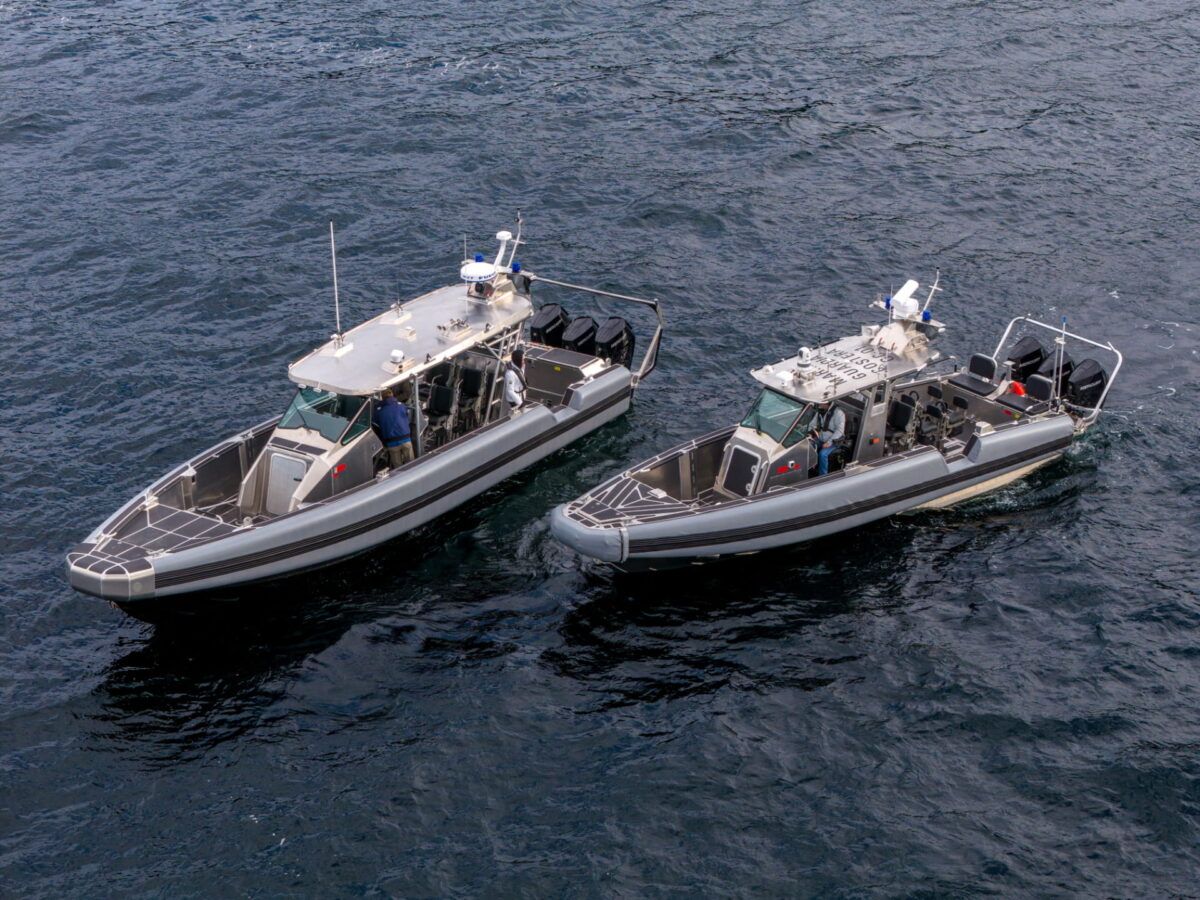
The SAFE Interceptor is a family of high-speed aluminum patrol boats manufactured by SAFE Boats International for maritime law enforcement and military applications. Boats of this family are in service with the United States Coast Guard and U.S. Customs and Border Protection. On 24 September 2026, the United States transferred two SAFE 4112 Interceptor boats to the Costa Rican National Coast Guard during a ceremony in Golfito attended by President Laura Fernández and U.S. Ambassador Melinda Hildebrand. The total value of the transferred equipment, which also included three support vehicles for the coast guard and the GOPES Special Operations Group, exceeded 2.3 million US dollars. Costa Rican crews completed a two-week training course under SAFE Boats instructors before the transfer. The U.S. government announced plans to provide Costa Rica with additional vessels, communications equipment, and infrastructure and training support during 2026–2027.
Design
Hull and structure
The SAFE Interceptor uses a forced-air stepped aluminum hull employing SAFE F.A.S.T. (Forced Air Stepped Technology) technology, described by the manufacturer as patent pending. The bottom plate is 5/16-inch 5086 aluminum with an exclusive stringer system and angled transverse framing. A reinforced keel beaching plate protects the hull during beaching operations. The stepped transom incorporates a speed shoe in the bottom plate, and performance wings below the collars increase lift and stabilize the hull during high-speed maneuvering. Fully welded lifting strakes provide structural support, and self-bailing decks with high-volume scupper drains manage water over the side. A forward anchor locker and a dual aft locker system with topside access provide stowage.
Mission equipment and electronics
The open deck layout is designed to accommodate specialized mission equipment and to provide unobstructed access for boarding teams. The platform supports integration of navigation packages, VHF/UHF communications, AIS, side-scan sonar, thermal and low-light camera systems, satellite weather receivers, EPIRB, loudhailer, and law-enforcement lighting strobes and bars. Customer-furnished equipment installation is available for custom mission configurations.
Operational history
The Costa Rican National Coast Guard began operating the two SAFE 4112 Interceptor boats in September 2026 for counter-narcotics patrol along the Pacific coast. By the end of September 2026, the coast guard reported seizing more than 44 tonnes of narcotics, with the majority of maritime interdiction operations conducted along the southern Pacific coast.
Variants
- SAFE 4112 Interceptor – 41 ft (12.5 m) high-speed interceptor; manufacturer-declared maximum output 1,800 hp; manufacturer-declared top speed 64 kn (119 km/h). Two units transferred to Costa Rica in September 2026.
- SAFE 3510 Interceptor – 35 ft 4 in (10.8 m) high-speed interceptor; manufacturer-declared maximum output 1,200 hp; manufacturer-declared top speed 60 kn (111 km/h). Listed in the SAFE Boats Interceptor product line.
Operators
- United States – U.S. Coast Guard and U.S. Customs and Border Protection operate SAFE Interceptor boats for domestic maritime law enforcement and border security.
- Costa Rica – National Coast Guard received two SAFE 4112 Interceptor boats in September 2026 for counter-narcotics patrol; additional vessels are planned for 2026–2027.
Specifications (SAFE 4112 Interceptor)
General characteristics
- Length overall: 12.5 m (41 ft)
- Beam overall: 3.7 m (12 ft)
- Deadrise at transom: 22°
- Draft (engine trimmed up): 0.66 m (26 in)
- Light ship weight: 7,484 kg (16,500 lb)
- Operational weight: 8,999 kg (19,855 lb)
- Maximum payload: 2,100 kg (4,630 lb)
- Fuel capacity: 2,271 L (600 US gal)
Performance
- Maximum power (manufacturer declared): 1,342 kW (1,800 hp)
- Top speed (manufacturer declared): 119 km/h (64 kn)
- Range: 648 km (350 NM) with 10% reserve
- Projected service life: over 25 years with proper maintenance
 Argentina
 Armenia
 Australia
 Austria
 Austria-Hungary
 Belgium
 Brazil
 United Kingdom
 Brunei
 Bulgaria
 Canada
 Chile
Chile China
China Colonial America
 Colombia
 Confederate States
 Croatia
 Czech
Czech Denmark
 Egypt
Egypt Finland
 France
 Georgia
 Germany
 German Imperial
 Greece
 Holland
 Hungary
 India
India Indonesia
 Iran
Iran Iraq
Iraq Ireland
 Israel
 Italy
Italy Japan
Japan Japan (1940)
 Jordan
 Kingdom of Italy
 Malaysia
 Mexico
 Myanmar
 Nazi Germany
 Netherlands
 New Zealand
 North Korea
 Norway
 Pakistan
 Peru
Peru Philippines
 Poland
 Portugal
 Prussia
 Romania
 Russia
 Saudi Arabia
 Serbia
 Singapore
 Slovakia
 Slovenia
 South Africa
 South Korea
 Soviet Union
 Spain
Spain Sweden
 Switzerland
 Syria
Syria Taiwan
 Thailand
 Turkey
 UAE
UAE Ukraine
 Vietnam
 Yugoslavia