


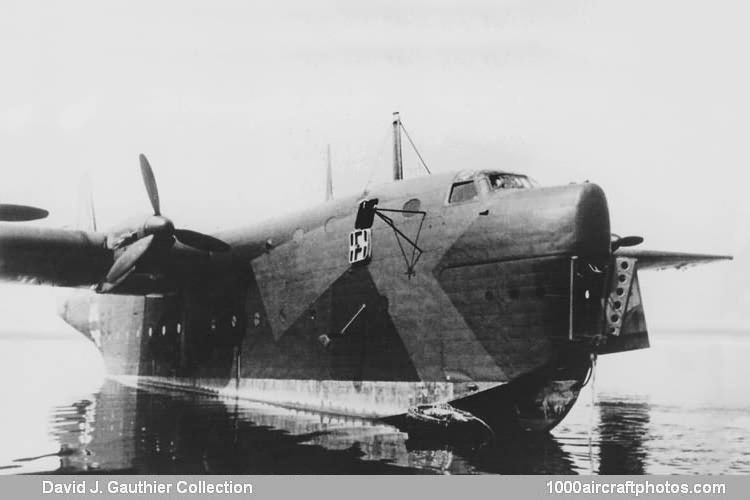

History
The behemoth Blohm & Voss Bv 238 was the next evolution of the German Blohm & Voss series of airships during World War II. The system, the largest aircraft produced by the Axis, was designed to provide the Empire with expanded airship capabilities if the series entered full production.
Ultimately, the BV 238 project had only one damaged prototype and two planned production prototypes that had been started but never completed.
The Bv 238 is powered by a range of six-piston engines from Daimler-Benz, with more than 1,750 of each engine produced. The engines are mounted on a high monoplane wing design with three engines per wing.
The original Bv 238 prototype was airborne in 1944, but was later damaged and sunk by Allied fighter jets while the Bv 238 was docked at the dock. The Bv 239 offers enormous range, payload and considerable speed for an aircraft of its size and role.
Specification
Basic
Production
Roles
- Naval/Navigation
Dimensions
142.26 ft (43.36 m)
197.41 ft (60.17 m)
43.96 ft (13.4 m)
Weight
120,593 lbs (54,700 kg)
85,000 kg
Performance
Performance
277 mph (446 km/h; 241 knots)
23,950 ft (7,300 m; 4.54 mi)
4,474 miles (7,200 km; 3,888 nautical miles)
Armor
Not available.
Changes
BV 238 - Base series designation, one of which was built but damaged at the pier; two planned prototypes were started, but production never ended.
BV 238 V-1
 Argentina
 Armenia
 Australia
 Austria
 Austria-Hungary
 Belgium
 Brazil
 United Kingdom
 United States
 Brunei
 Bulgaria
 Canada
 Chile
Chile China
China Colonial America
 Colombia
 Confederate States
 Croatia
 Czech
Czech Denmark
 Egypt
Egypt Finland
 France
 Georgia
 Germany
 German Imperial
 Greece
 Holland
 Hungary
 India
India Indonesia
 Iran
Iran Iraq
Iraq Ireland
 Israel
 Italy
Italy Japan
Japan Japan (1940)
 Jordan
 Kingdom of Italy
 Malaysia
 Mexico
 Myanmar
 Netherlands
 New Zealand
 North Korea
 Norway
 Pakistan
 Peru
Peru Philippines
 Poland
 Portugal
 Prussia
 Romania
 Russia
 Saudi Arabia
 Serbia
 Singapore
 Slovakia
 Slovenia
 South Africa
 South Korea
 Soviet Union
 Spain
Spain Sweden
 Switzerland
 Syria
Syria Taiwan
 Thailand
 Turkey
 UAE
UAE Ukraine
 Vietnam
 Yugoslavia