
History
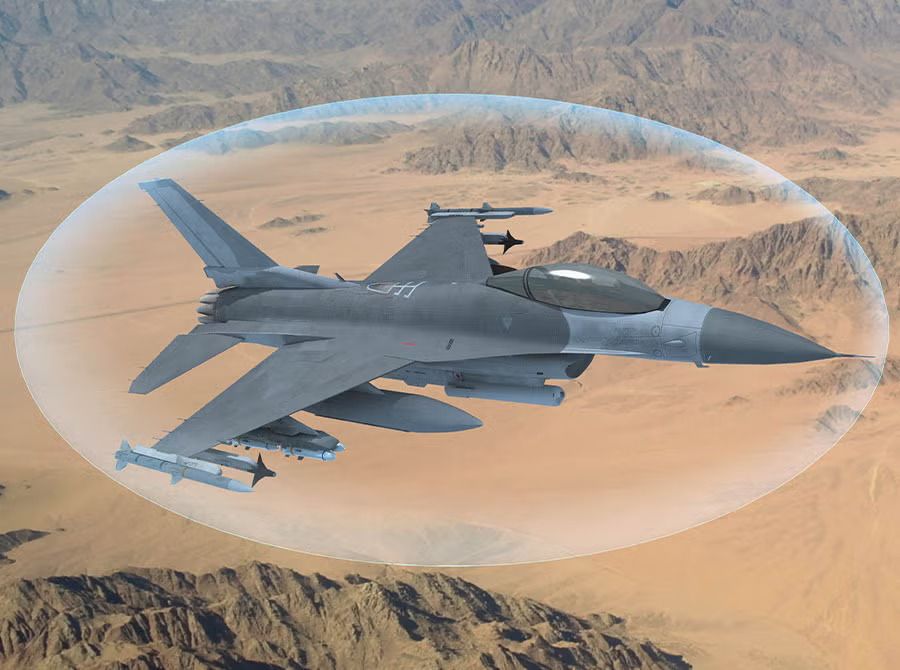
The L3Harris AN/ALQ-254(V)1 Viper Shield is an all-digital electronic-warfare suite developed for advanced F-16 fighters. It combines radar threat warning, threat identification, and electronic countermeasures to improve aircraft survivability in contested electromagnetic environments.
L3Harris is developing Viper Shield in partnership with Lockheed Martin and the United States Air Force for international F-16 operators. The internally installed system is designed as a baseline electronic-warfare capability for new F-16 Block 70 and Block 72 aircraft, while an external pod extends compatibility to earlier F-16 variants.
The program uses a software-defined, open-system architecture intended to simplify upgrades as radar-guided threats evolve. L3Harris describes the suite as an electronic shield that improves situational awareness and helps protect the aircraft without disrupting electronic-warfare systems aboard nearby friendly fighters.
Development and production
Viper Shield was designed around commercial off-the-shelf digital technology to reduce size, weight, lifecycle cost, and the number of critical components compared with earlier electronic-warfare systems. Its architecture supports field replacement of modular line-replaceable units and the future addition of electronic-warfare applications.
Production of Viper Shield hardware began at L3Harris facilities in Clifton, New Jersey, in 2025. Contemporary reports stated that six countries had ordered 168 systems by July 2025. L3Harris subsequently reported that seven United States partner nations had selected the system by September 2025, with Poland identified as the latest customer at that time. The company introduced the podded configuration on 23 September 2025.
Program quantities continued to change as additional customers joined. Later reporting referred to 219 systems under construction, while L3Harris stated in August 2026 that eight nations had selected Viper Shield and that production planning covered 233 systems. These figures represent different stages of the developing international program rather than a single fixed procurement total.
Flight testing
On 5 August 2026, L3Harris announced the first coordinated two-aircraft flight tests of Viper Shield-equipped F-16C and F-16D fighters at Edwards Air Force Base in California. The campaign was the first time that the system had flown simultaneously aboard these two F-16 variants.
The trials evaluated threat detection, identification, and countermeasure functions while the system operated with existing F-16 avionics and mission equipment. They also examined interaction between two equipped aircraft, including the ability to prevent interference between the electronic-warfare systems of formation partners.
Using both the single-seat F-16C and two-seat F-16D expanded testing beyond isolated aircraft sorties and exposed the suite to different cockpit workflows, mission configurations, and flight conditions. The tests advanced operational validation but did not by themselves establish that Viper Shield had entered operational service.
Design
Viper Shield is a digital, software-defined electronic-warfare system. Its principal functions include radar warning, emitter identification, electronic countermeasures, and presentation of threat information to the pilot. The system is intended to detect hostile radar activity rapidly and provide information that allows the crew to manoeuvre, activate defensive measures, or change the mission plan.
Sensors and countermeasures
The digital radar warning receiver is designed to operate with the F-16's Northrop Grumman APG-83 active electronically scanned array radar. This integration is intended to improve threat awareness while allowing the radar and electronic-warfare suite to operate together.
A digital radio-frequency memory-based jammer generates countermeasures against radar-guided threats. Digital radio-frequency memory technology records characteristics of an incoming radar signal and uses that information to produce a precisely controlled response. L3Harris states that the system improves the probability of intercepting agile radar threats and prevents electronic-warfare interference to and from an equipped wingman.
Architecture and maintenance
The suite uses a modular open-system design based on 3U commercial off-the-shelf technology. Software-defined functions and the open architecture allow new capabilities to be introduced through later hardware and software upgrades. Field personnel can replace individual line-replaceable units rather than removing the complete internal installation.
The internal and podded configurations use common components and identical part numbers. This commonality is intended to simplify training, maintenance, logistics, software updates, and interoperability among partner nations. The external pod can also be transferred between compatible aircraft according to mission requirements.
Further technical information is available from the L3Harris Viper Shield overview.
Program status
As of August 2026, Viper Shield remained in testing while L3Harris prepared for larger-scale production and deliveries. The first coordinated F-16C and F-16D flights expanded the validation program into a representative two-aircraft environment and reduced integration risk before operational fielding.
The system had been selected by eight nations, although the available sources do not identify every customer or confirm that all selected systems had entered service. Viper Shield was therefore a production and integration program moving toward operational use, rather than a universally fielded capability across participating F-16 fleets.
Variants
- Internal Viper Shield: Fully integrated configuration developed as a baseline electronic-warfare suite for advanced F-16 Block 70 and Block 72 aircraft. It can also form part of an upgrade package for certain Block 50 and Block 52 aircraft.
- Viper Shield Pod: Self-contained external configuration introduced in September 2025. It uses the same internal components as the integrated version and is intended to fit F-16 blocks from legacy aircraft to newly produced fighters. L3Harris presents the pod as an option for operators that require transferable electronic-warfare equipment or cannot accommodate the internal installation.
L3Harris outlines the configuration and maintenance concept in its Viper Shield Pod description.
Specifications (AN/ALQ-254(V)1 Viper Shield)
General characteristics
- Type: All-digital aircraft electronic-warfare and survivability suite
- Manufacturer: L3Harris Technologies
- Primary platform: F-16 fighter aircraft
- Installation: Internal integrated suite or external pod
- Architecture: Software-defined, modular open system using 3U commercial off-the-shelf technology
- Maintenance: Field-replaceable line-replaceable units
Electronic-warfare equipment
- Warning function: Digital radar warning receiver
- Countermeasure system: Digital radio-frequency memory-based jammer
- Radar integration: Designed to operate with the APG-83 active electronically scanned array radar
- Primary functions: Radar threat detection, identification, warning, situational awareness, and electronic countermeasures
- Formation capability: Technology intended to prevent electronic-warfare interference between equipped wingmen
- Upgrade provision: Open-system support for additional electronic-warfare applications and future hardware or software capabilities
 Argentina
 Armenia
 Australia
 Austria
 Austria-Hungary
 Belgium
 Brazil
 United Kingdom
 Brunei
 Bulgaria
 Canada
 Chile
Chile China
China Colonial America
 Colombia
 Confederate States
 Croatia
 Czech
Czech Denmark
 Egypt
Egypt Finland
 France
 Georgia
 Germany
 German Imperial
 Greece
 Holland
 Hungary
 India
India Indonesia
 Iran
Iran Iraq
Iraq Ireland
 Israel
 Italy
Italy Japan
Japan Japan (1940)
 Jordan
 Kingdom of Italy
 Malaysia
 Mexico
 Myanmar
 Nazi Germany
 Netherlands
 New Zealand
 North Korea
 Norway
 Pakistan
 Peru
Peru Philippines
 Poland
 Portugal
 Prussia
 Romania
 Russia
 Saudi Arabia
 Serbia
 Singapore
 Slovakia
 Slovenia
 South Africa
 South Korea
 Soviet Union
 Spain
Spain Sweden
 Switzerland
 Syria
Syria Taiwan
 Thailand
 Turkey
 UAE
UAE Ukraine
 Vietnam
 Yugoslavia