
History
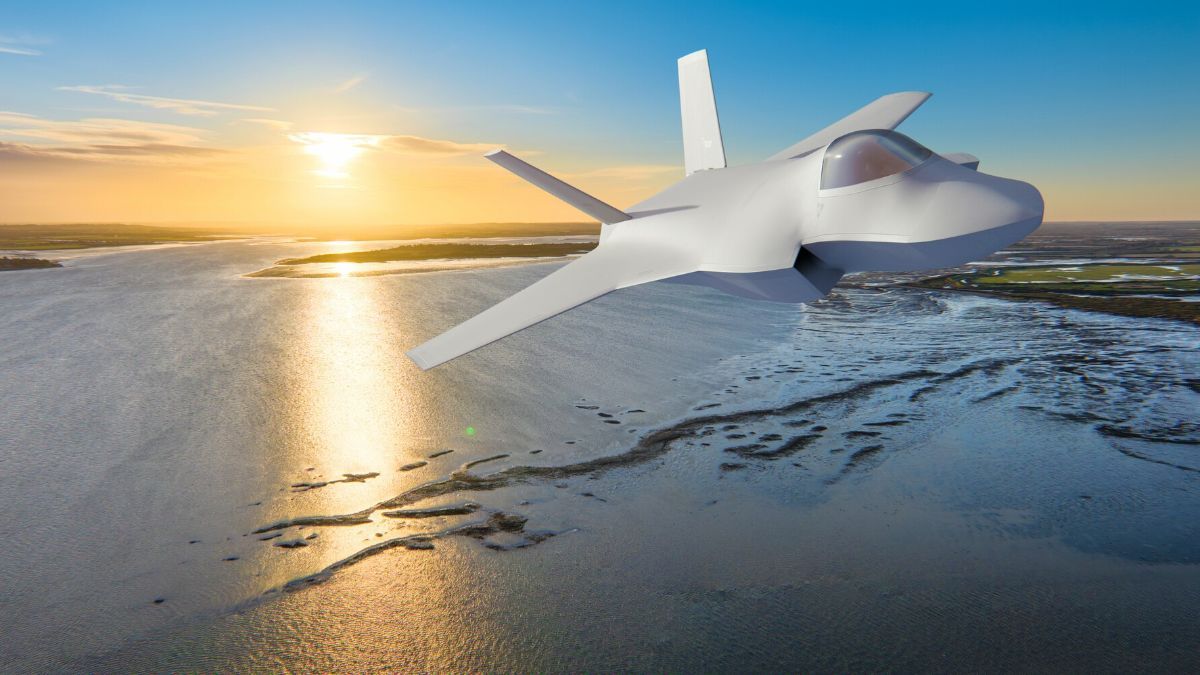
The BAE Systems Combat Air Flying Demonstrator is a crewed, supersonic technology-demonstrator aircraft under construction in the United Kingdom. It is intended to test design methods, manufacturing processes, flight-control systems, and low-observable technologies relevant to the Global Combat Air Programme (GCAP).
The aircraft supports development of the future Tempest combat aircraft but is not a Tempest prototype. Its shape, dimensions, engines, and systems are tailored to experimentation and risk reduction rather than operational service.
BAE Systems leads the aircraft work with the United Kingdom Ministry of Defence, Rolls-Royce, Leonardo UK, MBDA UK, the Royal Air Force, and British suppliers. The current schedule calls for the demonstrator to be prepared for its first flight by the end of 2027.
Development
The British government announced the flying-demonstrator program in 2022. It became the United Kingdom's first program to design and build a new crewed combat demonstrator since the British Aerospace Experimental Aircraft Programme, or EAP, which first flew in 1986 and contributed technology to the Eurofighter Typhoon.
By June 2023, pilots from BAE Systems, Rolls-Royce, and the Royal Air Force had completed more than 150 hours in a purpose-built simulator. Engineers used automatic code generation for safety-critical flight-control software, allowing proposed changes to be evaluated rapidly. Rolls-Royce and BAE Systems also tested an intake duct designed to reduce supersonic airflow to subsonic speed before it reached the engine. Ejection-seat trials conducted with Martin-Baker used a rocket-powered sled at speeds above 805 km/h (500 mph). These developments were described in a 2023 program report.
BAE Systems publicly revealed the demonstrator's configuration in July 2025. At that point, components representing approximately two-thirds of its structural weight were in manufacture. Simulator activity had exceeded 300 hours. According to the Royal Air Force announcement, the program was applying additive manufacturing, collaborative robots, digital twins, model-based systems engineering, and virtual simulation.
During 2026, the center fuselage entered final assembly at BAE Systems' Samlesbury facility in Lancashire. The wings and fins were being manufactured at Warton, where the completed aircraft is scheduled to conduct flight trials. Approximately half of the principal structure was in final assembly by July. More than 11,500 parts had been designed, accounting for about 90 percent of the planned aircraft weight. A component assembled robotically at BAE Systems' Factory of the Future was also scheduled for structural testing, as reported in a 2026 program update.
The front, center, and rear fuselage sections are to be joined before the assembly is transferred to Warton and mated with the wings. The current program schedule aims to have the aircraft ready to fly by the end of 2027. The precise first-flight date is expected to be selected according to the test program's requirements.
Design
Airframe
The demonstrator is a large, twin-engine aircraft with a modified cropped-delta wing. Its wing has a slightly cranked inboard leading edge, some forward sweep along the trailing edge, and heavily cropped tips. Two outward-canted trapezoidal vertical fins are fitted, but the aircraft has no separate horizontal tail surfaces.
The broad and deep center fuselage provides space for the intake ducts, engines, experimental systems, and an internal bay. The fuselage underside has narrowed, area-ruled contours. The cockpit has a single canopy whose configuration appears to provide limited visibility directly behind the aircraft.
The forward fuselage incorporates pronounced chines. Its forward-swept diverterless supersonic inlets avoid a conventional boundary-layer diverter assembly. Serpentine low-observable ducts conceal the engine compressor faces from a direct frontal view while controlling the airflow supplied to the engines. Manufacturing and integrating these ducts is one of the program's principal engineering tasks.
Structural work combines conventional aircraft assembly with large composite components, additive manufacturing, robotic assembly, and hot isostatic pressing of some metal parts. Three wing structures were reportedly being manufactured, including one intended solely for structural testing. The smooth external finish required for low-observable testing also demands tighter assembly tolerances than those used for the Eurofighter Typhoon. Further observations from the assembly program were published by the Royal Aeronautical Society.
Flight controls and cockpit
The aircraft is piloted and uses a flight-control system developed through extensive simulator testing. Automatic generation of portions of the control software and a corresponding digital model allow engineers to assess handling changes before flight. Program representatives have described the intended handling as fighter-like despite the demonstrator's size.
The simulator supports test pilots from BAE Systems, Rolls-Royce, and the Royal Air Force. It is used to examine complex maneuvers, mature the flight-control laws, and prepare the flight-test program before the physical aircraft enters service as a test platform.
Powerplant
Power is provided by two Rolls-Royce EJ200 turbofan engines of the type used by the Eurofighter Typhoon. Using an existing engine reduces development risk and allows the program to concentrate on aircraft integration, aerodynamics, controls, and manufacturing. The future operational GCAP aircraft is expected to use a different propulsion system that remains under development.
The intake system must deliver stable airflow after it passes through ducts that change shape along much of their length. This arrangement supports reduced radar visibility but creates aerodynamic and integration challenges. Ground testing has been used to compare physical results with digital design models.
Program status
The Combat Air Flying Demonstrator remained under construction in 2026 and had not yet flown. Final assembly, structural testing, simulator development, and preparation for flight trials were continuing. Its planned first-flight milestone is 2027.
The program is intended to reduce technical and industrial risk for GCAP. It is also rebuilding British experience in complete combat-aircraft design, wing manufacture, stealth-compatible assembly, and rapid digital engineering. Knowledge from the demonstrator can inform GCAP, but the demonstrator's external form should not be interpreted as the settled configuration of the operational Tempest aircraft.
No operational operator, production series, or combat role has been announced for the demonstrator. It is an experimental aircraft rather than a weapon system intended for squadron service.
Specifications (Combat Air Flying Demonstrator)
General characteristics
- Type: Crewed supersonic low-observable technology demonstrator
- Manufacturer: BAE Systems
- Development authority: United Kingdom Ministry of Defence and Team Tempest
- Crew: One pilot
- Configuration: Twin-engine, modified cropped-delta wing with two outward-canted vertical fins and no horizontal tail
- Powerplant: Two Rolls-Royce EJ200 turbofan engines
- Air intakes: Diverterless supersonic inlets feeding serpentine low-observable ducts
Performance
- Speed class: Supersonic
- Handling objective: Fighter-style handling for experimental flight testing
Test equipment and methods
- Flight controls: Digitally developed control system using automatically generated software and extensive simulator evaluation
- Development tools: Digital twins, model-based systems engineering, virtual simulation, additive manufacturing, and robotic assembly
- Planned first flight: By the end of 2027 under the schedule reported in 2026
Related equipment
- British Aerospace EAP: British experimental aircraft that first flew in 1986 and helped reduce development risk for the Eurofighter Typhoon.
- Tempest: Planned future combat aircraft being developed through GCAP by the United Kingdom, Italy, and Japan. The Combat Air Flying Demonstrator supplies experience and test data but does not represent the final Tempest configuration.
- Eurofighter Typhoon: Operational fighter that uses the EJ200 engine selected for the demonstrator.
 Argentina
 Armenia
 Australia
 Austria
 Austria-Hungary
 Belgium
 Brazil
 United States
 Brunei
 Bulgaria
 Canada
 Chile
Chile China
China Colonial America
 Colombia
 Confederate States
 Croatia
 Czech
Czech Denmark
 Egypt
Egypt Finland
 France
 Georgia
 Germany
 German Imperial
 Greece
 Holland
 Hungary
 India
India Indonesia
 Iran
Iran Iraq
Iraq Ireland
 Israel
 Italy
Italy Japan
Japan Japan (1940)
 Jordan
 Kingdom of Italy
 Malaysia
 Mexico
 Myanmar
 Nazi Germany
 Netherlands
 New Zealand
 North Korea
 Norway
 Pakistan
 Peru
Peru Philippines
 Poland
 Portugal
 Prussia
 Romania
 Russia
 Saudi Arabia
 Serbia
 Singapore
 Slovakia
 Slovenia
 South Africa
 South Korea
 Soviet Union
 Spain
Spain Sweden
 Switzerland
 Syria
Syria Taiwan
 Thailand
 Turkey
 UAE
UAE Ukraine
 Vietnam
 Yugoslavia