
History
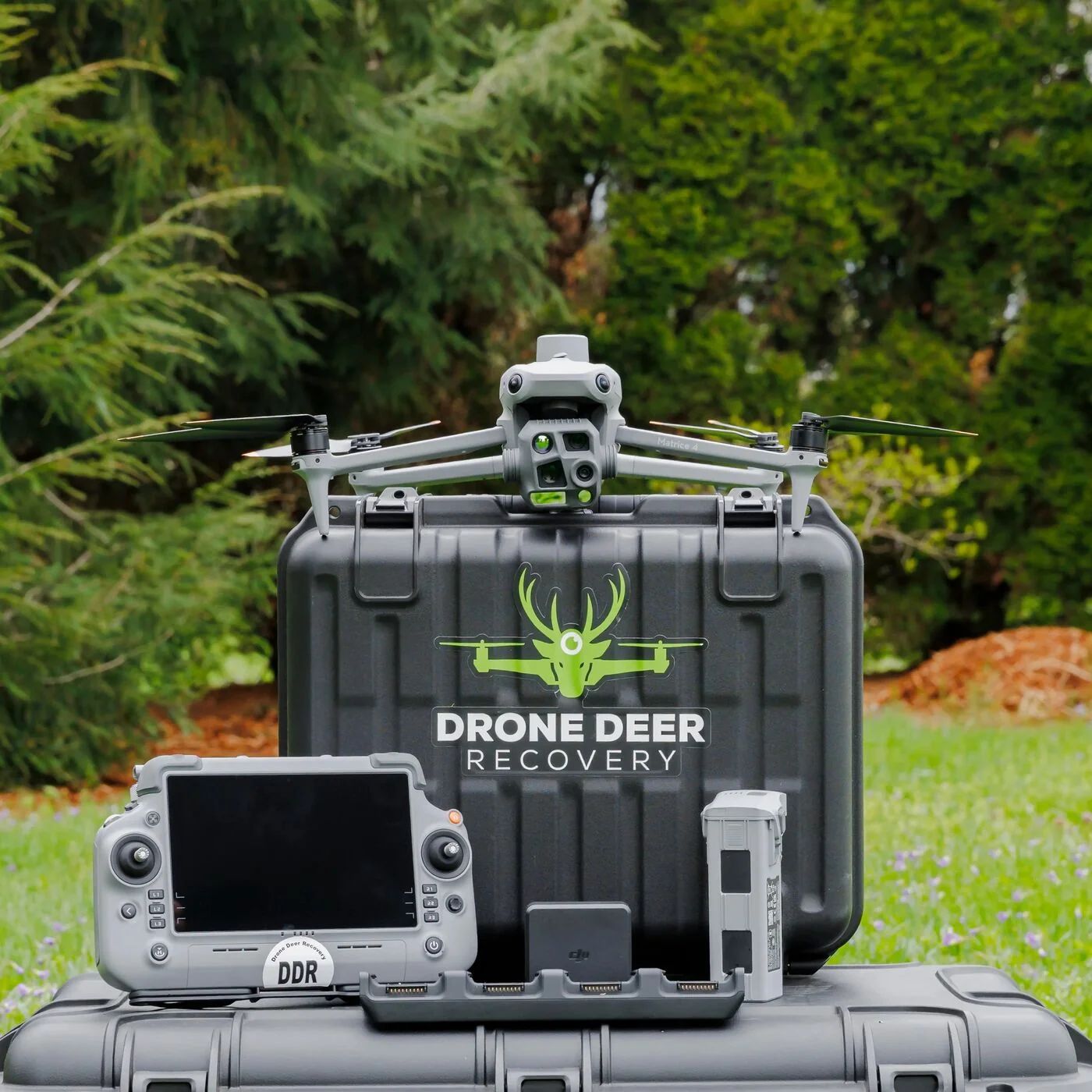
The DJI Matrice 4T is a compact industrial quadcopter developed in China by DJI. It combines visible-light and thermal cameras with real-time kinematic positioning and onboard artificial-intelligence functions.
DJI released the Matrice 4 series in January 2025 as the successor to the Mavic 3 Enterprise series. The initial series comprised the survey-oriented Matrice 4E and the thermal-imaging Matrice 4T.
The Matrice 4T uses a folding airframe similar to the Mavic 3 and carries an RTK module above the fuselage. Its sensor package is intended for observation in daylight, low-light, and thermal conditions.
Development and introduction
The wider DJI Matrice series began in 2015. Over successive generations, DJI introduced folding airframes, integrated camera systems, RTK positioning, autonomous ground stations, and increasingly specialized industrial variants.
The Matrice 4 series continued the compact configuration of the Mavic 3 Enterprise family. The Matrice 4E received a 20-megapixel wide-angle camera intended for imaging and survey work. The Matrice 4T replaced that camera with a 48-megapixel unit and added a dedicated thermal camera.
DJI expanded the family in February 2025 with the Matrice 4D and Matrice 4TD. These versions use fixed raised arms and were developed for operation with the DJI Dock 3 ground station.
Design
Airframe and positioning
The Matrice 4T is a four-motor unmanned aerial vehicle with folding arms. An integrated RTK module provides precision positioning. The aircraft also incorporates artificial-intelligence functions associated with its observation system.
Electro-optical system
The aircraft carries three visible-light cameras. These comprise a 48-megapixel wide-angle camera with a 1/1.3-inch CMOS sensor, a 48-megapixel medium telephoto camera with a 1/1.3-inch CMOS sensor, and a 48-megapixel telephoto camera with a 1/1.5-inch CMOS sensor.
A thermal camera provides imagery with a resolution of 1280 × 1024 pixels. This distinguishes the Matrice 4T from the Matrice 4E, which has no thermal camera and uses a larger 20-megapixel 4/3-inch CMOS wide-angle sensor.
Power system and accessories
The standard aircraft uses a 6,741 mAh battery and DJI 1157F propellers. DJI 1154F low-noise propellers are also compatible. The published maximum flight time with the standard power system is 49 minutes.
Optional equipment includes the DJI AL1 spotlight and AS1 speaker. These accessories can support applications such as search and rescue and communication with people on the ground.
Tulip Tech extended-endurance batteries
In 2026, Dutch battery manufacturer Tulip Tech reported the use of its 4S1P 16 Ah high-energy-density battery with DJI Matrice 4T and Matrice 4E aircraft in Ukraine. The external battery system is not the standard DJI power configuration.
According to Tulip Tech, a Matrice 4T fitted with two 4S1P 16 Ah batteries and operated without its standard battery remained airborne for 94 minutes. The company described this as a 135 percent increase over the usual endurance. In another reported flight, the aircraft covered 51 km in 62 minutes in wind of 6 m/s and landed with 19 percent charge remaining. A separate profile at an altitude of 80–150 m and in wind of up to 3–4 m/s produced approximately 70 minutes of flight and a distance of about 15 km.
Each Tulip Tech battery weighs approximately 560 g and has a stated energy density of 475 Wh/kg. Its dimensions are approximately 149 × 51 × 34 mm. The stated continuous discharge current is 16 A at 1C, while the peak discharge current is 64 A at 4C.
Operational history
Tulip Tech reported that its extended-endurance batteries were tested and used with DJI drones in Ukraine. Part of the company team operates in Ukraine and works directly with manufacturers and military units. The reported endurance figures remain manufacturer-supplied results and depend on the battery arrangement, weather, altitude, flight profile, and remaining charge.
Variants
- Matrice 4E: Compact industrial model with a 20-megapixel 4/3-inch CMOS wide-angle camera, two 48-megapixel telephoto cameras, RTK positioning, and a folding airframe.
- Matrice 4T: Thermal-imaging model with three 48-megapixel visible-light cameras and a 1280 × 1024-pixel thermal camera.
- Matrice 4D: Fixed-arm model using the Matrice 4E camera suite and designed for the DJI Dock 3.
- Matrice 4TD: Fixed-arm Dock 3 model using the Matrice 4T camera suite.
Specifications (DJI Matrice 4T)
General characteristics
- Configuration: Four-motor unmanned aerial vehicle with folding arms
- Company designation: Model M4T
- Standard battery capacity: 6,741 mAh
- Standard propellers: DJI 1157F
- Optional propellers: DJI 1154F low-noise propellers
- Positioning equipment: Integrated RTK module
Imaging system
- Wide-angle camera: 48 megapixels, 1/1.3-inch CMOS sensor
- Medium telephoto camera: 48 megapixels, 1/1.3-inch CMOS sensor
- Telephoto camera: 48 megapixels, 1/1.5-inch CMOS sensor
- Thermal camera resolution: 1280 × 1024 pixels
Performance
- Maximum flight time with standard battery: 49 minutes
- Reported flight time with two Tulip Tech 4S1P batteries: 94 minutes
Tulip Tech 4S1P 16 Ah battery
- Capacity: 16 Ah
- Weight: Approximately 560 g
- Energy density: 475 Wh/kg
- Continuous discharge current: 16 A at 1C
- Peak discharge current: 64 A at 4C
- Dimensions: Approximately 149 × 51 × 34 mm
 Argentina
 Armenia
 Australia
 Austria
 Austria-Hungary
 Belgium
 Brazil
 United Kingdom
 United States
 Brunei
 Bulgaria
 Canada
 Chile
Chile Colonial America
 Colombia
 Confederate States
 Croatia
 Czech
Czech Denmark
 Egypt
Egypt Finland
 France
 Georgia
 Germany
 German Imperial
 Greece
 Holland
 Hungary
 India
India Indonesia
 Iran
Iran Iraq
Iraq Ireland
 Israel
 Italy
Italy Japan
Japan Japan (1940)
 Jordan
 Kingdom of Italy
 Malaysia
 Mexico
 Myanmar
 Nazi Germany
 Netherlands
 New Zealand
 North Korea
 Norway
 Pakistan
 Peru
Peru Philippines
 Poland
 Portugal
 Prussia
 Romania
 Russia
 Saudi Arabia
 Serbia
 Singapore
 Slovakia
 Slovenia
 South Africa
 South Korea
 Soviet Union
 Spain
Spain Sweden
 Switzerland
 Syria
Syria Taiwan
 Thailand
 Turkey
 UAE
UAE Ukraine
 Vietnam
 Yugoslavia