
History
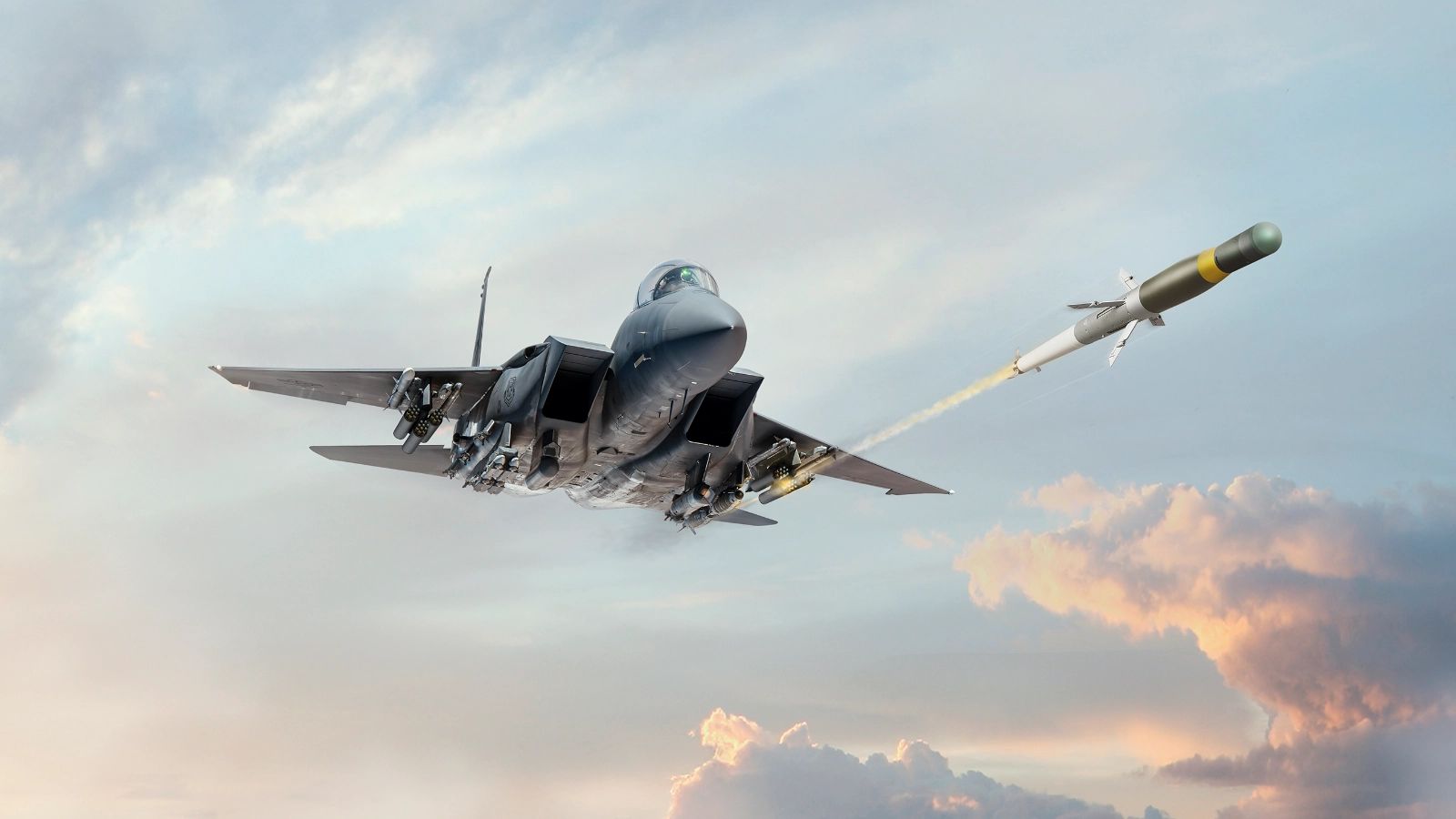
The BAE Systems Advanced Precision Kill Weapon System II (APKWS II) is a laser-guided conversion for the 70 mm (2.75-inch) Hydra rocket family. The guidance section is installed between the rocket motor and warhead, turning an unguided rocket into a precision-guided weapon while retaining established rocket components.
According to the U.S. Naval Air Systems Command, production began in 2011 and initial operational capability was declared in 2012 on the AH-1W and UH-1Y. Integration expanded to the MH-60S and MH-60R in 2014, followed by fielding on the AV-8B, F-16, and A-10 in 2016.
By 2026, APKWS II had also developed a prominent counter-unmanned aircraft system role. The United Kingdom integrated the weapon with the Eurofighter Typhoon for counter-UAS use, and the United States approved a potential sale of more than 5,000 air-to-air guidance sections to Italy in August 2026.
Production and early fielding
APKWS II was developed as a way to add precision guidance to existing 70 mm rocket architecture without replacing the complete rocket with a purpose-built missile. NAVAIR describes the system as a conversion of the unguided Hydra 2.75-inch rocket using a laser guidance kit. The guidance section is threaded between a legacy 10 lb high-explosive warhead and the Mk 66 Mod 4 rocket motor.
Production began in 2011. Initial operational capability followed in 2012 on the AH-1W and UH-1Y helicopters. In March 2014, APKWS II was successfully integrated onto MH-60S and MH-60R helicopters. In 2016, it was fielded on the AV-8B, F-16, and A-10, extending the weapon to fixed-wing combat aircraft as well as helicopters.
By February 2026, BAE Systems had delivered its 100,000th APKWS guidance kit, according to reporting summarized by Army Recognition. The same report stated that the system had been in full-rate production for more than twelve years and that manufacturing capacity had reached at least 25,000 units per year.
Expansion into the counter-UAS role
APKWS II was initially established primarily as a precision air-to-surface weapon, but later work extended the concept to aerial targets. The air-to-air configuration uses the same basic 70 mm rocket architecture with laser guidance, while a proximity fuze and software optimized for air targets support engagements against drones and other slow-moving aerial threats. Secondary reporting from Militarnyi describes the air-target version as having an engagement range of about 5–6 km.
During 2026, the Royal Air Force integrated APKWS with the Eurofighter Typhoon as a lower-cost counter-UAS weapon. Janes reported that BAE Systems saw interest from other Eurofighter customers after the British integration. The concept allows a fighter to carry multiple guided rockets in a standard rocket pod and use laser designation rather than expending a larger conventional air-to-air missile against every low-end aerial target.
Italian Foreign Military Sale approval
On 21 August 2026, the U.S. Department of State approved a possible Foreign Military Sale to Italy valued at an estimated USD 364 million. The package covered 5,031 WGU-59B/B guidance sections for the Single Variant Air-to-Air APKWS II configuration, together with related equipment and support. Janes reported that the weapons were intended to equip Italian Eurofighter Typhoon aircraft, designated F-2000 in Italian service, for the counter-UAS mission.
The proposed package also included LAU-131 A/A launchers, Mk 152 high-explosive warheads, Mk 66 rocket motors, proximity fuzes, WTU-1/B practice warheads, inert motors, and associated training, technical, logistics, and support elements. The estimated USD 364 million value therefore represented the broader FMS package rather than a simple per-unit price for the guidance sections.
Public reporting was not completely uniform about the intended Italian platform. Janes described the Eurofighter F-2000 counter-UAS role as the purpose of the sale, and Defence Industry Europe likewise described planned Eurofighter integration. Army Recognition, however, noted that the public U.S. notification itself did not identify the eventual Italian service or launch platform. The Italian Eurofighter role is therefore supported by specialist reporting, while the public FMS package details principally establish the approved air-to-air configuration and associated equipment.
Design
Guidance architecture
APKWS II is not a conventional purpose-built missile. It is a modular guidance conversion for a 70 mm rocket. The guidance section is inserted between the warhead and the Mk 66 Mod 4 rocket motor, allowing the weapon to retain existing rocket components while adding precision guidance.
The BAE Systems guidance section uses Distributed Aperture Semi-Active Laser Seeker technology. The laser seeker optics are distributed across four deployable guidance wings rather than concentrated in a seeker in the nose. Army Recognition reports a 40-degree instantaneous field of regard. The arrangement also keeps the forward warhead section available for different compatible payloads.
Because the weapon uses semi-active laser guidance, the target must be designated by a compatible laser source during the engagement. This differs from radar- or infrared-guided air-to-air missiles that can use autonomous onboard seekers. The APKWS II approach trades some engagement flexibility and range for a smaller, modular weapon that can be carried in multi-round launchers.
Rocket motor and warheads
NAVAIR identifies the Mk 66 Mod 4 as the APKWS II rocket motor. The standard all-up round can use an M151 or Mk 152 10 lb high-explosive warhead. The Italian air-to-air package specifically included Mk 152 high-explosive warheads and Mk 66 rocket motors.
For the air-to-air counter-UAS configuration, the approved Italian package included proximity fuzes. A proximity fuze allows the warhead to function near an aerial target rather than depending only on a direct impact, which is useful against small unmanned aircraft. The package also included WTU-1/B practice warheads and inert motors for training.
Launchers and aircraft integration
APKWS II can be carried by a range of rotary-wing and fixed-wing aircraft. NAVAIR lists the AH-1W, UH-1Y, MH-60, AV-8B, F-16, A-10, and AH-64 among supported platforms. The 2026 Italian FMS package included LAU-131 A/A launchers for the air-to-air configuration.
For Eurofighter counter-UAS employment, the British precedent showed that the weapon could be carried in standard rocket pods and used with existing laser-targeting equipment. This reduced the need to treat APKWS II as a complete new missile architecture. The Italian proposal followed the same general concept, although the final Italian integration and fielding status depended on completion of the proposed sale and subsequent integration work.
Operational history
APKWS II entered U.S. operational service after initial operational capability was declared in 2012 on the AH-1W and UH-1Y. The weapon subsequently expanded across additional U.S. helicopter and fixed-wing platforms. The NAVAIR record confirms integration on MH-60S and MH-60R in 2014 and fielding on AV-8B, F-16, and A-10 aircraft in 2016.
By 2026, the Royal Air Force had integrated APKWS with the Eurofighter Typhoon for the counter-UAS mission. This application used the guided rocket as a lower-tier air-defense effector against unmanned aircraft, complementing rather than replacing conventional air-to-air missiles designed for faster, more maneuverable, or longer-range threats.
Italy was not yet a confirmed operator under the August 2026 approval. The U.S. authorization covered a possible Foreign Military Sale of 5,031 WGU-59B/B air-to-air guidance sections and associated equipment. If completed and fielded, the acquisition would give Italy a large inventory of short-range guided interceptors for counter-UAS use.
Variants
- APKWS II standard guided-rocket configuration: A 70 mm Hydra-family rocket fitted with the APKWS II laser guidance section between the warhead and Mk 66 Mod 4 rocket motor. It is used as a precision-guided weapon against surface targets and has been integrated on multiple helicopter and fixed-wing aircraft.
- Single Variant Air-to-Air APKWS II, WGU-59B/B guidance section: Air-to-air configuration intended for counter-UAS and other slow aerial targets. The 2026 Italian FMS approval covered 5,031 WGU-59B/B guidance sections together with proximity fuzes, LAU-131 A/A launchers, rocket motors, warheads, and support equipment.
Operators
- United States: Initial operational capability was declared in 2012 on AH-1W and UH-1Y helicopters. Subsequent integration included MH-60S and MH-60R helicopters, with fielding on AV-8B, F-16, and A-10 aircraft by 2016.
- United Kingdom: The Royal Air Force integrated APKWS with the Eurofighter Typhoon for a counter-UAS role in 2026.
Italy is a prospective customer rather than a confirmed operator. The United States approved a possible sale in August 2026, but approval of an FMS package does not by itself establish completed delivery or operational fielding.
Specifications (APKWS II all-up round)
General characteristics
- Rocket caliber: 70 mm (2.75 in)
- All-up round length: 1.87 m (73.77 in)
- Guidance-section length: 470 mm (18.5 in)
- Wingspan: 243 mm (9.55 in)
- All-up round weight: 14.8 kg (32.6 lb)
- Guidance-section weight: 4.45 kg (9.8 lb)
- Propulsion: Mk 66 Mod 4 rocket motor
- Guidance: Semi-active laser guidance using Distributed Aperture Semi-Active Laser Seeker technology
Performance
- Maximum speed: 1,000 m/s
Warhead
- Standard warhead options: M151 or Mk 152 4.54 kg (10 lb) high-explosive warhead
The specifications above describe the standard APKWS II all-up round as listed by NAVAIR. The 2026 WGU-59B/B air-to-air package for Italy included Mk 152 warheads and proximity fuzes, but the supplied sources do not provide a complete separate dimensional specification set for that air-to-air configuration.
Related equipment
- Hydra 70: The unguided 70 mm rocket family that provides the basic rocket architecture converted by the APKWS II guidance section.
 Argentina
 Armenia
 Australia
 Austria
 Austria-Hungary
 Belgium
 Brazil
 United Kingdom
 Brunei
 Bulgaria
 Canada
 Chile
Chile China
China Colonial America
 Colombia
 Confederate States
 Croatia
 Czech
Czech Denmark
 Egypt
Egypt Finland
 France
 Georgia
 Germany
 German Imperial
 Greece
 Holland
 Hungary
 India
India Indonesia
 Iran
Iran Iraq
Iraq Ireland
 Israel
 Italy
Italy Japan
Japan Japan (1940)
 Jordan
 Kingdom of Italy
 Malaysia
 Mexico
 Myanmar
 Nazi Germany
 Netherlands
 New Zealand
 North Korea
 Norway
 Pakistan
 Peru
Peru Philippines
 Poland
 Portugal
 Prussia
 Romania
 Russia
 Saudi Arabia
 Serbia
 Singapore
 Slovakia
 Slovenia
 South Africa
 South Korea
 Soviet Union
 Spain
Spain Sweden
 Switzerland
 Syria
Syria Taiwan
 Thailand
 Turkey
 UAE
UAE Ukraine
 Vietnam
 Yugoslavia