

History
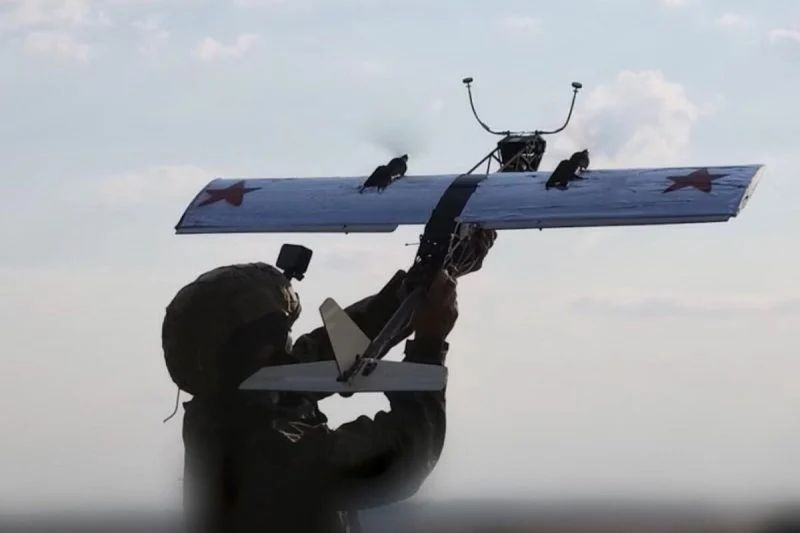
Malysh is a Russian fixed-wing unmanned aerial vehicle developed for the interception of hostile attack drones. By August 2026, Russian reports stated that the interceptor had been transferred to military units and was being used in counter-UAS missions.
The aircraft combines a conventional fixed-wing layout with two electric motors and a hand-launch method. Russian military statements described the design as simple to prepare and maintain, while detailed performance figures were not disclosed.
On 18 August 2026, reports citing the Russian Ministry of Defense stated that air-defense units of the West group of forces had begun using Malysh interceptors against attack UAVs. The aircraft were reportedly issued to counter-UAS crews of an anti-aircraft missile brigade. The ministry said personnel had already familiarized themselves with the system and were employing it in the combat zone, according to Voennoe Delo.
Later reporting in August 2026 described operators associated with the Center group of forces using the same interceptor in the Dobropillia area. An account published on 25 August said crews were launching the aircraft by hand and attributed operational information to Russian military personnel, as reported by Amalantra.
Design
Malysh uses a conventional airplane configuration with a rectangular wing. Two electric motors are installed on the airframe, each driving a tractor propeller. The tail has a conventional arrangement consisting of a vertical fin and a horizontal stabilizer.
The interceptor does not require a dedicated launch catapult. An operator can launch it by hand, reducing the amount of ground equipment needed for deployment. Russian descriptions also characterize the design as universal and relatively simple to service and prepare for flight.
Russian military statements claim that the airplane configuration allows Malysh to reach high speed and pursue aerial targets over considerable distances. They also state that differences in altitude between the interceptor and its target are not a major obstacle during interception. No numerical speed, range, endurance, altitude, dimensions, weight, or payload figures have been disclosed in the supplied sources.
Operational history
By August 2026, Malysh was reported in service with Russian units assigned to counter unmanned aircraft. Air-defense elements of the West group of forces were reported to use the interceptor specifically against hostile attack UAVs. Separate reporting described its use by unmanned-systems operators associated with the Center group of forces.
The available reports confirm field use of the aircraft but do not provide independently verified interception rates, engagement statistics, or detailed information about its method of destroying a target.
Operators
- Russia — Russian military units, including reported counter-UAS crews of the West group of forces and unmanned-systems operators associated with the Center group of forces, were using the Malysh interceptor by August 2026.
Specifications (Malysh)
General characteristics
- Type: Fixed-wing interceptor unmanned aerial vehicle
- Configuration: Conventional airplane layout
- Wing: Rectangular wing
- Powerplant: Two electric motors
- Propellers: Two tractor propellers
- Tail: Conventional vertical fin and horizontal stabilizer
- Launch method: Hand launch
- Primary role: Interception of attack UAVs
 Argentina
 Armenia
 Australia
 Austria
 Austria-Hungary
 Belgium
 Brazil
 United Kingdom
 United States
 Brunei
 Bulgaria
 Canada
 Chile
Chile China
China Colonial America
 Colombia
 Confederate States
 Croatia
 Czech
Czech Denmark
 Egypt
Egypt Finland
 France
 Georgia
 Germany
 German Imperial
 Greece
 Holland
 Hungary
 India
India Indonesia
 Iran
Iran Iraq
Iraq Ireland
 Israel
 Italy
Italy Japan
Japan Japan (1940)
 Jordan
 Kingdom of Italy
 Malaysia
 Mexico
 Myanmar
 Nazi Germany
 Netherlands
 New Zealand
 North Korea
 Norway
 Pakistan
 Peru
Peru Philippines
 Poland
 Portugal
 Prussia
 Romania
 Saudi Arabia
 Serbia
 Singapore
 Slovakia
 Slovenia
 South Africa
 South Korea
 Soviet Union
 Spain
Spain Sweden
 Switzerland
 Syria
Syria Taiwan
 Thailand
 Turkey
 UAE
UAE Ukraine
 Vietnam
 Yugoslavia