
History
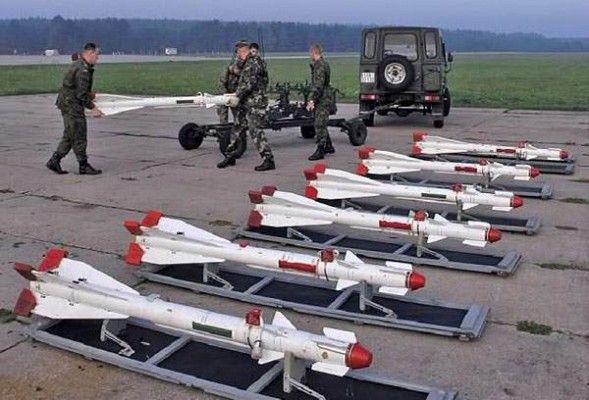
The Molniya R-60, known by the NATO reporting name AA-8 Aphid, is a Soviet short-range infrared-guided air-to-air missile developed for close-range aerial combat. Development began in the late 1960s, initially for the MiG-23, under the K-60 bureau designation. Series production began in 1973.
The R-60 combined low launch weight with high maneuverability and a short minimum engagement distance. It was subsequently carried by numerous Soviet combat aircraft and was widely exported. The later R-60M introduced an improved infrared seeker and other changes intended to improve close-range performance.
Sources differ slightly on the date of service introduction. The Ukrainian source states that the R-60 was accepted for service in late 1973, while Weaponsystems.net gives 1974 as the service-entry year. Series production in 1973 is independently reported by the R-60 reference article, so 1973 is used here as the earliest supported physical production milestone.
Development and production
The R-60 was developed as a lightweight short-range missile during the late 1960s. It was intended initially for the MiG-23 and provided a more modern close-combat weapon than the older K-13 family. The original production missile was designated R-60, with the NATO reporting name Aphid-A.
The original missile entered series production in 1973. An improved R-60M appeared around 1982. This version incorporated a more sensitive nitrogen-cooled seeker with a wider field of view and improved resistance to electronic countermeasures. The R-60 family was later supplemented by the larger and more capable R-73.
Design
The R-60 uses infrared homing and was designed to engage maneuvering aircraft at short range. The original missile uses an uncooled Komar infrared seeker. Unlike several other Soviet air-to-air missile families, no semi-active radar-homing version was developed.
Airframe and control
The missile has the seeker in the nose, followed by the warhead, with the solid-propellant rocket motor occupying much of the rear section. Steering is provided by forward control surfaces and larger rear fins. Small nose surfaces commonly described as destabilizers improve control efficiency at high angles of attack.
The compact configuration contributed to high maneuverability. Reference material reports that the missile could be launched by an aircraft maneuvering at up to 9 g against a target maneuvering at up to 8 g. The original R-60 had a minimum engagement distance of approximately 300 m.
Guidance and fuzing
The R-60 is a passive infrared-homing weapon. Its seeker tracks thermal radiation associated with an aircraft or helicopter target. The original missile could use the Strizh optical proximity fuze, while a version equipped with the Kolibri-M radar proximity fuze was designated R-60K.
The improved R-60M introduced a nitrogen-cooled seeker with a reported viewing angle of ±20 degrees. It offered greater seeker sensitivity and limited all-aspect capability. Its minimum engagement distance was reduced to approximately 200 m. Both optical and radar proximity-fuze arrangements remained available.
Warhead
The original R-60 carries a small 3 kg expanding-rod warhead. The R-60M uses a heavier 3.5 kg continuous-rod warhead. The missile's compact warhead reflected the overall emphasis on low weight and maneuverability rather than long-range interception.
Operational history
The R-60 was widely distributed among Soviet and foreign users and has appeared in several conflicts. A secondary overview at AirPra describes reported employment during the Iran-Iraq War, the 1982 Lebanon War and the Gulf War. Some individual combat claims from these conflicts remain disputed, so they should not be treated as confirmed solely from that source.
Recent Ukrainian use
In September 2026, a Ukrainian Air Force MiG-29MU1 was reported to have intercepted a Russian S8000 Banderol compact cruise missile at very low altitude using an R-60 air-to-air missile. The account described the engagement as an air-defense mission and reflects continued use of older short-range missiles against cruise missiles and one-way attack threats after stocks of newer weapons had been heavily consumed.
The same source states that by November 2025 Ukrainian organizations were working on modernization of R-60MK and related missiles for possible launch from ground-based systems. The described work included replacement of some analog components with digital electronics. A claim that some companies achieved nearly a tenfold increase in seeker sensitivity was presented as a developer-related statement and is not independently confirmed in the supplied material.
Ground-based adaptation of the R-60 concept predates the current war. Reference material describes modified R-60 missiles used from 1999 with Yugoslav anti-aircraft systems, including installations in which an additional booster was fitted for ground launch.
Variants
- R-60: Original production infrared-guided missile, introduced in the early 1970s and known to NATO as Aphid-A.
- R-60K: Original R-60 fitted with the Kolibri-M radar proximity fuze instead of the standard optical fuze.
- UZ-62 / UZR-60: Inert training version of the original R-60.
- R-60M: Improved production version introduced around 1982, with a nitrogen-cooled seeker, wider viewing angle, improved countermeasure resistance and a heavier warhead. NATO reporting name Aphid-B.
- R-60MK / R-60KM: Radar-fuzed derivative of the R-60M. The supplied references use both R-60MK and R-60KM forms for this configuration.
- R-60MU: Inert training version of the R-60M.
Operators
The R-60 was widely exported and has been used by Soviet successor states and numerous foreign air forces. The supplied material specifically identifies continued or historical use by the Soviet Union, Russia, Ukraine and India, but it does not provide a sufficiently complete and consistently sourced operator list for a comprehensive enumeration.
Specifications (R-60MK)
General characteristics
- Launch weight: approximately 45 kg
- Length: approximately 1.859 m
- Diameter: approximately 120 mm
- Warhead: approximately 3.5 kg continuous-rod type
- Propulsion: solid-propellant rocket motor
- Guidance: infrared homing
Performance
- Maximum quoted range: up to 8 km under favorable conditions
- Practical engagement range: less than approximately 4 km according to cited reference material for the R-60 family
- Maximum quoted speed: approximately Mach 2.7
- Minimum engagement range: approximately 200 m for the improved R-60M family
Related equipment
- K-13: Earlier Soviet short-range air-to-air missile family that preceded the R-60 in the close-combat role.
- R-73: Later Soviet short-range infrared-guided air-to-air missile that supplemented and progressively replaced the R-60 in frontline service.
 Argentina
 Armenia
 Australia
 Austria
 Austria-Hungary
 Belgium
 Brazil
 United Kingdom
 United States
 Brunei
 Bulgaria
 Canada
 Chile
Chile China
China Colonial America
 Colombia
 Confederate States
 Croatia
 Czech
Czech Denmark
 Egypt
Egypt Finland
 France
 Georgia
 Germany
 German Imperial
 Greece
 Holland
 Hungary
 India
India Indonesia
 Iran
Iran Iraq
Iraq Ireland
 Israel
 Italy
Italy Japan
Japan Japan (1940)
 Jordan
 Kingdom of Italy
 Malaysia
 Mexico
 Myanmar
 Nazi Germany
 Netherlands
 New Zealand
 North Korea
 Norway
 Pakistan
 Peru
Peru Philippines
 Poland
 Portugal
 Prussia
 Romania
 Russia
 Saudi Arabia
 Serbia
 Singapore
 Slovakia
 Slovenia
 South Africa
 South Korea
 Spain
Spain Sweden
 Switzerland
 Syria
Syria Taiwan
 Thailand
 Turkey
 UAE
UAE Ukraine
 Vietnam
 Yugoslavia