History
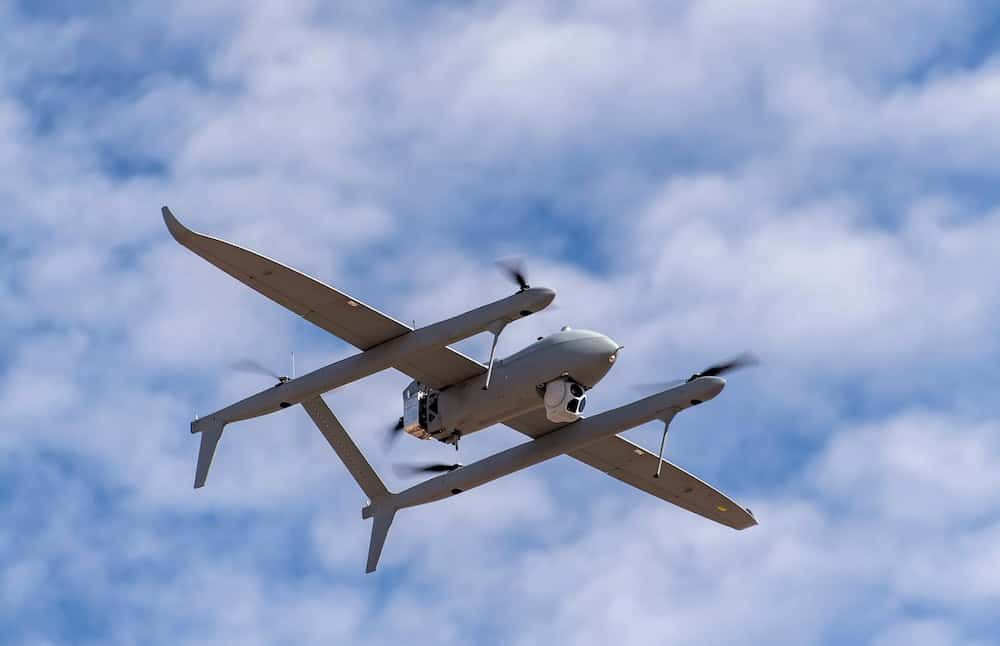
The Textron Systems Aerosonde Mk. 4.7 is a vertical take-off and landing unmanned aerial system intended for intelligence, surveillance and reconnaissance missions. Textron Systems plans to provide the Mk. 4.7 under U.S. Navy contractor-owned, contractor-operated unmanned aviation service task orders.
The aircraft is intended to deliver continuous sensor data and full-motion video to U.S. Navy and joint forces operating at sea and ashore. The planned deployment expands Textron Systems' maritime unmanned aircraft presence to Littoral Combat Ships, guided-missile destroyers and maritime support vessels.
The Mk. 4.7 combines runway-independent VTOL operation with a stated range of 75 nautical miles and support for multiple payloads. Available Aerosonde mission equipment includes imaging, maritime surveillance, radar, signals intelligence, communications and navigation-support systems.
U.S. Navy ISR services program
In 2025, the U.S. Navy identified AeroVironment, Shield AI, Insitu and Textron as unmanned aerial system vendors eligible to compete for task orders under a limited-source framework. Naval Air Systems Command estimated the aggregate value of the initiative at $819 million over five years.
The Navy's 2025 request for information emphasized runway-independent unmanned aircraft with an operational range of at least 75 nautical miles. The desired sensor capabilities included full-motion video, electro-optical and infrared systems, and either an electronic warfare type sensor or a wide-area maritime search sensor. The Navy also sought systems suitable for adverse weather, austere operating environments and areas where GPS navigation may be impaired.
In 2026, the Navy issued presolicitations for the first two expected task orders under the basic ordering agreement framework. Textron subsequently received two task orders. One was awarded on August 24, 2026, with a potential value of approximately $43 million if all options are exercised. The second was awarded on August 31, 2026, with a potential value of nearly $42 million if all options are exercised. Each includes a base period and multiple option periods that could provide up to five years of service.
Textron Systems said it planned to use the Aerosonde Mk. 4.7 VTOL system for these missions. The orders call for contractor-owned, contractor-operated unmanned aviation services providing sensor data and full-motion video to Navy and joint forces. They also include Maritime B-Kits intended primarily to support forces in the Pacific region, including the U.S. Navy's 7th Fleet.
Each Maritime B-Kit is provisioned with a pre-operational support period, a 12-month operational support period providing up to 175 sensor-data hours per month, and a post-operational period. Textron stated that it had already provided shipboard unmanned aircraft support for more than a decade through contractor-owned, contractor-operated missions involving operations support and training.
Design
The Aerosonde Mk. 4.7 is configured for vertical take-off and landing, allowing operations without a conventional runway. This feature directly supports maritime and austere-site missions where launch and recovery space may be limited.
Mission systems and payloads
Aerosonde unmanned aircraft can carry up to six payloads during a single flight. Supported sensing and intelligence-gathering functions include full-motion video, day and night imaging, maritime wide-area search, synthetic aperture radar, Automatic Identification System reception, Automatic Dependent Surveillance-Broadcast reception, signals intelligence, communications intelligence, light detection and ranging, and 3D mapping.
Additional mission tools identified for the platform include electronic warfare systems, voice communications relay, ad-hoc networking and anti-jamming capabilities intended to support assured position, navigation and timing. Textron Systems stated that Aerosonde systems have accumulated more than 750,000 operational flight hours across the family and support more than 40 payload integrations. These fleet-wide figures are not specific flight-hour totals for the Mk. 4.7 variant.
Program status
As of September 2026, Textron Systems had been selected for two U.S. Navy contractor-owned, contractor-operated ISR service task orders and stated that it planned to provide the Aerosonde Mk. 4.7 VTOL system for the work. The available source does not establish that Mk. 4.7 operations under these specific task orders had already begun.
The planned service is intended to support U.S. Navy and joint forces, particularly operations associated with the 7th Fleet in the Pacific. Textron said the awards would expand its maritime operational presence to Littoral Combat Ship, guided-missile destroyer and maritime support vessel classes.
Specifications (Aerosonde Mk. 4.7)
Performance
- Range: 75 nautical miles
Mission equipment
- Payload capacity: Up to six payloads in a single flight
- Imaging and surveillance: Full-motion video, day and night imaging, maritime wide-area search and 3D mapping
- Radar: Synthetic aperture radar support
- Tracking and identification: Automatic Identification System and Automatic Dependent Surveillance-Broadcast support
- Intelligence: Signals intelligence and communications intelligence payload support
- Other sensors: Light detection and ranging
- Communications: Voice communications relay and ad-hoc networking support
- Electronic warfare and navigation support: Electronic warfare tools and anti-jamming capabilities for assured position, navigation and timing
 Argentina
 Armenia
 Australia
 Austria
 Austria-Hungary
 Belgium
 Brazil
 United Kingdom
 United States
 Brunei
 Bulgaria
 Canada
 Chile
Chile China
China Colonial America
 Colombia
 Confederate States
 Croatia
 Czech
Czech Denmark
 Egypt
Egypt Finland
 France
 Georgia
 Germany
 German Imperial
 Greece
 Holland
 Hungary
 India
India Indonesia
 Iran
Iran Iraq
Iraq Ireland
 Israel
 Italy
Italy Japan
Japan Japan (1940)
 Jordan
 Kingdom of Italy
 Malaysia
 Mexico
 Myanmar
 Nazi Germany
 Netherlands
 New Zealand
 North Korea
 Norway
 Pakistan
 Peru
Peru Philippines
 Poland
 Portugal
 Prussia
 Romania
 Russia
 Saudi Arabia
 Serbia
 Singapore
 Slovakia
 Slovenia
 South Africa
 South Korea
 Soviet Union
 Spain
Spain Sweden
 Switzerland
 Syria
Syria Taiwan
 Thailand
 Turkey
 UAE
UAE Ukraine
 Vietnam
 Yugoslavia