
History
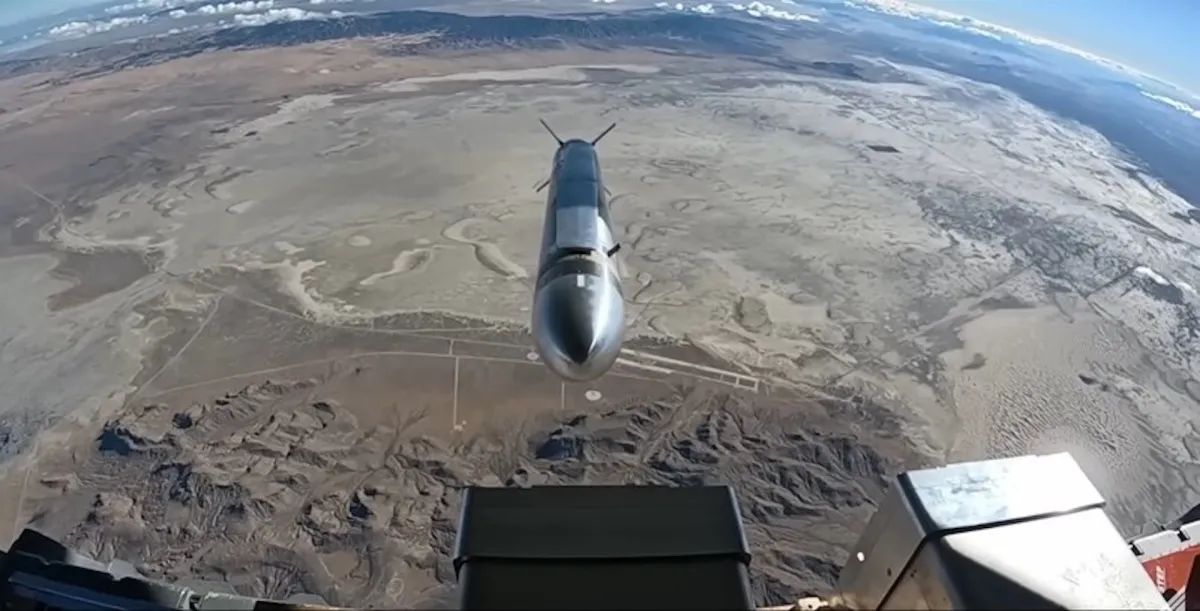
The Leidos AGM-190A Havoc Spear is a U.S. small cruise missile developed for standoff precision strike. Air Force Special Operations Command describes it as a mission-adaptable, modular weapon intended for rapid and comparatively low-cost production.
The missile forms part of AFSOC's Enhanced Precision Effects modernization effort, which seeks adaptable weapons able to deliver long-range kinetic and non-kinetic effects. Development was accelerated through cooperation between U.S. Special Operations Command and industry rather than a conventional weapons acquisition cycle.
Havoc Spear completed a combat evaluation in spring 2026 and met AFSOC's requirement for a small cruise missile. Broader integration across special operations and conventional aircraft remains a program objective rather than a completed fleet-wide capability.
Development
Work on the weapon began in 2022 through a Cooperative Research and Development Agreement with Leidos, according to reporting by Breaking Defense. The development approach emphasized rapid iteration and direct feedback between operators and engineers.
During a visit to AFSOC headquarters in November 2025, Secretary of the Air Force Troy Meink selected the name Havoc Spear. AFSOC later explained that the name combined the concepts of mass attack and long-range precision targeting.
In spring 2026, AGM-190A missiles were used in a combat evaluation within U.S. Africa Command's area of responsibility. The official AFSOC release stated that the weapon was accurate and effective when employed from an AFSOC aircraft in a test configuration and that it met the command's requirement for a small cruise missile. Breaking Defense reported, citing an AFSOC spokesperson, that two missiles were launched from an AC-130J against two separate targets.
AFSOC publicly unveiled the Havoc Spear name at Special Operations Forces Week on May 19, 2026. The command stated through DVIDS that the missile had been designed, tested and evaluated in combat in less than three years, compared with the five-to-seven-year development periods associated by AFSOC with more traditional programs.
U.S. Special Operations Command awarded Leidos a $27.2 million Havoc Spear contract on July 8, 2026. AFSOC requirements personnel subsequently said deliveries from that order were expected to begin around autumn 2027. They also reported a low-rate initial production unit cost of about $600,000.
On September 14, 2026, AFSOC announced the results of the spring combat evaluation and stated that the missile had demonstrated the performance needed to support broader real-world employment. At that stage, the command was seeking compatibility with additional special operations and conventional aircraft and multiple launch methods.
Design
Havoc Spear is an air-launched, modular small cruise missile intended to provide standoff precision effects. Its modular architecture is designed to permit adaptation for different missions and payloads without requiring an entirely new missile design.
AFSOC has not publicly released the missile's detailed guidance architecture, warhead characteristics or precise service-defined engagement envelope. Leidos has stated that the approximately 200-pound-class weapon has a range exceeding 400 nautical miles. These figures are manufacturer-reported rather than specifications published in the AFSOC announcement.
The program emphasizes production speed and cost as well as performance. Leidos stated that its Huntsville, Alabama facilities could support production capacity of up to 15,000 Havoc Spear missiles per year. This figure represents available manufacturing capacity and not an announced annual U.S. procurement quantity.
Launch integration
AFSOC has said it wants Havoc Spear integrated with as many special operations and conventional platforms as practical and in multiple launch modes. Program personnel specifically discussed both pylon carriage and aerial delivery from C-130-family aircraft. The September 2026 official release did not publish a complete list of certified launch platforms.
Payload adaptability
AFSOC has associated the Enhanced Precision Effects effort with both kinetic and non-kinetic missions. Leidos was also reported to be working on non-kinetic and palletized Havoc Spear configurations, although these concepts had not reached the same publicly documented status as the baseline AGM-190A by September 2026.
Program status
By September 2026, the AGM-190A had completed a combat evaluation and had entered low-rate initial production procurement, while wider aircraft integration and crew training were continuing. AFSOC was working with Leidos to increase production and expand the weapon beyond its initial special operations requirement.
The command's long-term objective is broader use across special operations and conventional aircraft. No complete integration schedule, total planned inventory or final list of operational aircraft had been publicly disclosed.
Variants
- AGM-190A Havoc Spear: Baseline small cruise missile that completed the spring 2026 combat evaluation and met AFSOC's requirement.
- Non-kinetic configuration: A planned modular configuration reported as being developed by Leidos for missions using non-kinetic effects.
- Palletized configuration: A reported development concept intended to support palletized employment from suitable aircraft.
Operators
- United States Air Force Special Operations Command: Combat-evaluated the AGM-190A in spring 2026 and is pursuing production, training and broader platform integration.
Specifications (AGM-190A Havoc Spear)
General characteristics
- Type: Small air-launched cruise missile
- Weight class: Approximately 91 kg (200 lb), according to Leidos
- Architecture: Mission-adaptable modular design
Performance
- Range: More than 741 km (400 nmi), according to Leidos
 Argentina
 Armenia
 Australia
 Austria
 Austria-Hungary
 Belgium
 Brazil
 United Kingdom
 Brunei
 Bulgaria
 Canada
 Chile
Chile China
China Colonial America
 Colombia
 Confederate States
 Croatia
 Czech
Czech Denmark
 Egypt
Egypt Finland
 France
 Georgia
 Germany
 German Imperial
 Greece
 Holland
 Hungary
 India
India Indonesia
 Iran
Iran Iraq
Iraq Ireland
 Israel
 Italy
Italy Japan
Japan Japan (1940)
 Jordan
 Kingdom of Italy
 Malaysia
 Mexico
 Myanmar
 Nazi Germany
 Netherlands
 New Zealand
 North Korea
 Norway
 Pakistan
 Peru
Peru Philippines
 Poland
 Portugal
 Prussia
 Romania
 Russia
 Saudi Arabia
 Serbia
 Singapore
 Slovakia
 Slovenia
 South Africa
 South Korea
 Soviet Union
 Spain
Spain Sweden
 Switzerland
 Syria
Syria Taiwan
 Thailand
 Turkey
 UAE
UAE Ukraine
 Vietnam
 Yugoslavia