
History
The Next Generation c-sUAS Missile (NGCM) is a U.S. Army requirement for an extended-range, quick-response interceptor intended to defeat Group 2 and Group 3 small unmanned aircraft systems. The Army wants the missile to integrate with the existing Coyote Launch System while providing greater range, faster launch response, and shorter time-to-target than current effectors.
In August 2026, the Army issued a Sources Sought Notice and Request for Information for NGCM. The requirement calls for a production cost below $150,000 per missile when purchased in quantities of at least 5,000, a launch response of less than five seconds, and the ability to engage the specified drone classes beyond 16 km at 6 km altitude. The objective requirement extends this to beyond 25 km at 8 km altitude.
NGCM remains a development and acquisition requirement rather than an operational missile. The Army plans for the system to reach Technology Readiness Level 7 after an initial developmental test series ending in the fourth quarter of fiscal 2027, with 50 missiles required for an operational assessment in the first quarter of fiscal 2028.
Development context
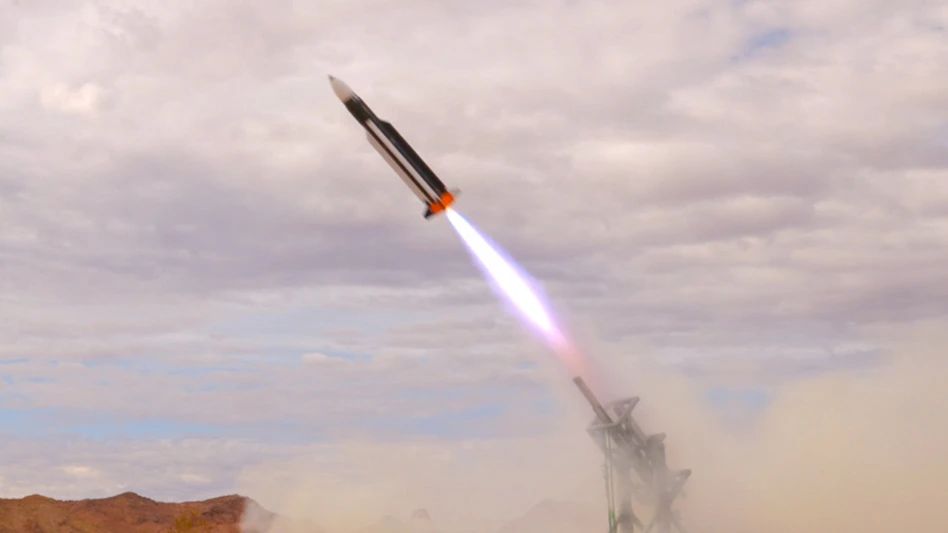
In October 2025, AeroVironment announced that it had been selected for a U.S. Army effort described as the Next-Generation C-UAS Missile and had received a $95.9 million contract under the Long-Range Kinetic Interceptor program to deliver its FE-1 Freedom Eagle missile. The company stated that FE-1 had completed controlled test vehicle launches, a live-fire demonstration of its dual-thrust solid rocket motor, and warhead tests. The announcement is available from AeroVironment.
The Army's August 2026 NGCM notice does not identify AeroVironment or FE-1 as the selected solution. Instead, it is explicitly a market-research notice intended to assess industry capabilities and does not commit the government to a procurement. The 2025 FE-1 announcement therefore cannot by itself establish that FE-1 is the missile sought under the August 2026 NGCM requirement.
The August 2026 NGCM effort also appeared alongside a separate Army low-cost interceptor initiative. Contemporary reporting noted similarities in the goal of reducing the cost of counter-drone engagements, but an Army spokesperson stated that NGCM was a separately defined initiative from the low-cost interceptor program. The Army's NGCM requirements were published in the official SAM.gov notice.
2026 requirements
The August 2026 notice asks industry for a complete missile solution covering development, integration, demonstration, and production. The principal objective is an extended-range interceptor with rapid launch and reduced time-to-target against Group 2 and Group 3 small UAS. Responses to the notice were due on 20 August 2026.
The Army requires the missile to be compatible with the Coyote Launcher with minimal or no modifications. It must also fit within the Army's counter-UAS architecture. The threshold integration requirement includes KuRFS, while objective radar compatibility includes Sentinel A3 and A4, LTAMDS, Patriot, and TPQ-53. The notice states that the missile should use an all-weather radio-frequency seeker.
The government also requires simulations, performance-analysis tools, and design documentation for missile components, the integrated missile system, and the all-up round configured for the launch platform. Requested support areas include engineering, field service, training, logistics, data analytics, and cybersecurity.
Design
NGCM is defined by the Army as a kinetic counter-UAS missile intended for rapid reaction against small unmanned aircraft. The final missile design, dimensions, mass, propulsion arrangement, warhead, and control system have not been disclosed in the August 2026 requirement, because the Army is still soliciting industry solutions.
Guidance and engagement
The Army states that the missile should use an all-weather radio-frequency seeker. The requirement emphasizes rapid launch and extended engagement range, but it does not disclose a specific seeker architecture, guidance law, fuze type, or warhead configuration.
Launcher and network integration
The missile must integrate with the existing Coyote Launch System with minimal or no launcher modification. It is also intended to connect to the Army's counter-UAS architecture through IBCS-M using the WES interface control document. The requirement identifies KuRFS as a threshold integration item and calls for objective compatibility with Sentinel A3 and A4, LTAMDS, Patriot, and TPQ-53 radars.
The wider counter-UAS architecture includes both Fixed-Site Low, slow, small UAS Integrated Defeat System and Mobile Low, slow, small UAS Integrated Defeat System configurations. The fixed-site system incorporates Forward Area Air Defense, electronic warfare, multi-mission radar, electro-optical and infrared cameras, and kinetic options. The mobile configuration is mounted on tactical vehicles for use at the halt and on the move and combines kinetic and non-kinetic effects with components shared with the fixed-site system. These are integration environments for NGCM and are not confirmed missile variants.
Program status
As of August 2026, NGCM is at the market-research and requirements stage. The Sources Sought Notice is not a request for proposals, an invitation for bids, or a government commitment to purchase a specific missile.
The Army expects the selected system to achieve Technology Readiness Level 7 after the initial developmental test series concludes in the fourth quarter of fiscal 2027. The missile is also required to be ready for Army Test and Evaluation Command evaluation by that quarter. The program calls for 50 missiles to be available for an operational assessment in the first quarter of fiscal 2028. These are planned milestones and do not indicate that NGCM is currently operational.
Specifications (NGCM requirement)
Role and configuration
- Type: Extended-range, quick-response counter-UAS interceptor missile
- Primary targets: Group 2 and Group 3 small unmanned aircraft systems
- Launch system: Coyote Launch System, with minimal or no modifications required
- Seeker: All-weather radio-frequency seeker desired by the Army
- Target production cost: Less than $150,000 per missile in a quantity purchase of at least 5,000 missiles
Performance requirements
- Threshold engagement requirement: Beyond 16 km at 6 km altitude against Group 2 and Group 3 small UAS
- Objective engagement requirement: Beyond 25 km at 8 km altitude against Group 2 and Group 3 small UAS
- Launch response: Missile to leave the rail in less than 5 seconds after operator initiation
Integration requirements
- Counter-UAS architecture: IBCS-M via the WES interface control document
- Threshold sensor integration: KuRFS
- Objective radar compatibility: Sentinel A3, Sentinel A4, LTAMDS, Patriot, and TPQ-53
 Argentina
 Armenia
 Australia
 Austria
 Austria-Hungary
 Belgium
 Brazil
 United Kingdom
 Brunei
 Bulgaria
 Canada
 Chile
Chile China
China Colonial America
 Colombia
 Confederate States
 Croatia
 Czech
Czech Denmark
 Egypt
Egypt Finland
 France
 Georgia
 Germany
 German Imperial
 Greece
 Holland
 Hungary
 India
India Indonesia
 Iran
Iran Iraq
Iraq Ireland
 Israel
 Italy
Italy Japan
Japan Japan (1940)
 Jordan
 Kingdom of Italy
 Malaysia
 Mexico
 Myanmar
 Nazi Germany
 Netherlands
 New Zealand
 North Korea
 Norway
 Pakistan
 Peru
Peru Philippines
 Poland
 Portugal
 Prussia
 Romania
 Russia
 Saudi Arabia
 Serbia
 Singapore
 Slovakia
 Slovenia
 South Africa
 South Korea
 Soviet Union
 Spain
Spain Sweden
 Switzerland
 Syria
Syria Taiwan
 Thailand
 Turkey
 UAE
UAE Ukraine
 Vietnam
 Yugoslavia