
History
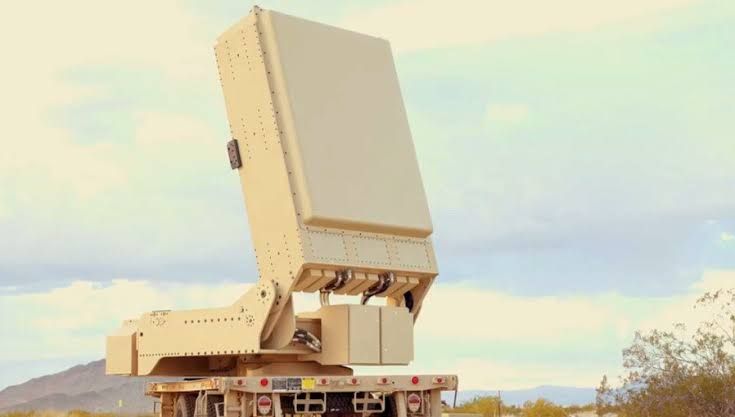
Epirus HAVOC, short for High-power Microwave Autonomous Vehicle Operational Capability, is a vehicle-mounted counter-unmanned aircraft system developed for the U.S. Marine Corps. It uses high-power microwave energy to disrupt or disable electronic systems on unmanned aircraft and is intended to provide non-kinetic point defense against individual drones and swarms.
The Marine Corps awarded Epirus an $11 million contract for HAVOC in August 2026. The award, managed through the U.S. Navy's Office of Naval Research, covers the system as well as testing, training, service, and sustainment support. HAVOC was planned for delivery and Marine Corps testing under this effort. Breaking Defense reported the award and its vehicle-integration requirement.
HAVOC is an autonomy-enabled evolution of the Expeditionary Directed Energy Counter-Swarm system, or ExDECS. Epirus delivered ExDECS to the Marine Corps in 2025, and ExDECS itself was derived from the company's Leonidas Expeditionary high-power microwave system.
Development
ExDECS was developed from 2024 with $5.5 million in Office of Naval Research funding to support Marine Corps low-altitude air-defense requirements. The earlier effort was intended to produce a system compact enough for integration on a light tactical vehicle and compatible with the Marine Corps' Common Aviation Command and Control System. In April 2025, Epirus announced delivery of an ExDECS system to the Naval Surface Warfare Center Dahlgren.
HAVOC followed as a more mobile and autonomy-enabled configuration. The Marine Corps selected the system in 2026 for integration across crewed and uncrewed ground vehicles. Epirus described the design as offering greater power output, expanded coverage, improved electronic lethality, improved reliability, and increased operational efficiency compared with ExDECS. Inside Defense reported that the Marine Corps planned to employ HAVOC within its Low Altitude Air Defense formations.
DefenseScoop reported that Epirus intended HAVOC to work alongside the Marine Air Defense Integrated System in mobile air-defense units. The company also said it had prepared its facilities for low-rate production, but the 2026 Marine Corps award represented a testing and fielding step rather than confirmation of widespread operational deployment. DefenseScoop described the planned testing and production posture.
Design
HAVOC is based on the Leonidas family of high-power microwave technology. The underlying architecture uses solid-state microwave components and gallium nitride amplifiers to generate and amplify electromagnetic energy. The effect is directed against electronic circuitry in unmanned systems rather than using a projectile or missile interceptor.
The system is designed as a mobile counter-UAS payload for ground vehicles. Its universal sled mount is intended to support installation on multiple Marine Corps manned and unmanned vehicle types rather than tying the weapon to a single chassis. A published concept image showed HAVOC on a ROGUE uncrewed JLTV-derived platform, although the contract information describes broader vehicle compatibility and does not identify that chassis as the only carrier. Calibre Defence discussed the concept configuration and the relationship with earlier ExDECS work.
HAVOC is intended to engage multiple small unmanned aircraft with a single high-power microwave system. Epirus characterizes this as a one-to-many approach. The system is also described as software-defined, allowing software-controlled tuning of its electronic effects. Safety functions in the wider Epirus high-power microwave family include weapon-control software and exclusion zones intended to reduce the risk of affecting unintended equipment.
Compared with ExDECS, HAVOC is reported to provide greater power output, greater range, improved ruggedness, wider coverage, and autonomous functions intended to reduce operator workload. The Defense Post reported that HAVOC would deliver about three times the power of ExDECS, although detailed numerical output, range, and engagement-envelope figures were not disclosed. The Defense Post summarized these reported improvements.
Program status
As of August 2026, HAVOC was under an $11 million Marine Corps contract and was planned for delivery and testing. The contract also included training, service, and sustainment support, with options reported for an additional system and related capabilities.
The Marine Corps intends to use HAVOC for short-range protection of high-value points and mobile formations. Examples identified by Epirus include ground-based air-defense assets, refueling points, radars, communications equipment, power systems, and other forward-deployed assets. The system is intended to complement kinetic air-defense weapons rather than replace the full layered air-defense architecture.
Operators
- United States Marine Corps: Customer under an $11 million 2026 contract for HAVOC delivery, testing, training, service, and sustainment support. The system was not yet confirmed as broadly operational in the supplied 2026 sources.
Specifications (HAVOC)
General characteristics
- Type: Vehicle-mounted high-power microwave counter-unmanned aircraft system.
- Manufacturer: Epirus.
- Primary role: Non-kinetic point defense against unmanned aircraft and drone swarms.
- Mounting: Universal sled mount for integration on multiple manned and unmanned Marine Corps ground vehicles.
- Technology: Solid-state high-power microwave architecture using gallium nitride amplifiers.
- Control concept: Software-defined operation with autonomy-enabled functions and one-to-many employment.
Reported performance features
- Power: Greater output than ExDECS; one source reported approximately three times the ExDECS power level.
- Coverage: Expanded relative to ExDECS; no numerical coverage area was disclosed in the supplied sources.
- Range: Described as greater than ExDECS and intended for short-range employment; no numerical range was disclosed.
- Target set: Small unmanned aircraft, including Group 1 drones and multi-drone swarms.
Related equipment
- Epirus Leonidas Expeditionary: Earlier high-power microwave counter-UAS system that formed the technological basis for ExDECS.
- Expeditionary Directed Energy Counter-Swarm (ExDECS): Marine Corps-oriented development delivered in 2025 and the direct predecessor from which HAVOC evolved.
- Marine Air Defense Integrated System (MADIS): Mobile Marine Corps air-defense system that Epirus said HAVOC was intended to complement.
 Argentina
 Armenia
 Australia
 Austria
 Austria-Hungary
 Belgium
 Brazil
 United Kingdom
 Brunei
 Bulgaria
 Canada
 Chile
Chile China
China Colonial America
 Colombia
 Confederate States
 Croatia
 Czech
Czech Denmark
 Egypt
Egypt Finland
 France
 Georgia
 Germany
 German Imperial
 Greece
 Holland
 Hungary
 India
India Indonesia
 Iran
Iran Iraq
Iraq Ireland
 Israel
 Italy
Italy Japan
Japan Japan (1940)
 Jordan
 Kingdom of Italy
 Malaysia
 Mexico
 Myanmar
 Nazi Germany
 Netherlands
 New Zealand
 North Korea
 Norway
 Pakistan
 Peru
Peru Philippines
 Poland
 Portugal
 Prussia
 Romania
 Russia
 Saudi Arabia
 Serbia
 Singapore
 Slovakia
 Slovenia
 South Africa
 South Korea
 Soviet Union
 Spain
Spain Sweden
 Switzerland
 Syria
Syria Taiwan
 Thailand
 Turkey
 UAE
UAE Ukraine
 Vietnam
 Yugoslavia