
History
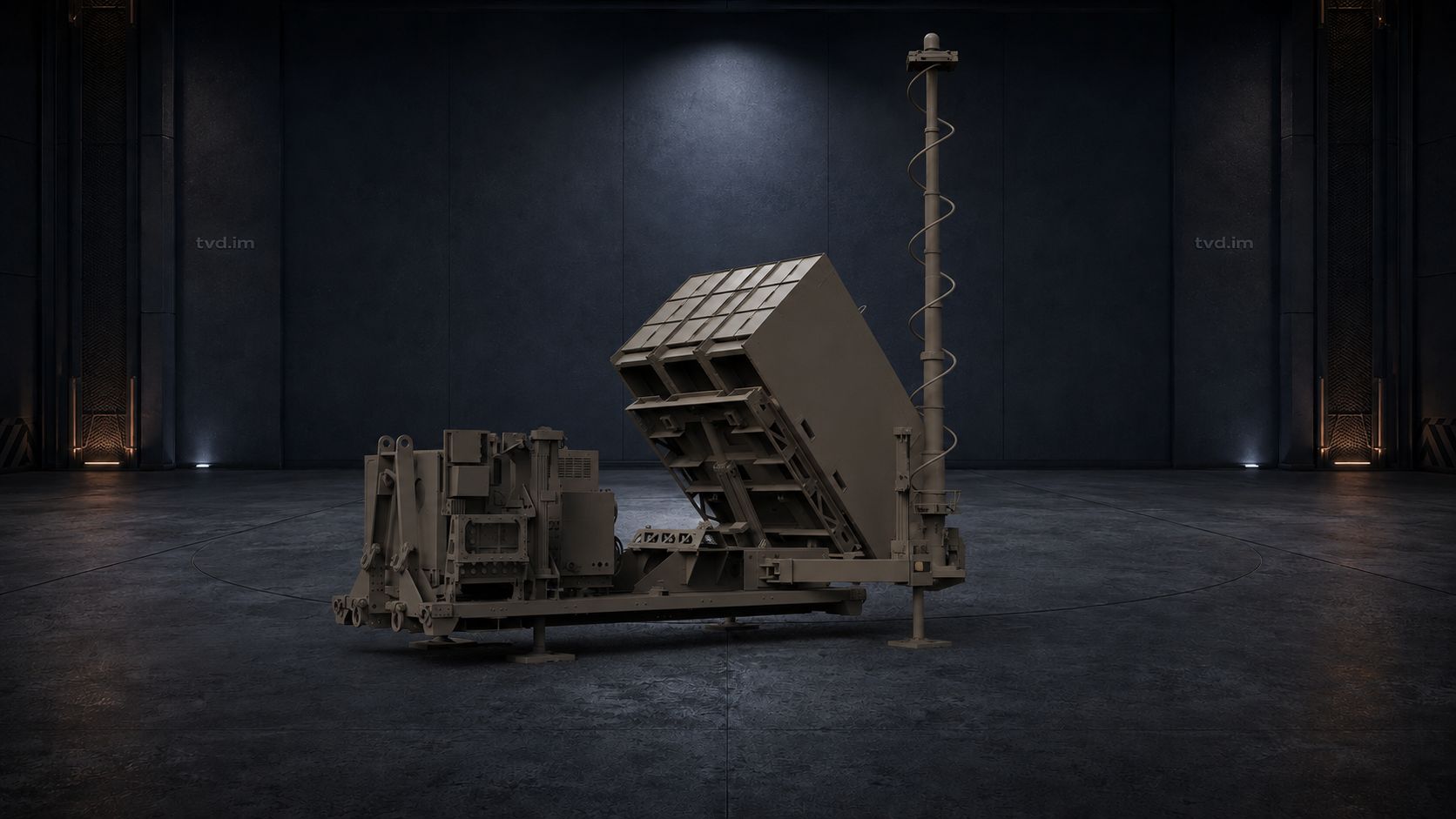
The Indirect Fire Protection Capability (IFPC) is a mobile, ground-based U.S. Army air and missile defense system. It is intended to protect critical fixed and semi-fixed sites against cruise missiles, unmanned aircraft, rockets, artillery, and mortars.
The system combines launchers and interceptors within a networked defense architecture. It is designed to fill the coverage gap between short-range air defense systems and longer-range systems such as Patriot and Terminal High Altitude Area Defense.
The Army began the original IFPC Increment 1 program in 2004. Congress later directed the service to acquire four interim medium-range air defense batteries, and the Army selected Israel's Iron Dome. Integration difficulties led Congress to waive the requirement for the final two Iron Dome batteries in 2021, helping establish the basis for IFPC Increment 2.
Development and production
On September 24, 2021, the Army awarded Dynetics, a Leidos subsidiary, an approximately $237.38 million prototype agreement. It covered 16 launcher prototypes, 60 interceptors, and associated all-up-round magazines. Prototype deliveries for testing were planned to begin in the fourth quarter of fiscal year 2022, making 2022 the earliest supported year for a physically recognizable IFPC Increment 2 system.
The program later encountered a delay of at least eight months, with initial operational testing moved from fiscal year 2025 to fiscal year 2026. In late summer 2024, the system reportedly defeated two maneuvering unmanned-aircraft targets and one maneuvering cruise-missile target during testing. A January 2026 Congressional Research Service report describes the program's development, variants, testing, and planned fielding.
In November 2024, the Army awarded Dynetics a $4.1 billion indefinite-delivery contract covering low-rate production, full-rate production, and lifecycle support, with an initial order for 18 launchers. A separate $617 million fiscal year 2026 production contract covered launchers, magazines, trainers, and logistics support, with deliveries scheduled through November 2029.
In October 2025, the Army awarded Lockheed Martin an agreement to prototype a second interceptor intended to improve performance against cruise missiles and broaden the system's engagement options. The Army continued to target IFPC fielding in Guam in 2027.
Design
IFPC Increment 2 uses the Enduring Shield launcher with interceptor rounds carried in sealed, ready-to-fire magazines. This arrangement supports rapid reloading while limiting the exposure of personnel handling the munitions. The interceptor variant uses an open architecture intended to support the integration of additional missile types.
The system uses 360-degree radar coverage and integrates with the Army's Integrated Battle Command System. This command-and-control network connects sensors and effectors from multiple air defense systems, allowing IFPC to operate as part of a layered defense rather than as an isolated launcher.
Reported interceptor options include the AIM-9X Sidewinder and AGM-114L Longbow Hellfire. The Army has also tested the Israeli Tamir interceptor. A separate future interceptor is being developed for improved performance against lower-flying supersonic cruise missiles, but it is not described as operational.
Operational history
The 35th Air Defense Artillery Brigade has operated IFPC equipment in South Korea since at least September 2025, representing the system's first confirmed overseas deployment. During the Freedom Shield exercise in March 2026, the Army positioned IFPC at Camp Humphreys to test its integration with Patriot and Avenger systems in a layered defense network.
On August 5, 2026, soldiers from Delta Battery, 6th Battalion, 52nd Air Defense Artillery Regiment, trained to set up the system at Camp Humphreys. The exercise prepared the unit to employ IFPC in support of air and missile defense operations, according to the training report.
Variants
- IFPC Increment 2 Interceptor: Missile-based variant with an open architecture for integrating present and future interceptors.
- IFPC High Energy Laser: Developmental directed-energy variant designed to protect fixed and semi-fixed assets against cruise missiles, unmanned aircraft, rockets, artillery, and mortars. Plans called for four 300 kW-class prototypes on tactical vehicles.
- IFPC High Power Microwave: Developmental counter-small-UAS variant intended to defend fixed and semi-fixed sites against drone swarms. Epirus delivered four prototypes to the Army by May 2024.
Operators
- United States: The U.S. Army is developing, procuring, testing, and fielding IFPC. The 35th Air Defense Artillery Brigade has operated the system in South Korea.
Specifications (IFPC Increment 2 Interceptor)
General characteristics
- Type: Mobile, ground-based air and missile defense system
- Primary role: Defense of critical fixed and semi-fixed sites
- Main elements: Enduring Shield launcher, interceptor missiles, and sealed all-up-round magazines
- Command and control: Integrated Battle Command System
- Sensor coverage: 360 degrees
Engagement capability
- Supported threats: Cruise missiles, unmanned aircraft systems, rockets, artillery, and mortars
- Reported interceptors: AIM-9X Sidewinder and AGM-114L Longbow Hellfire; Tamir has also been tested
- Architecture: Open design intended to support future interceptor integration
 Argentina
 Armenia
 Australia
 Austria
 Austria-Hungary
 Belgium
 Brazil
 United Kingdom
 Brunei
 Bulgaria
 Canada
 Chile
Chile China
China Colonial America
 Colombia
 Confederate States
 Croatia
 Czech
Czech Denmark
 Egypt
Egypt Finland
 France
 Georgia
 Germany
 German Imperial
 Greece
 Holland
 Hungary
 India
India Indonesia
 Iran
Iran Iraq
Iraq Ireland
 Israel
 Italy
Italy Japan
Japan Japan (1940)
 Jordan
 Kingdom of Italy
 Malaysia
 Mexico
 Myanmar
 Nazi Germany
 Netherlands
 New Zealand
 North Korea
 Norway
 Pakistan
 Peru
Peru Philippines
 Poland
 Portugal
 Prussia
 Romania
 Russia
 Saudi Arabia
 Serbia
 Singapore
 Slovakia
 Slovenia
 South Africa
 South Korea
 Soviet Union
 Spain
Spain Sweden
 Switzerland
 Syria
Syria Taiwan
 Thailand
 Turkey
 UAE
UAE Ukraine
 Vietnam
 Yugoslavia